




Is It Too Late to Repair Hail Damage Before Winter? What Denver Drivers Should Know
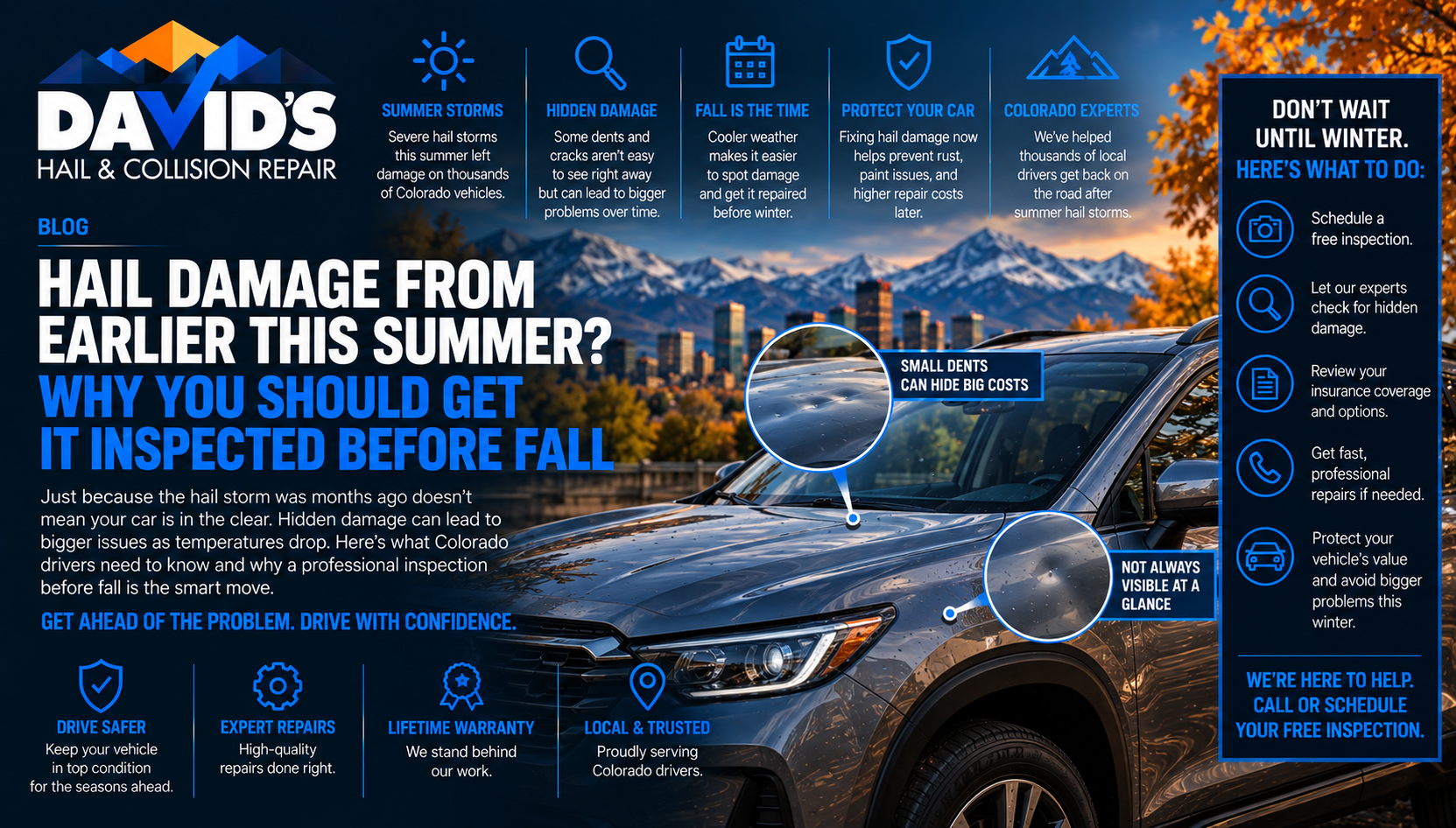
Summer may be winding down, but plenty of Colorado vehicles are still carrying hail damage from storms earlier this year.
Maybe you planned to get the dents repaired but never found the time. Maybe the damage didn’t seem serious enough to deal with immediately. Or perhaps you filed an insurance claim, received an estimate, and simply haven’t scheduled the repairs yet.
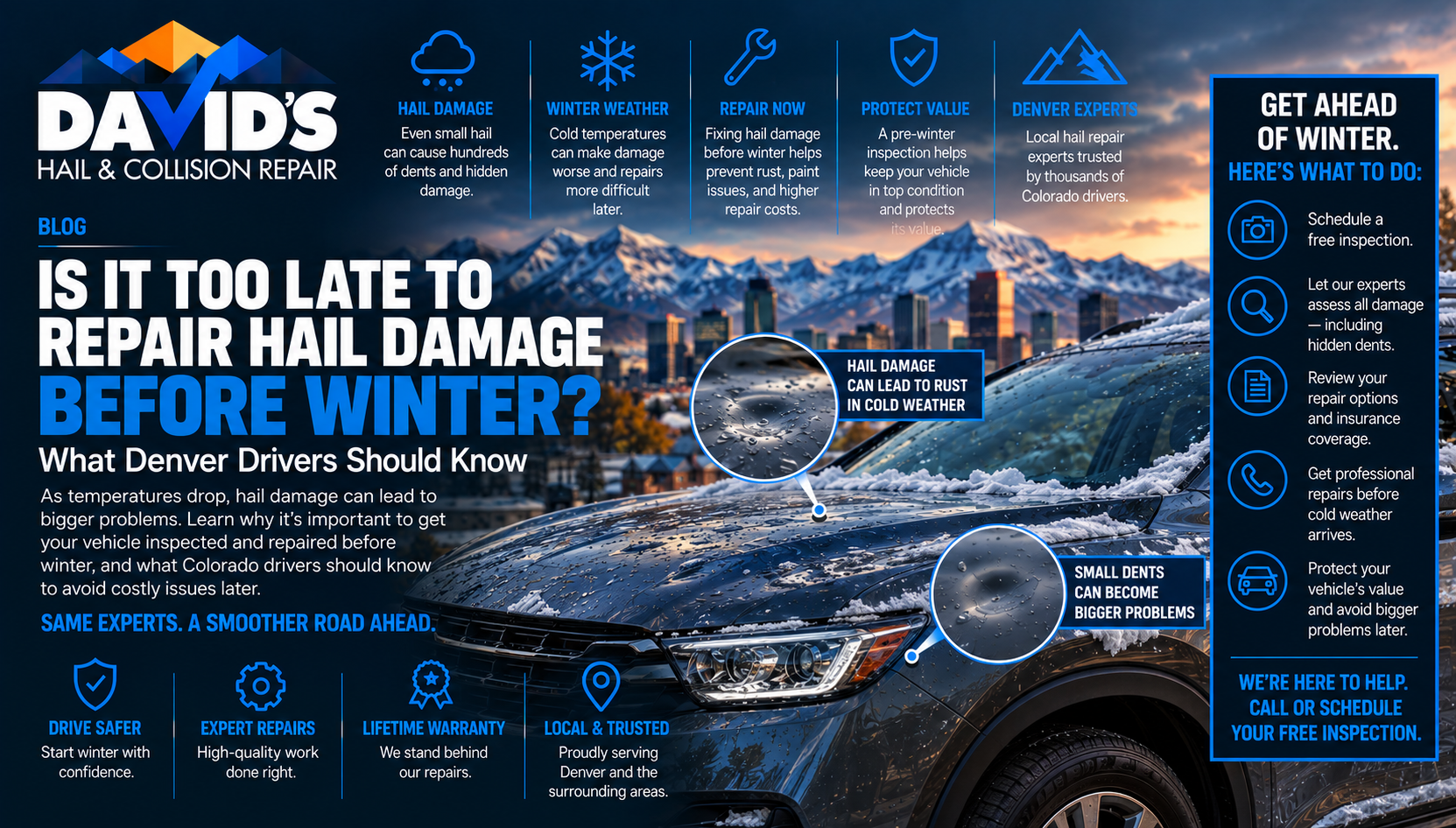
Now that fall is approaching, you may be wondering: Is it too late to repair hail damage before winter?
In most cases, no. September can actually be a good time to finally take care of hail damage you’ve been putting off.
If your vehicle still has damage from a spring or summer storm, here’s what Denver-area drivers should know about getting it repaired before Colorado winter weather arrives.
Why Hail Damage Often Gets Put Off Until Fall
Hail damage is easy to postpone because most hail-damaged vehicles remain completely drivable.
Unlike a collision that leaves a vehicle unsafe or unable to drive, hail may leave dozens of dents without affecting how the vehicle operates.
That makes it easy to say, “I’ll take care of it later.”
Drivers may also delay repairs because they:
- Aren’t sure how extensive the damage is
- Don’t know whether insurance will cover the repair
- Are concerned about paying their deductible
- Haven’t had time to schedule repairs
- Assume the damage is only cosmetic
- Already received an insurance estimate but haven’t moved forward
- Don’t understand how the hail repair process works
If that’s where you are now, you haven’t necessarily missed your opportunity to get the vehicle repaired.
But there are several reasons September is a good time to stop putting it off.
Can Hail Damage Still Be Repaired Months After the Storm?
Yes. The age of the hail damage alone generally doesn’t determine whether a dent can be repaired.
What matters more is the condition of the damaged panel.
For many vehicles, Paintless Dent Repair (PDR) can still be used months after the original storm when the factory paint remains intact and the metal hasn’t been damaged beyond what PDR can successfully restore.
During PDR, trained technicians use specialized tools and techniques to carefully manipulate the damaged metal back toward its original shape without traditional body filler or repainting.
Whether PDR is appropriate depends on factors such as:
- Dent size
- Dent depth
- Location of the damage
- Amount of metal stretching
- Condition of the paint
- Accessibility behind the damaged panel
If some areas can’t be repaired using PDR, conventional auto body repair may be necessary.
A professional inspection is the best way to determine the proper repair method.
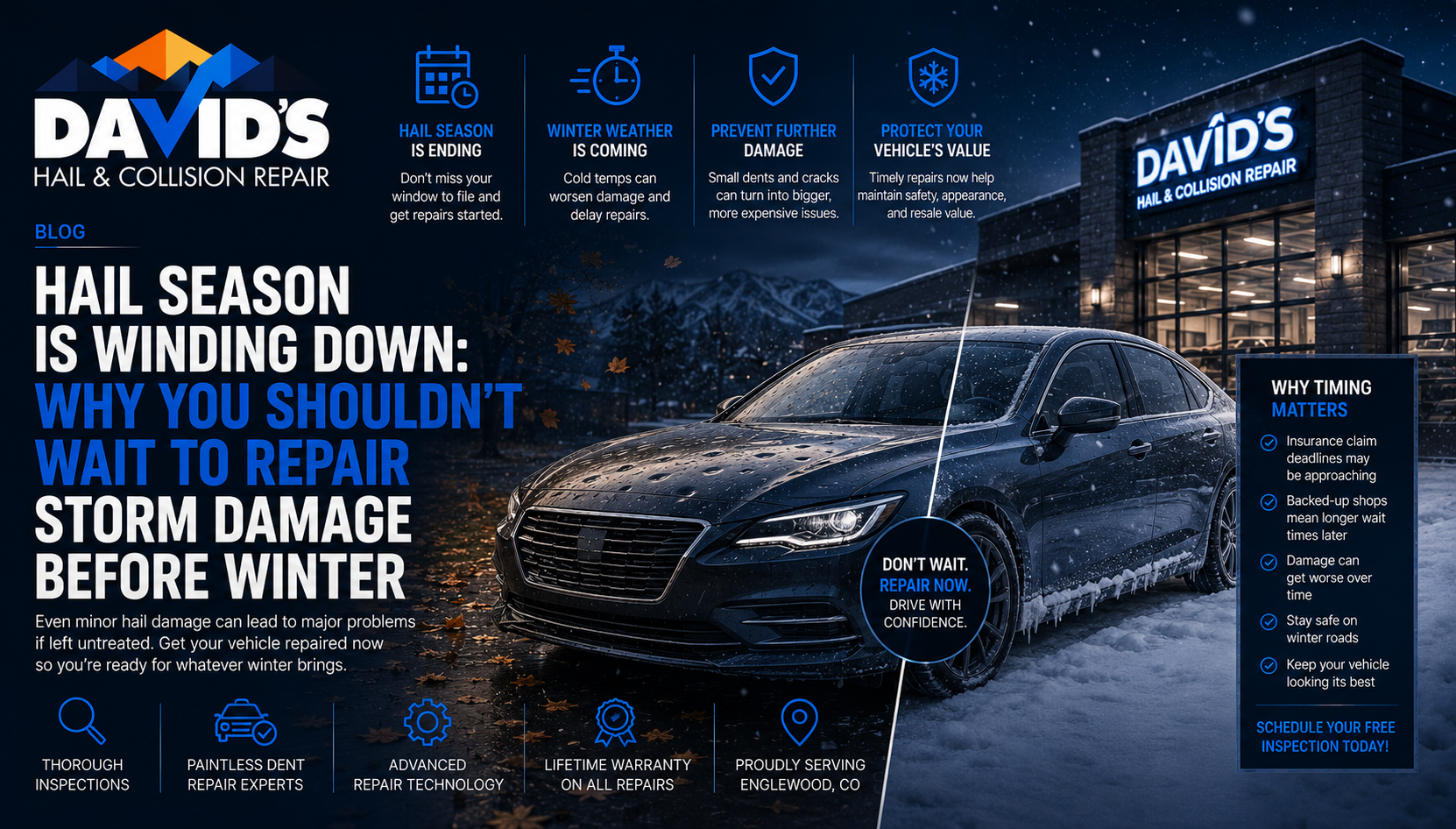
Why Repair Hail Damage Before Winter?
There’s no universal rule that every hail dent must be repaired before the first snowfall.
But if you already intend to repair the vehicle, carrying unresolved damage through another season usually doesn’t provide much benefit.
Getting the repair handled before winter can help you resolve the existing damage while the details of this year’s hail season are still relatively recent.
It also means you’re not starting winter with a vehicle that already needs body work.
Most importantly, you’ll know the condition of the vehicle rather than continuing to wonder how extensive the damage actually is.
Check for Damaged Paint Before Winter
Many hail dents leave the factory paint intact, which is one reason PDR works so well for qualifying hail damage.
However, more severe hail impacts can sometimes chip, crack or otherwise damage the paint.
That distinction matters.
When paint and protective coatings are compromised and bare metal becomes exposed, moisture can contribute to corrosion over time.
Colorado winter conditions can introduce plenty of moisture, road grime and deicing materials to a vehicle’s exterior.
If you aren’t sure whether the paint was damaged during the hailstorm, have the vehicle professionally inspected rather than assuming every dent is purely cosmetic.
You May Have More Damage Than You Can See
Hail damage can be deceptive.
A quick walk around your vehicle may reveal only a few obvious dents, while specialized inspection lighting can uncover significantly more damage across multiple panels.
Common hail-damaged areas include:
- Hood
- Roof
- Trunk or liftgate
- Fenders
- Doors
- Quarter panels
- Roof rails
- Exterior trim
Professional PDR technicians use specialized lighting and reflection systems to identify subtle distortions in the metal that can be difficult to see under normal lighting.
That’s why an inspection can be valuable even when the vehicle doesn’t appear heavily damaged.
What If You Already Filed an Insurance Claim?
If you already filed a hail claim earlier this year and received an insurance estimate, bring that estimate with you when you have the vehicle inspected.
The insurance company’s initial estimate may not always reflect every repair operation or all damage identified during a more thorough inspection.
If additional covered damage or necessary repair procedures are discovered, the repair facility can document those items and submit a supplement to the insurance carrier for review.
David’s Hail & Collision Repair can communicate with your insurance company throughout the repair process, review the insurer’s estimate, document additional damage and submit supplements when appropriate.
Your insurance company ultimately determines coverage under your individual policy.
What If You Never Filed a Hail Damage Claim?
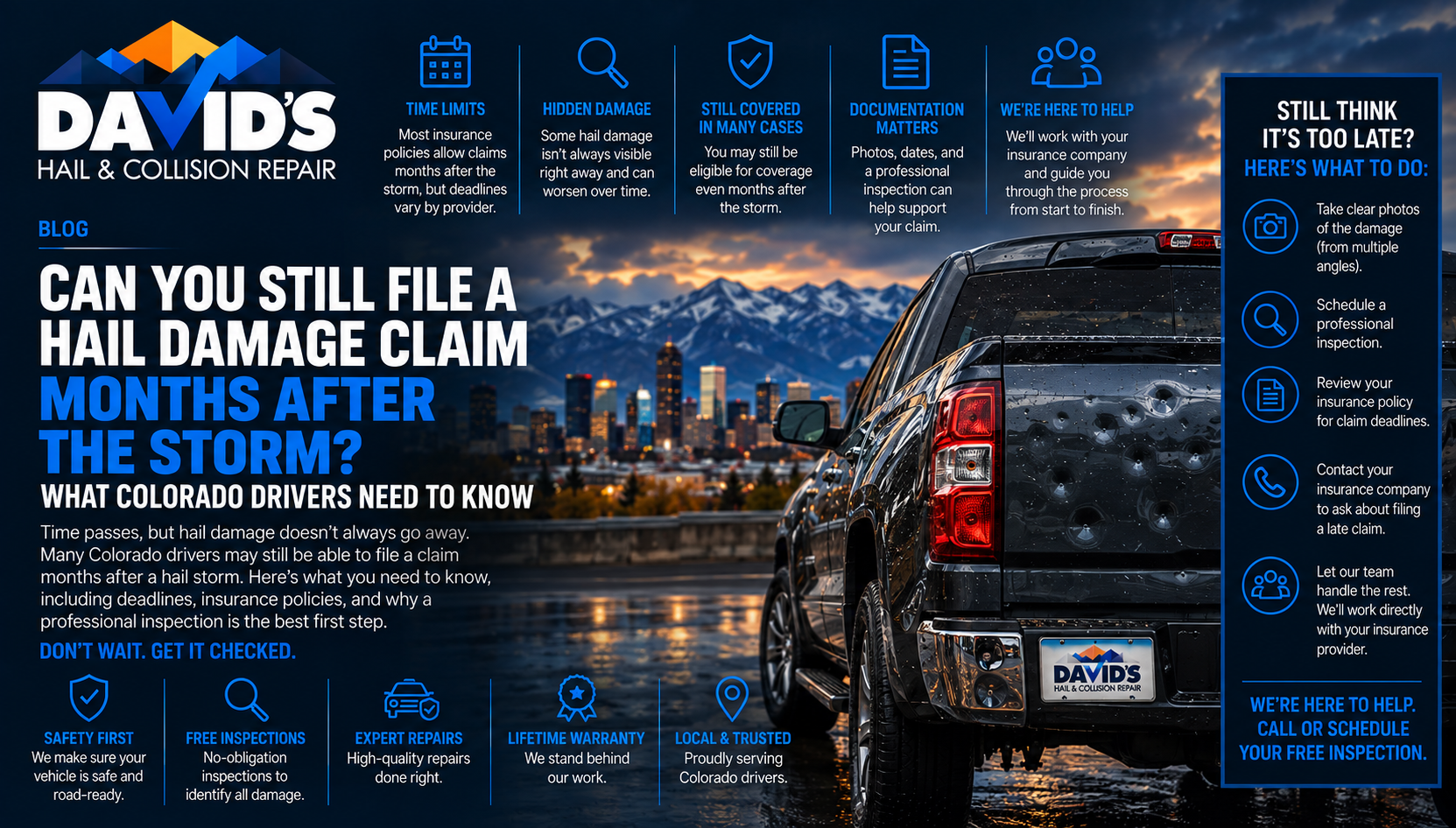
If the hail damage happened earlier this year and you never filed a claim, don’t automatically assume it’s too late.
Insurance policies can contain different requirements for reporting losses, and coverage depends on the policy that was in effect when the damage occurred.
If you’re considering filing a claim now, contact your insurance carrier and review the requirements of your specific policy.
You should also be as accurate as possible about when and where you believe the damage occurred.
If you aren’t certain about the date of loss, don’t guess.
A repair facility can document the physical damage to your vehicle, but your insurance carrier determines coverage and how the claim is handled.
What If Another Hailstorm Hits Before You Repair the Vehicle?
This is another reason not to leave existing damage unresolved indefinitely.
If a vehicle with unrepaired hail damage is caught in another storm, some of the same panels could sustain additional dents.
That may make distinguishing previous damage from new damage more complicated.
Separate storms can also potentially involve separate dates of loss and insurance claims, depending on the circumstances and policy.
Having existing damage inspected, documented and repaired gives you a clean starting point if the vehicle is damaged again in the future.
Will Unrepaired Hail Damage Affect Your Vehicle’s Value?
It can.
Visible dents and body damage may affect how potential buyers or dealerships evaluate the condition of a vehicle.
Even when the damage is cosmetic, a buyer or dealer may consider the expected repair cost when determining what they’re willing to pay.
If you’re planning to sell or trade your vehicle in the near future, waiting until the last minute to address hail damage can also leave you scrambling to schedule repairs.
Taking care of it beforehand allows you to resolve the damage on your schedule rather than when you’re trying to complete a sale or trade.
Can You Use Deductible Assistance for Hail Damage Repair?
David’s Hail & Collision Repair offers up to $500 in deductible assistance on qualifying repairs.
Eligibility and the amount of assistance can depend on the repair and other applicable requirements, so not every repair will necessarily qualify for the full $500.
If your deductible is one of the reasons you’ve delayed repairing your hail damage, ask our team whether your repair qualifies for deductible assistance.
We’ll explain the program before repairs begin so you understand what may apply to your situation.
Don’t Wait Until the First Snowstorm to Start the Process
September can feel early when you’re thinking about winter, but Colorado weather doesn’t always follow the calendar.
If you’ve already decided that you want your hail damage repaired, there’s little advantage to waiting until winter to begin figuring everything out.
Starting now gives you time to:
- Have the vehicle professionally inspected
- Determine whether PDR is appropriate
- Review an existing insurance estimate
- Address insurance questions
- Determine whether deductible assistance is available
- Schedule the repair
- Get the vehicle restored before winter is fully underway
Even if you aren’t ready to schedule the repair immediately, getting an estimate gives you a clearer understanding of what you’re dealing with.
Hail Damage Repair in Englewood and the Denver Metro Area
David’s Hail & Collision Repair provides professional hail damage repair and Paintless Dent Repair from our Englewood location.
We serve drivers throughout Denver, Englewood, Aurora, Lakewood, Littleton and surrounding Denver Metro communities.
Our team can evaluate your hail damage, determine the appropriate repair method, work with your insurance carrier when applicable, and help guide you through the repair process.
David’s Hail & Collision Repair also offers up to $500 in deductible assistance on qualifying repairs and backs our repair work with a lifetime warranty.
Whether the hailstorm happened last week or several months ago, the first step is finding out exactly what your vehicle needs.
Get Your Free Hail Damage Estimate
If your vehicle is still carrying hail damage from earlier this summer, don’t head into another Colorado season without knowing what it will take to repair it.
Get your free estimate from David’s Hail & Collision Repair today. We’ll evaluate the damage, explain your repair options, and help you determine the best next step for getting your vehicle repaired before winter.