




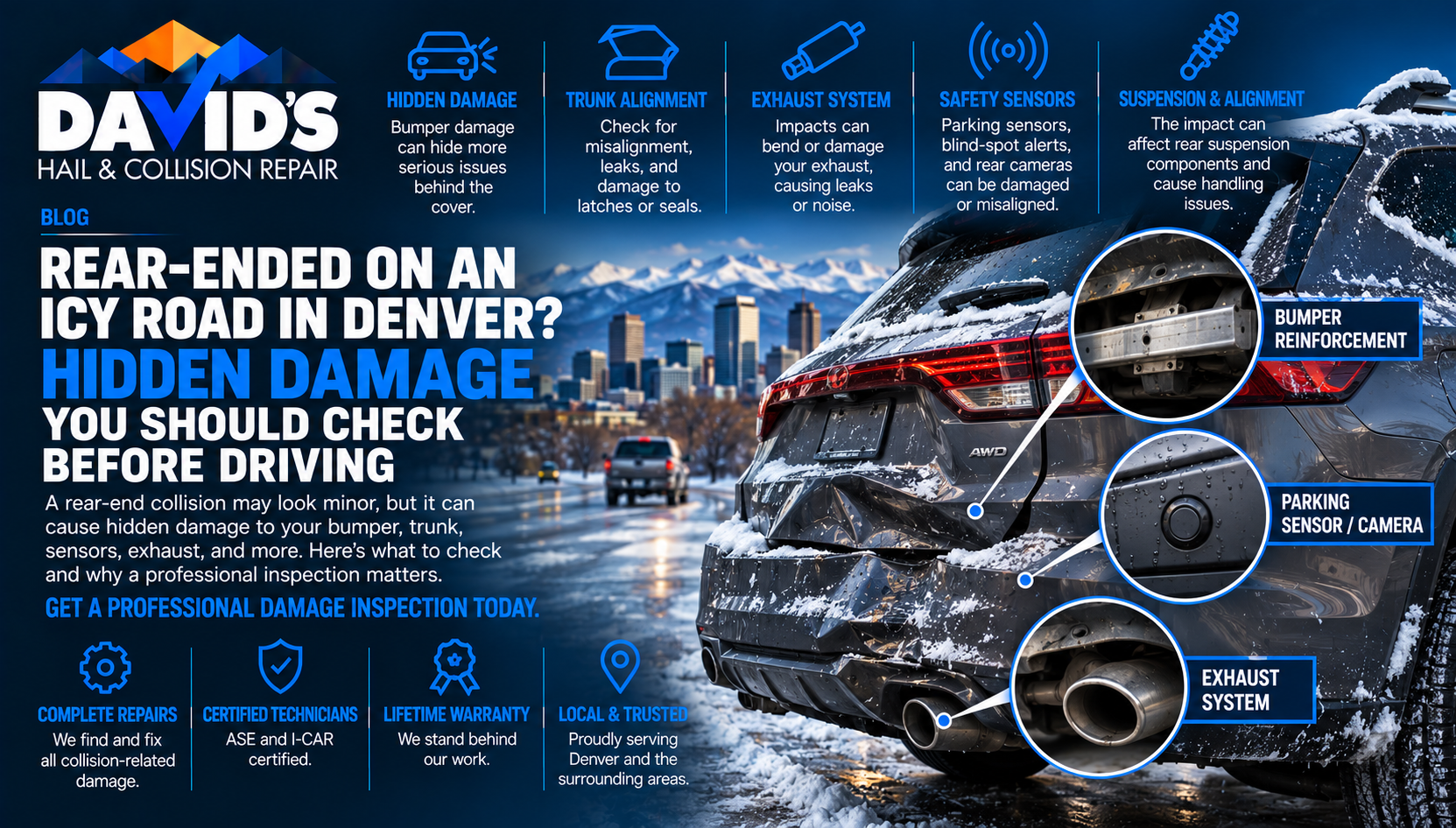
Rear-Ended on an Icy Road in Denver? Hidden Damage You Should Check Before Driving
Winter driving in Denver can turn dangerous in seconds. One moment you’re slowing down for a traffic light, and the next, another driver slides across an icy intersection and crashes into the back of your vehicle.
Even if the accident seems minor, a rear-end collision can cause hidden damage that isn’t visible from outside your car. What looks like a scratched bumper or small dent could involve damaged reinforcement components, trunk structures, exhaust parts, or vehicle safety sensors.
At David’s Hail & Collision Repair, we help Denver-area drivers identify accident damage, understand their repair options, and navigate the insurance claims process.
If you’ve been rear-ended on an icy road, here’s what you should know before getting back behind the wheel.
Can a Rear-End Collision Cause Hidden Damage?
Yes. Even a relatively low-speed rear-end collision can damage components behind the bumper, including reinforcement bars, energy absorbers, mounting brackets, sensors, and structural areas.
Modern vehicles are designed to absorb and manage crash forces. That means some components can deform during an impact while the exterior bumper cover returns close to its original shape.
As a result, your vehicle might look relatively undamaged while important components underneath have been affected.
A professional collision inspection helps determine whether the damage is cosmetic or extends to components that affect vehicle safety and operation.
1. Hidden Damage Behind the Rear Bumper
Your vehicle’s rear bumper is more than a painted plastic cover.
Depending on the make and model, the bumper assembly may include:
- Exterior bumper cover
- Reinforcement bar
- Energy-absorbing components
- Mounting brackets
- Impact-related sensors
- Wiring and electrical connections
- Rear parking sensors
- Blind-spot monitoring components
During a rear-end collision, the outer bumper cover may flex while the components behind it absorb significant force.
Why this matters: A bumper that looks normal doesn’t necessarily mean the underlying reinforcement or energy-absorbing components are undamaged.
If these parts have been compromised, they may need repair or replacement according to the vehicle manufacturer’s procedures.
2. Trunk and Liftgate Alignment Problems
After being rear-ended, pay attention to how your trunk or liftgate opens and closes.
Warning signs include:
- Trunk lid that doesn’t close smoothly
- Uneven gaps between body panels
- Liftgate that appears crooked
- Water leaking into the trunk
- Damaged weather seals
- Unusual rattling from the rear of the vehicle
These problems can indicate damage to hinges, latches, mounting areas, or surrounding body structures.
A misaligned trunk may seem like a minor inconvenience, but it can signal that the impact affected more than the exterior bumper.
3. Rear Body Panel and Structural Damage
Some rear-end collisions affect the vehicle’s underlying body structure.
Modern passenger vehicles commonly use unibody construction, meaning the body and structural components work together to provide strength and manage collision forces.
Depending on the severity of the impact, damage may affect:
- Rear body panels
- Trunk floor
- Rear rails
- Reinforcement structures
- Mounting points
- Adjacent body panels
Structural damage isn’t always visible without removing components or performing appropriate measurements.
Important: A vehicle that drives normally after an accident can still have structural damage that requires professional evaluation.
4. Exhaust System Damage After a Rear-End Collision
Your exhaust system may be vulnerable during a rear impact, particularly when components extend toward the rear bumper.
Damage may include:
- Bent exhaust pipes
- Broken exhaust hangers
- Damaged mufflers
- Misaligned exhaust components
- Exhaust leaks
- Unusual vibrations or rattling
If you notice a new exhaust smell, loud noise, or vibration after being rear-ended, have the vehicle inspected.
An exhaust leak can present a serious safety concern, particularly if exhaust gases enter the passenger compartment.
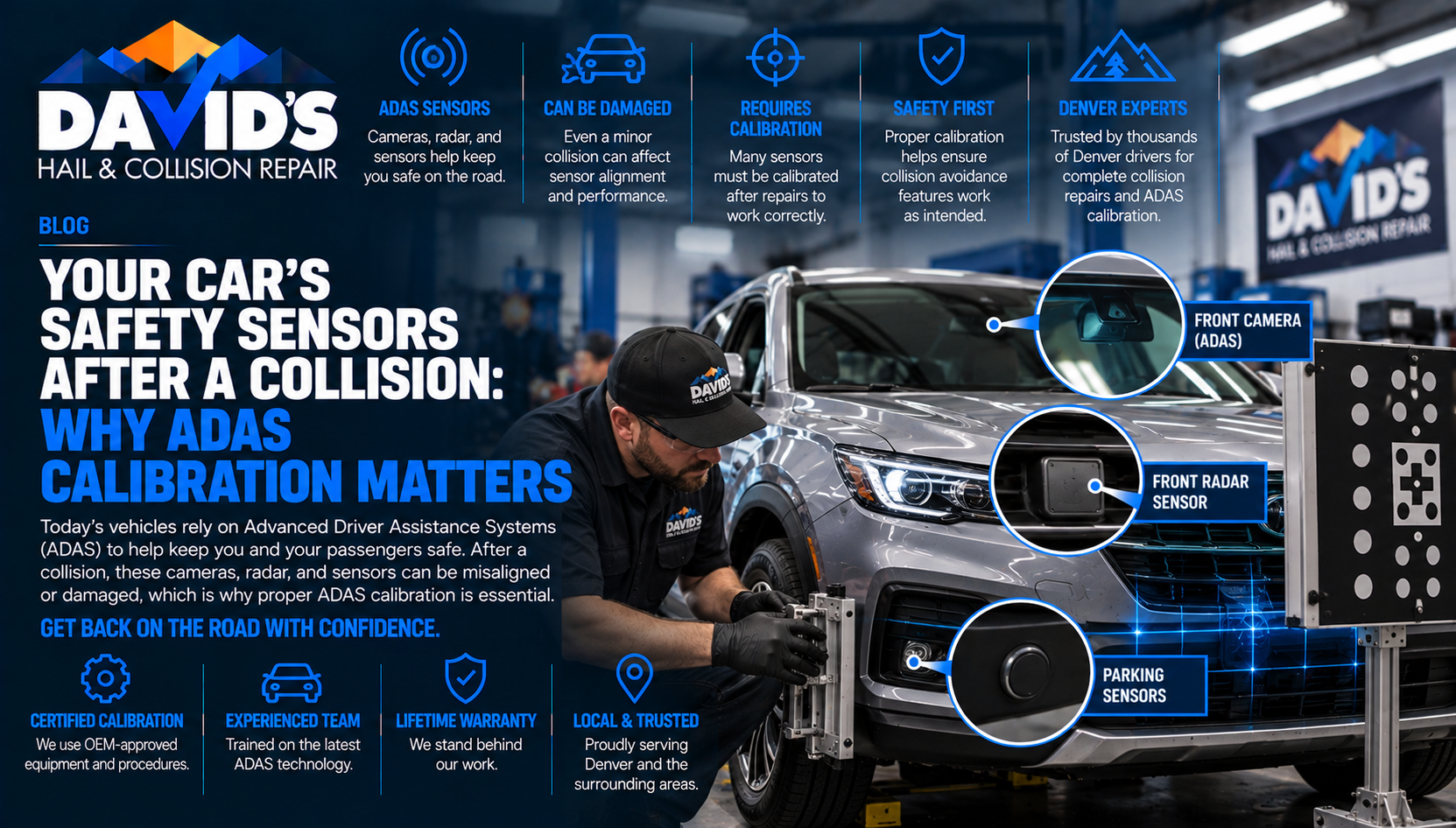
5. Parking Sensors and Blind-Spot Monitoring Damage
Many newer vehicles rely on cameras, radar, and electronic sensors mounted near the rear bumper.
These systems may support:
- Rear parking assistance
- Blind-spot monitoring
- Rear cross-traffic alerts
- Automatic emergency braking
- Parking cameras
- Other advanced driver-assistance features
A rear-end collision can damage a sensor, its mounting bracket, or the surrounding components.
Even when the sensor itself survives, changes to its mounting position may affect its operation.
A sensor doesn’t necessarily have to display a warning light to have been affected by an accident.
Depending on the vehicle and repair, diagnostic scanning, inspection, or calibration may be required under manufacturer procedures.
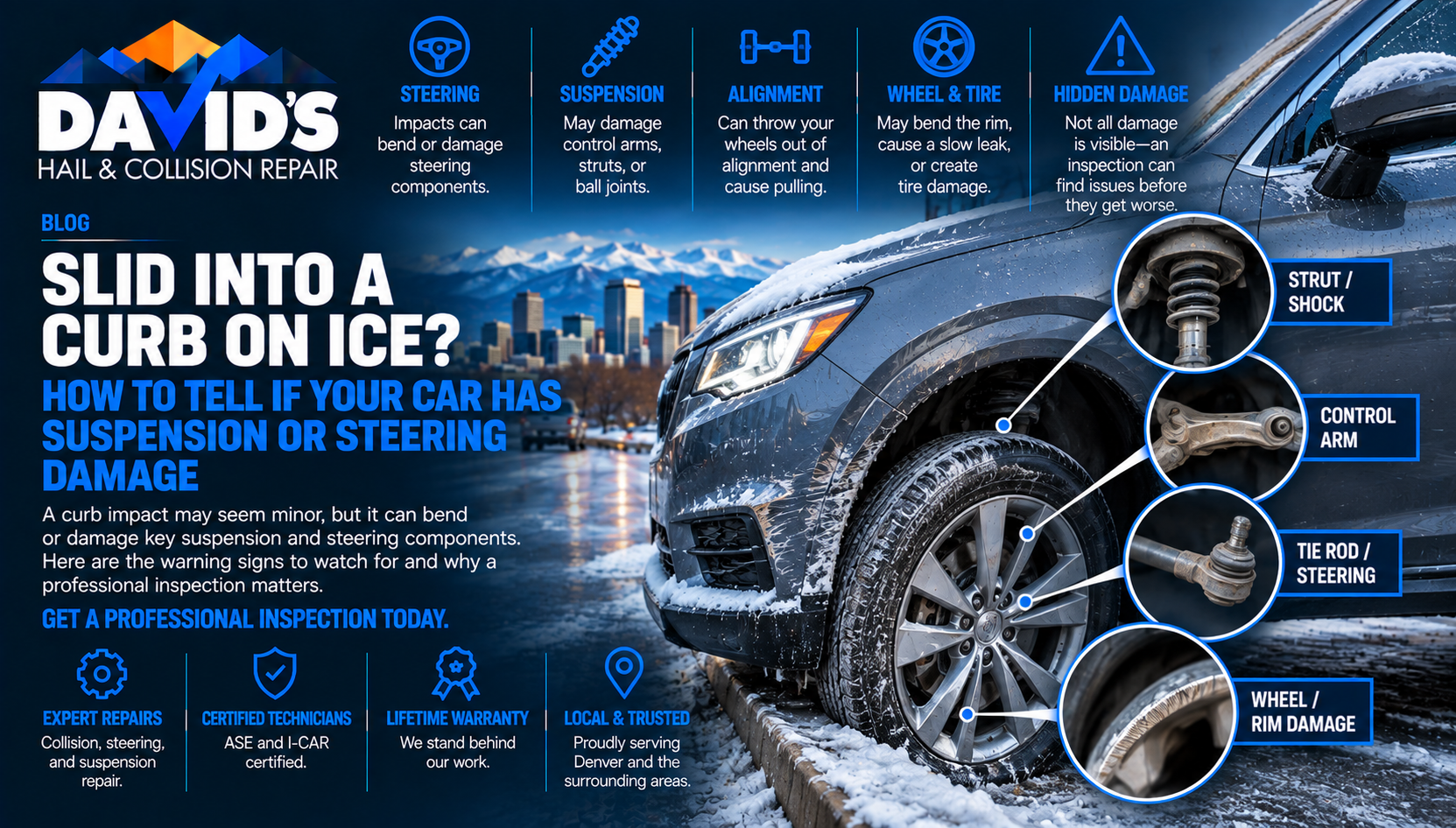
6. Rear Wheel and Suspension Damage
Although rear-end collisions primarily affect the bumper and body structure, certain impacts can also affect the rear wheels or suspension.
This is particularly relevant when a vehicle is pushed into a curb, another vehicle, or an obstacle.
Possible symptoms include:
- Vehicle pulling to one side
- Unusual tire wear
- Steering wheel no longer centered
- Vibration while driving
- Unusual noises over bumps
- Changes in handling
If your vehicle begins driving differently after an accident, don’t assume it simply needs a wheel alignment.
Damaged suspension components may need to be identified and repaired before alignment can be completed properly.
Is It Safe to Drive After Being Rear-Ended?
It depends on the severity of the collision and the condition of the vehicle. Visible damage alone isn’t enough to determine whether a car is safe to drive.
A minor cosmetic scrape is very different from an impact that damages the bumper reinforcement, exhaust, suspension, lighting, or underlying structure.
Avoid driving and arrange professional assistance if you notice:
- Loose or dragging bumper components
- Fluid leaks
- Damaged or rubbing tires
- Significant steering or handling changes
- Exhaust fumes entering the cabin
- Broken lights that make the vehicle unsafe or unlawful to operate
- A trunk or liftgate that won’t latch securely
- Smoke, unusual electrical behavior, or other serious warning signs
When you’re unsure whether the vehicle is safe, having it towed for inspection is the safer option.
Why Icy Roads Make Rear-End Collisions More Common
Denver winters create challenging driving conditions, particularly during sudden temperature drops, overnight freezing, and snowstorms.
Bridges, overpasses, shaded intersections, and untreated roads can become slippery even when nearby pavement appears relatively clear.
When traction decreases, stopping distances increase.
Drivers who follow too closely, brake suddenly, or fail to adjust their speed can lose control before reaching an intersection or stopped traffic.
Rear-end collisions are especially concerning because the driver being struck may have little opportunity to avoid the impact.
And while the accident may happen at a relatively low speed, the resulting damage still deserves a proper inspection.
What Should You Do After a Rear-End Collision in Denver?
If another vehicle hits you from behind during icy or snowy conditions, take these steps.
1. Make Sure Everyone Is Safe
Check for injuries and call 911 when necessary.
If the vehicles can be moved safely and doing so is appropriate, get out of active traffic.
Be especially cautious around icy intersections, highway shoulders, and areas with poor visibility.
2. Document the Accident
When it’s safe, take photographs of:
- Damage to both vehicles
- Vehicle positions
- License plates
- Road conditions
- Snow or ice near the accident scene
- Traffic signs and signals
- Any visible debris
Also exchange the required driver and insurance information.
3. Report the Accident as Required
Follow applicable Colorado accident-reporting requirements and contact your insurance company as appropriate.
Keep your claim number and adjuster information available for the repair process.
4. Schedule a Professional Collision Inspection
Don’t rely solely on a quick visual assessment of the rear bumper.
A qualified auto body shop can evaluate visible damage and determine whether further inspection or disassembly is necessary.
5. Review Your Repair and Insurance Options
An insurance company’s initial estimate may not include damage hidden behind exterior components.
If additional accident-related damage is discovered during the repair process, the repair facility can document it and submit a supplement to the insurer for review.
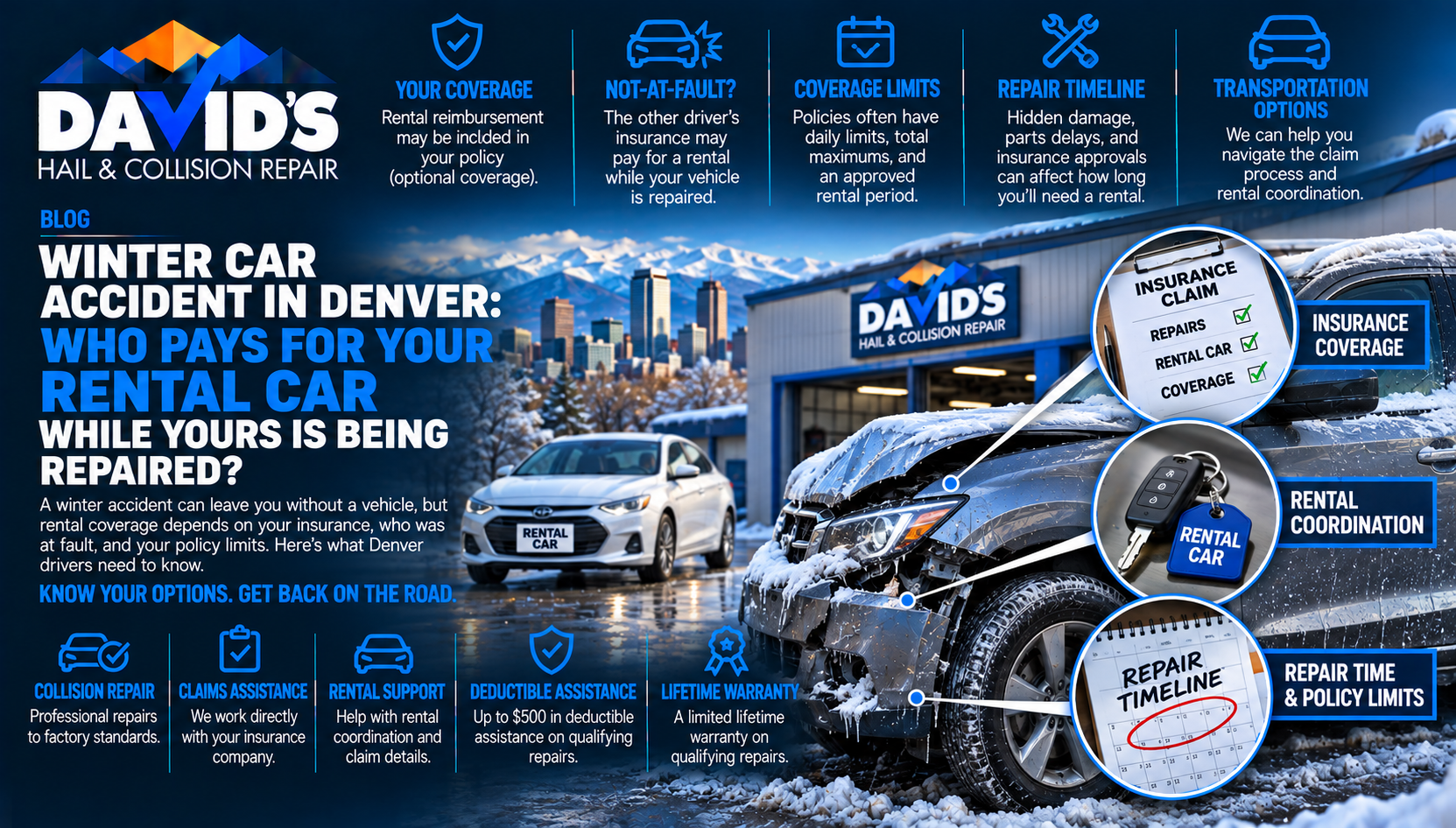
What If the Insurance Estimate Doesn’t Include Hidden Damage?
This is one of the most common concerns after a collision.
An initial insurance estimate is often based on the damage visible during the first inspection.
However, certain components cannot be fully evaluated until the damaged area is disassembled.
For example, removing the rear bumper cover may reveal damaged reinforcement components, brackets, wiring, or structural areas.
When legitimate additional damage is identified, David’s Hail & Collision Repair can document the findings and coordinate with the insurance carrier through the supplemental estimate process.
Our Insurance Claims Assistance service helps customers navigate repair documentation, adjuster communication, and supplements.
Why Choose a Professional Collision Repair Shop?
A rear-end collision can involve considerably more than replacing a bumper cover.
Modern vehicle repairs may require specialized equipment, structural measurements, manufacturer repair information, electronic diagnostics, and sensor calibration.
Choosing an experienced collision repair facility helps ensure the repair plan addresses the damage identified during inspection rather than only the most obvious cosmetic issues.
David’s Hail & Collision Repair provides:
- ASE and I-CAR certified technicians
- Professional collision and auto body repair
- Bumper and body-panel repair
- Structural damage evaluation and repair
- Insurance claims assistance
- Insurance supplement coordination
- Limited lifetime warranty on qualifying repairs
- A+ Better Business Bureau rating
- Free damage inspections
- English and Spanish-speaking customer assistance
Learn more about our Collision Repair services.
Rear-End Collision Repair in Denver and Surrounding Areas
David’s Hail & Collision Repair is located in Englewood, Colorado, and serves drivers throughout the Denver metro area, including Denver, Aurora, Lakewood, Littleton, Centennial, and Highlands Ranch.
Whether your vehicle was rear-ended at an icy intersection, in stop-and-go highway traffic, or in a snow-covered parking lot, our team can inspect the damage and explain the appropriate repair options.
Schedule Your Free Rear-End Collision Damage Inspection
A damaged bumper doesn’t always tell the full story of a rear-end accident.
If your vehicle was rear-ended on an icy road, don’t assume the damage is minor simply because the car still drives.
David’s Hail & Collision Repair can inspect your vehicle, document accident-related damage, explain the repair process, and help coordinate with your insurance company when applicable.
Call (303) 815-3854 or schedule your free inspection online.