




Hidden Hail Damage: Why Your Car May Have More Damage Than You Can See
After a Colorado hailstorm, most drivers walk around their vehicle looking for obvious dents.
You may notice a few marks on the hood or roof, but everything else looks fine. The paint isn’t cracked, the vehicle drives normally, and from a few feet away, the damage may barely be noticeable.
That doesn’t necessarily mean your vehicle escaped with only minor damage.
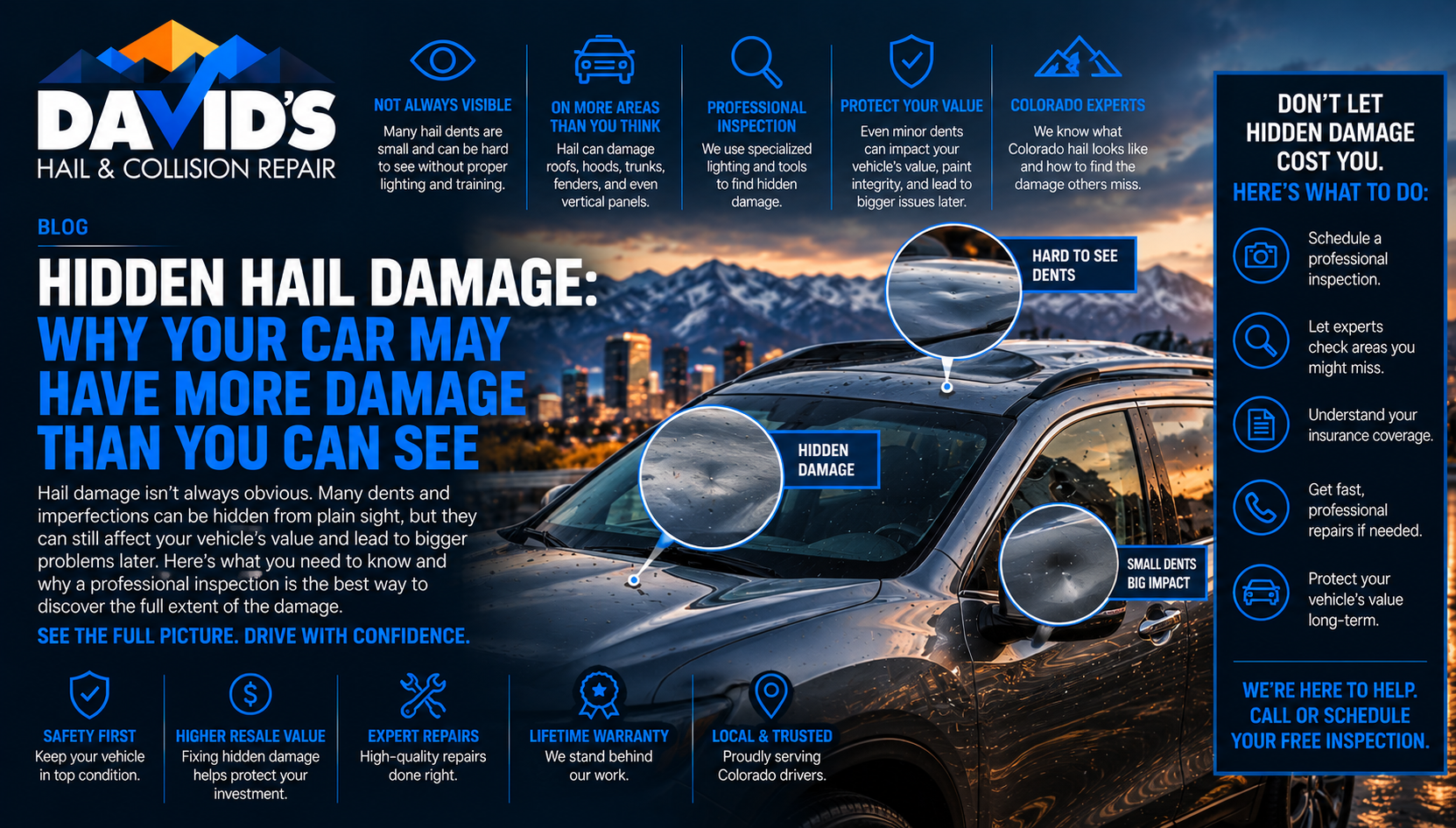
Hail damage can be surprisingly difficult to see without the proper lighting and inspection techniques. What appears to be a handful of dents in your driveway can sometimes turn out to be significantly more damage once the vehicle is inspected professionally.
If your vehicle was caught in a hailstorm anywhere around Denver or the surrounding metro area this summer, here’s why a professional hail damage inspection can be worthwhile even when the damage doesn’t look severe.
Why Is Hail Damage So Hard to See?
Vehicle panels are designed with curves, body lines and reflective surfaces that can make small dents difficult to identify.
Lighting also makes a major difference.
Under bright sunlight, shade, parking garage lighting or normal household lighting, subtle dents can blend into reflections on the vehicle’s paint.
The color of your vehicle can make a difference as well. Certain paint colors and finishes may make shallow dents harder to recognize with the naked eye.
Professional Paintless Dent Repair technicians use specialized lighting and reflection boards that reveal distortions in the metal.
Instead of simply looking for an obvious dent, technicians can see how reflected lines move across the surface of the panel. Even subtle changes in those reflections can reveal damage that would otherwise be easy to miss.
Your Vehicle May Have More Hail Dents Than You Think
One of the biggest surprises for vehicle owners after a hail inspection is the number of dents technicians actually find.
You might see five or ten dents on the hood.
Under proper inspection lighting, there may be dozens.
The same thing can happen across the roof, trunk, doors and other panels.
Hailstorms don’t typically strike one isolated area of a vehicle. Depending on the direction of the wind and where the vehicle was parked, multiple exterior panels may be affected.
That’s why estimating hail damage based only on the dents you can see in your driveway can significantly underestimate the extent of the damage.
Where Does Hidden Hail Damage Commonly Occur?
Some areas of a vehicle naturally make hail damage easier to overlook.
Roof
The roof is one of the most commonly damaged areas during a hailstorm, but it’s also one of the hardest areas for vehicle owners to inspect.
Unless you’re standing above the vehicle with good lighting, shallow roof dents may be almost impossible to see.
Hood
Hood damage is often easier to spot, but smaller dents can disappear into reflections from the sky, trees and surrounding buildings.
A professional inspection can reveal damage across areas of the hood that initially appear unaffected.
Trunk or Liftgate
Sedans, SUVs and crossovers can sustain significant hail damage to the trunk lid or liftgate.
The angles and body lines on these panels can make smaller dents difficult to identify.
Roof Rails and Body Lines
Hail can strike reinforced areas and body lines where dents may be less obvious but more challenging to repair.
The location of a dent can be just as important as its size when determining the appropriate repair method.
Doors and Fenders
Wind-driven hail doesn’t only fall straight down.
During strong Colorado thunderstorms, hail can strike the sides of a vehicle as well, damaging doors, quarter panels and fenders.
Hail Can Damage More Than Sheet Metal
Most people think of hail damage as dents in the metal body panels.
But a severe hailstorm can affect other exterior components too.
Depending on the size and intensity of the hail, technicians may inspect:
- Windshields and automotive glass
- Headlights and taillights
- Exterior trim
- Moldings
- Mirrors
- Plastic components
- Roof-mounted components
This is another reason a complete inspection is more useful than simply counting the visible dents on the hood.
Why Proper Lighting Matters During a Hail Inspection
Professional hail inspections aren’t performed by simply walking around the vehicle and looking for dents.
Paintless Dent Repair technicians commonly use specialized LED lighting or reflection systems designed to highlight even small changes in the surface of the metal.
When the light reflects across an undamaged panel, the reflection appears smooth and consistent.
When the metal is dented, those reflected lines distort.
This allows a trained technician to identify the location, size and characteristics of individual dents much more accurately than would normally be possible under everyday lighting.
It’s also one reason photographs don’t always show the true extent of hail damage.
Why an Accurate Dent Count Matters
Determining the number and location of hail dents isn’t just about knowing how your vehicle looks.
It’s also an important part of determining how the vehicle should be repaired.
Hail repair estimates may consider factors such as:
- Number of dents
- Size of the dents
- Location of the dents
- Number of damaged panels
- Access behind each panel
- Aluminum versus steel panels
- Damage along body lines
- Condition of the paint
- Required removal and installation of trim or interior components
A vehicle with dozens of shallow dents may require a very different repair process than one with fewer but deeper or sharper impacts.
A thorough inspection gives the repair facility a much better understanding of what will actually be required to restore the vehicle.
What If the Insurance Estimate Missed Some of the Damage?
This can happen.
An initial insurance estimate may not always include every dent or every repair operation ultimately discovered once the vehicle is inspected more thoroughly or disassembled for repair.
That doesn’t automatically mean there’s a problem with your claim.
When additional covered damage or necessary repair procedures are identified, the repair shop can document those items and submit a supplement to the insurance company for review.
David’s Hail & Collision Repair works with insurance companies throughout the repair process and can communicate with the carrier when additional damage or repair requirements are identified.
The insurance company ultimately determines what is covered under your policy.
Can Hidden Hail Damage Be Repaired With Paintless Dent Repair?
Many hail dents can be repaired using Paintless Dent Repair (PDR).
PDR is a specialized repair process that allows trained technicians to carefully manipulate damaged metal back toward its original shape without sanding, body filler or repainting.
When the factory paint remains intact and the metal hasn’t been excessively stretched or severely damaged, PDR can often provide an excellent repair while preserving the vehicle’s original finish.
Whether a particular dent qualifies for PDR depends on several factors, including:
- Dent depth
- Dent size
- Location
- Metal condition
- Paint condition
- Access behind the panel
Damage involving cracked paint, severely stretched metal or certain sharp impacts may require conventional auto body repair instead.
A professional inspection is the best way to determine which repair method is appropriate.
Does Minor Hail Damage Really Need to Be Repaired?
Whether you choose to repair cosmetic hail damage is ultimately your decision, but it’s worth understanding what leaving it unrepaired can mean.
Even relatively small dents can affect the appearance and potential resale or trade-in value of a vehicle.
Unrepaired damage can also complicate matters if the vehicle is caught in another hailstorm later.
If new damage occurs on panels that already contain unrepaired dents, determining which damage belongs to which storm and insurance claim may become more complicated.
You don’t necessarily need to make a repair decision immediately.
But knowing how much damage is actually there gives you the information you need to make that decision intelligently.
Don’t Assume a Quick Walkaround Is Enough
After a hailstorm, checking your vehicle yourself is a good first step.
But don’t assume that what you can see is everything that’s there.
A professional inspection may identify damage that is difficult to detect in normal lighting and help determine:
- How many panels were affected
- Approximately how extensive the damage is
- Whether PDR is appropriate
- Whether conventional repair may be necessary
- Whether the damage may justify an insurance claim
If your vehicle was outside during a significant Colorado hailstorm—even if you only see a few dents—having it inspected can provide peace of mind.
Free Hail Damage Inspections in Englewood and Denver
David’s Hail & Collision Repair provides professional hail damage inspections and repair for drivers throughout the Denver Metro area.
From our Englewood location, we serve customers from Denver, Englewood, Aurora, Lakewood, Littleton and surrounding communities.
Our technicians can thoroughly inspect your vehicle under proper lighting, identify hail damage that may be difficult to see, and explain which repair options are appropriate for your vehicle.
When insurance is involved, our team can also help with the insurance repair process, communicate with your carrier and document additional damage when necessary.
We offer free hail damage inspections, deductible assistance of up to $500 on qualifying repairs, and a lifetime warranty on our repair work.
Schedule Your Free Hail Damage Inspection
If your vehicle was caught in a Colorado hailstorm this summer, don’t rely only on the dents you can see from your driveway.
There may be more damage than you realize.
Schedule a free hail damage inspection with David’s Hail & Collision Repair today. We’ll thoroughly inspect your vehicle, explain what we find and help you understand your repair options before you decide what to do next.