



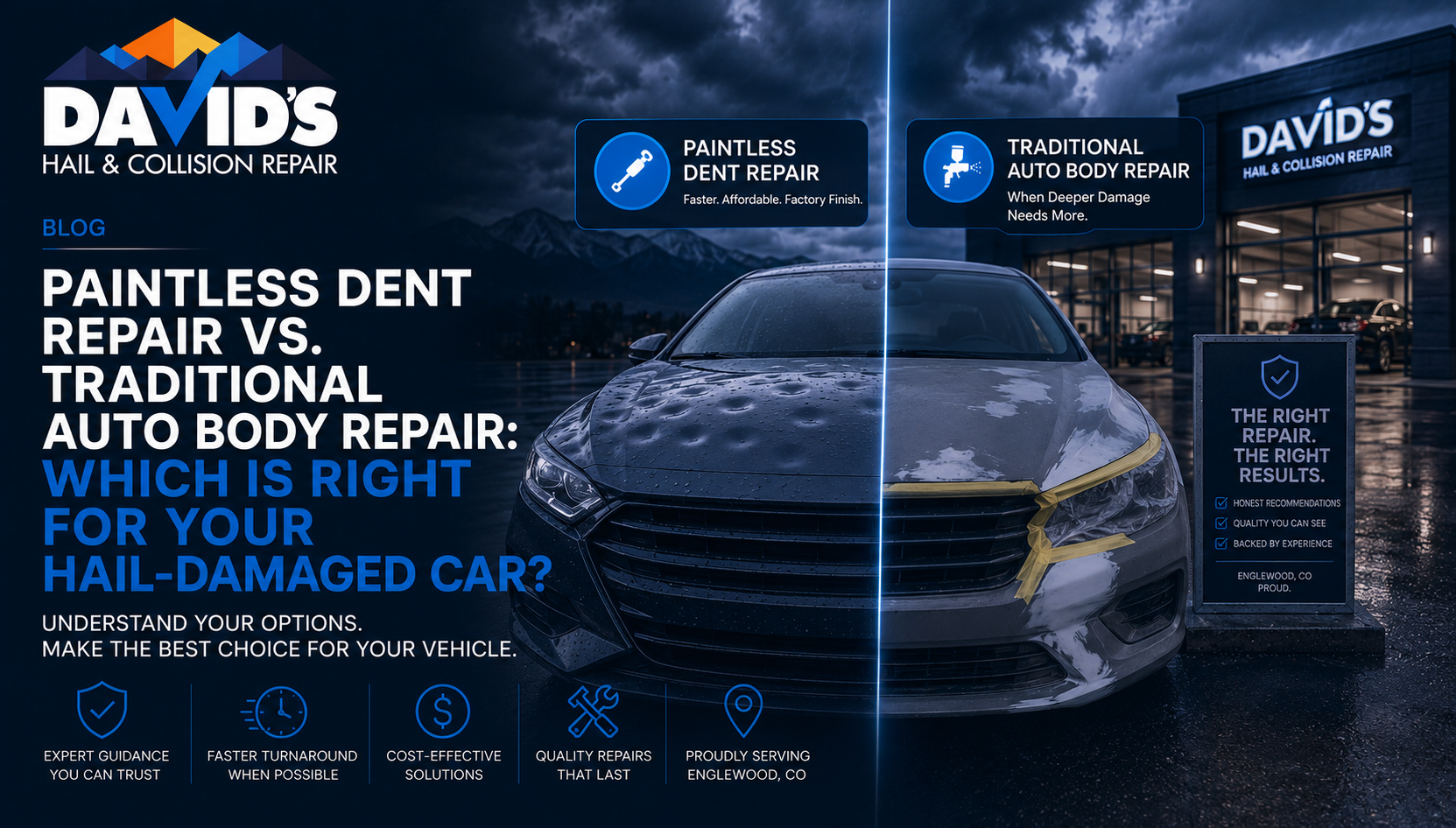
Paintless Dent Repair vs. Traditional Auto Body Repair: Which Is Right for Your Hail-Damaged Car?
If you’ve just had your car assessed after a Colorado hailstorm, you’ve probably heard the term “paintless dent repair” thrown around — maybe by your insurance adjuster, maybe by the shop you called for an estimate. But it’s not always obvious when PDR is actually the right call versus when your vehicle needs traditional bodywork instead. Understanding the difference can save you money, protect your resale value, and help you ask the right questions before you commit to a repair.
What Paintless Dent Repair Actually Does
Paintless dent repair is exactly what it sounds like: removing dents without touching the paint. A trained technician accesses the back side of a dented panel — through existing gaps, removed trim, or occasionally a small access point — and carefully massages the metal back into its original shape using specialized tools. Because the factory paint and clear coat are never sanded, filled, or resprayed, the panel keeps its original finish from the factory floor.
This isn’t a shortcut or a lesser repair. For the kind of shallow, rounded dents hail typically produces, PDR is widely considered the preferred repair method — not just the cheaper one.
When Traditional Repair Is Actually Necessary
PDR has real limits, and a reputable shop will tell you when you’ve hit them rather than trying to force a PDR fix that won’t hold up. Traditional bodywork — filling, sanding, and repainting — becomes necessary when:
- The paint itself is cracked or chipped, not just dented underneath
- A dent sits too close to a panel’s edge or a body line for a technician to access properly
- The metal has stretched rather than just dented, which happens with unusually large hail or a particularly hard impact
- Multiple overlapping dents have essentially collapsed a section of the panel
In these cases, trying to force PDR can leave a panel looking uneven or cause the repair to fail down the road. A shop that pushes PDR on damage it isn’t suited for isn’t doing you a favor — they’re setting up a comeback repair.
Why the Distinction Matters for Your Wallet
Cost is the most obvious difference. PDR is typically less labor-intensive than stripping a panel down to bare metal, filling, priming, and repainting — which means it’s usually faster and cheaper, both for you and your insurance company. That’s part of why adjusters generally approve PDR first when it’s viable.
But cost isn’t the only factor worth caring about.
Why It Matters for Resale Value
This is the part a lot of drivers don’t think about until they’re trying to sell or trade in the vehicle. A panel that’s been resprayed shows up differently than an untouched factory panel under paint-thickness testing — the tool used by savvy used car buyers, dealers, and appraisers to check whether a vehicle has been repainted. A PDR repair generally passes this test cleanly, since nothing was ever removed or resprayed. A traditional repair, done well, can still look great — but it will typically register as repainted work if someone checks.
Neither outcome is a dealbreaker on its own. But if two otherwise identical vehicles are being compared, the one with an all-original finish (thanks to PDR) tends to hold a slight edge in resale conversations, especially with more detail-oriented buyers.
What to Ask Your Shop
Before agreeing to any repair plan, it’s worth asking directly:
- Which panels qualify for PDR, and which don’t?
- If a panel needs traditional repair, why specifically — is the paint cracked, or is it an access issue?
- Will the estimate reflect PDR pricing on the panels that qualify, rather than defaulting everything to a full repaint?
A shop that can answer these clearly, panel by panel, is one that’s actually assessing your vehicle rather than applying a blanket approach to every hail claim that comes through the door.
The Bottom Line
Most hail damage is a strong candidate for paintless dent repair, and for good reason — it’s faster, generally less expensive, and preserves your vehicle’s original factory finish. But not every dent qualifies, and a shop that’s honest about which panels need traditional repair — instead of pushing PDR everywhere or defaulting to a full repaint out of convenience — is the one actually looking out for your vehicle and your wallet.
If you’re not sure which category your hail damage falls into, a free inspection is the fastest way to find out. Our technicians will walk you through exactly which panels qualify for PDR and which don’t, and why, before any work begins.