




DEDUCTIBLE ASSISTANCE AVAILABLE FOR QUALIFIED REPAIRS

HAIL DAMAGE REPAIR
Hail Damage Repair
Hail can damage dozens or even hundreds of areas across a vehicle in a matter of minutes. What looks like a handful of dents in normal lighting may actually extend across the hood, roof, trunk, doors, fenders, quarter panels, trim, and other surfaces.
David’s Hail & Collision Repair provides professional hail damage repair and paintless dent repair (PDR) for vehicle owners throughout the Denver metro area. Our ASE and I-CAR certified technicians evaluate the entire vehicle, determine which damage can be repaired using PDR, identify areas requiring conventional auto body repair, and develop a complete repair plan.
Whenever the damage allows, paintless dent repair can restore hail-damaged panels while preserving the vehicle’s original factory paint.
Schedule Your Free Inspection Today
What Is Hail Damage Repair?
Hail damage repair is the process of restoring vehicle panels, trim, glass, and other components damaged during a hailstorm.
The appropriate repair method depends on several factors, including:
- Size and depth of the dents
- Number of dents
- Location of the damage
- Panel material
- Accessibility behind the panel
- Condition of the paint
- Damage near panel edges and body lines
- Cracked or chipped paint
- Broken trim, moldings, or glass
- Previous repairs to the affected panels
For many vehicles, the majority of hail dents can be repaired using paintless dent repair.
More severe damage may require a combination of PDR and traditional auto body repair.
The important part is determining the correct repair method for each damaged area rather than treating every hail-damaged vehicle the same way.
What Is Paintless Dent Repair?
Paintless dent repair, commonly called PDR, is a specialized repair technique that reshapes damaged metal without conventional body filler or repainting when the original paint remains intact.
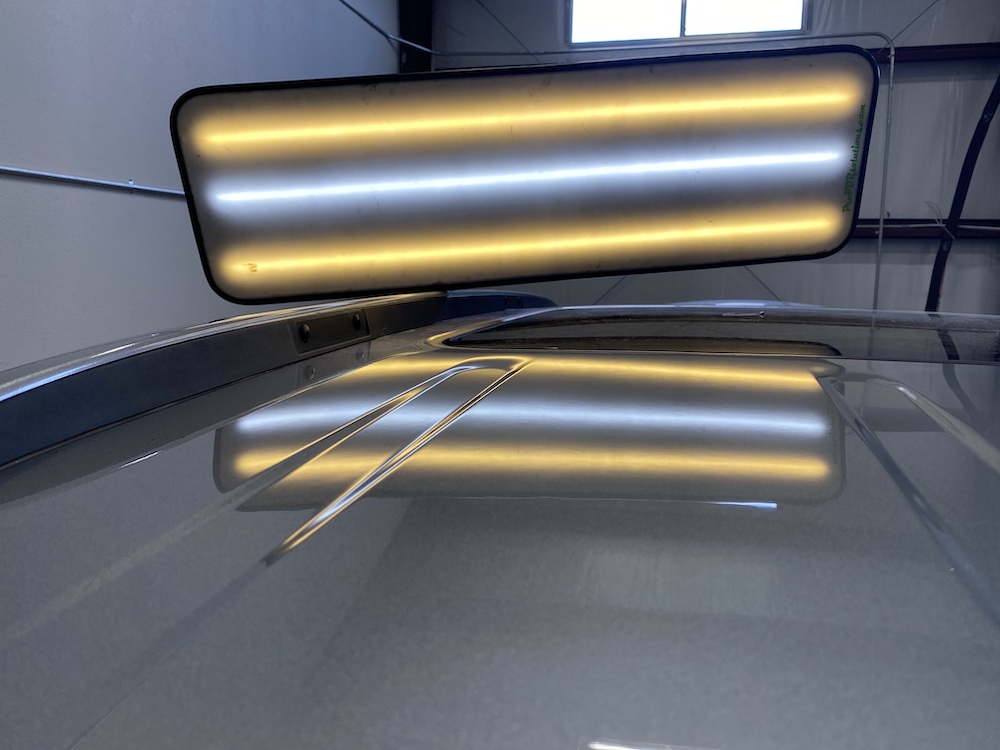
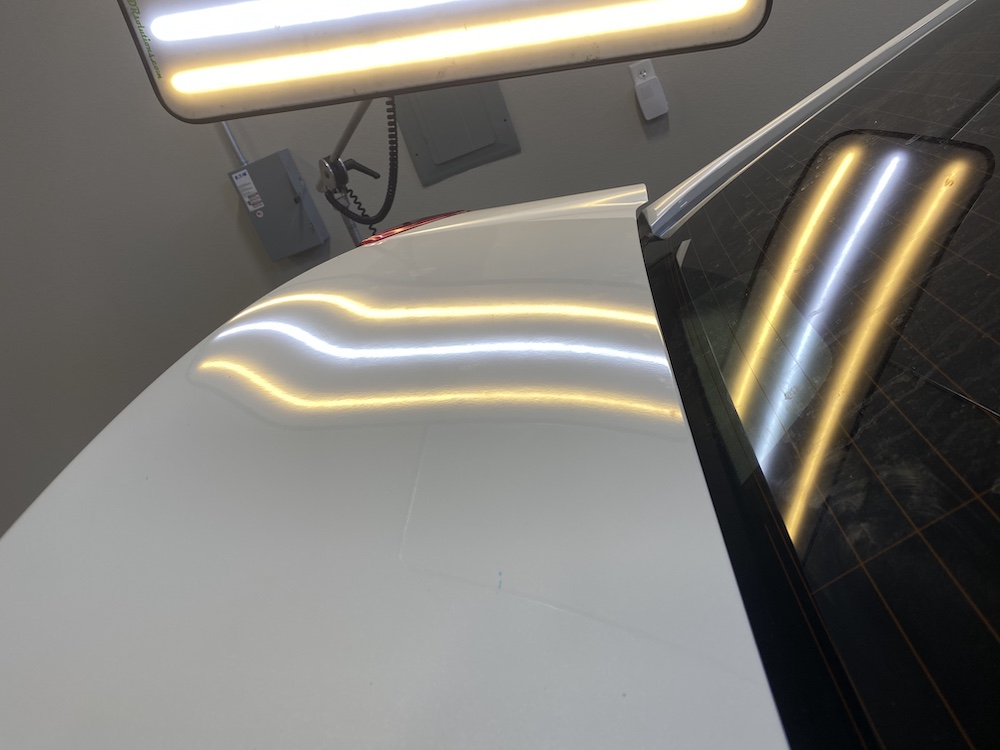
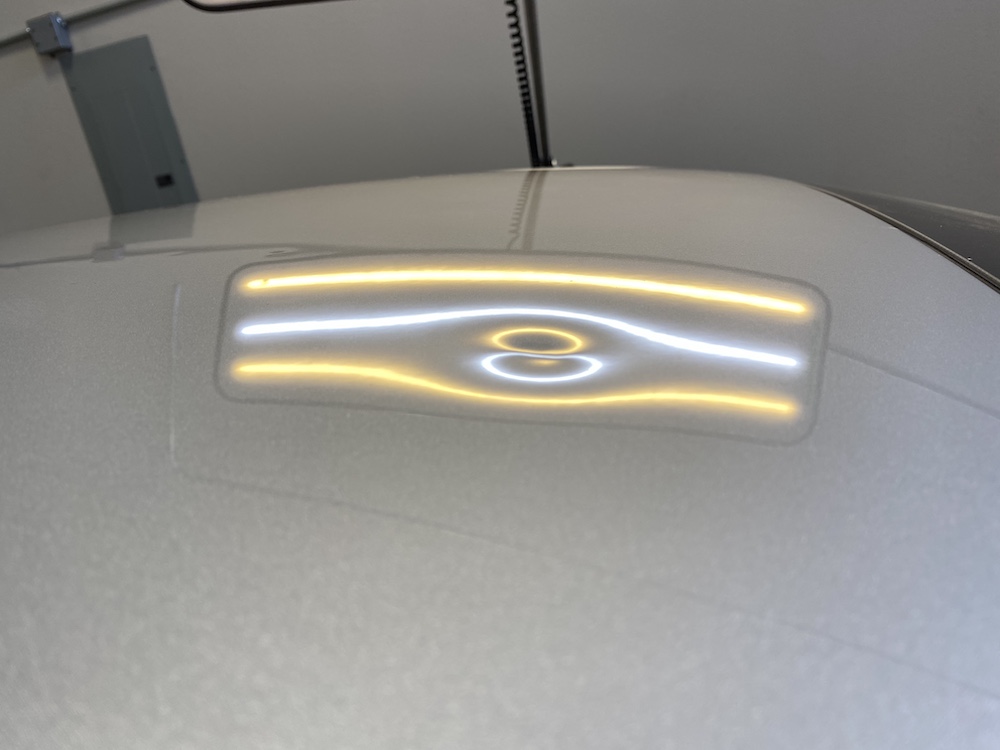
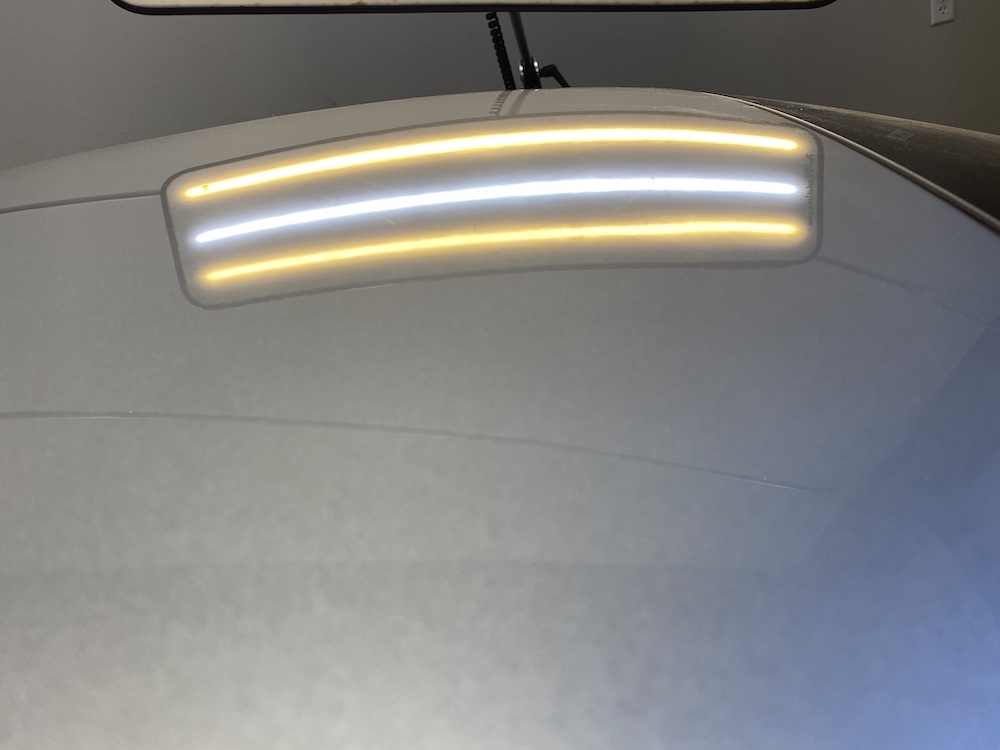
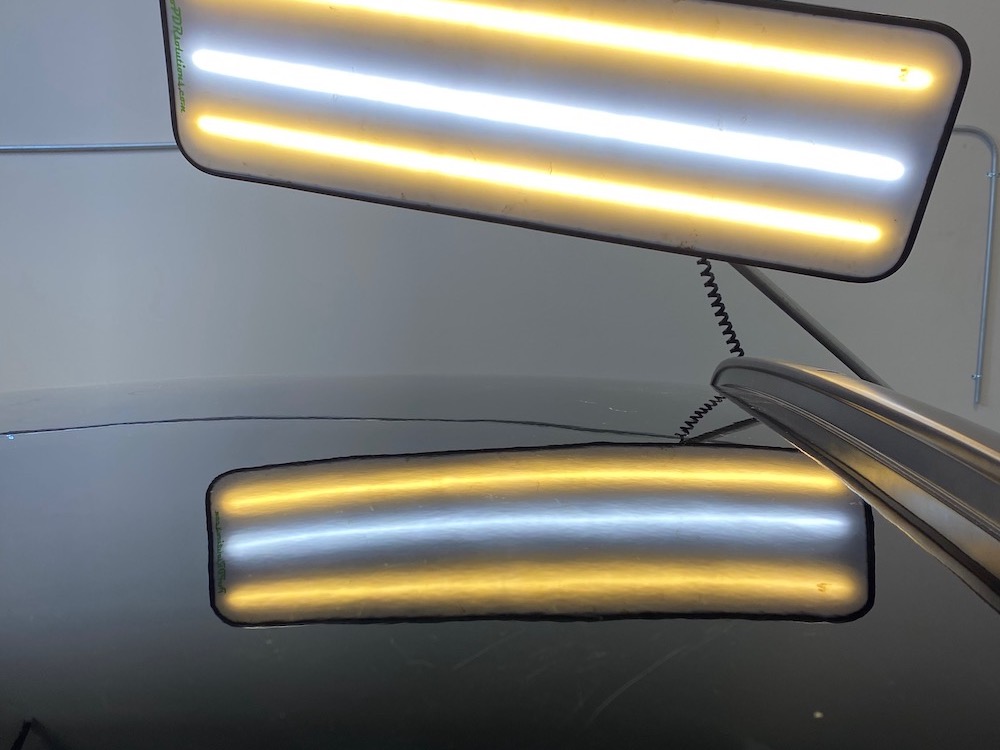
Technicians use specialized tools and lighting to identify subtle changes in the panel’s surface and carefully manipulate the metal back toward its original shape.
Depending on the location of the dent, technicians may work from behind the panel or use specialized techniques from the exterior surface.
Because the original paint isn’t removed when PDR is appropriate, it can be an excellent method for repairing hail damage.
Why PDR Is Ideal for Many Hail-Damaged Vehicles
Hailstorms frequently produce the exact type of damage PDR was designed to repair: numerous dents in otherwise intact painted panels.
When appropriate, paintless dent repair offers several advantages.
Preserves the Factory Finish
Traditional body repair can involve sanding, body filler, primer, paint, and clear coat.
PDR reshapes the original panel without repainting it when the factory finish remains intact.
That allows the vehicle to retain more of its original factory paint.
Repairs the Original Panel
Instead of automatically replacing a hail-damaged hood, roof, door, or other panel, PDR may allow technicians to restore the original component.
Avoids Unnecessary Refinishing
If a dent can be properly repaired without disturbing the paint, there is no reason to refinish that area simply because the panel was dented.
Works Well for Multiple Dents
A severe hailstorm can leave dozens or hundreds of dents across a vehicle.
Experienced PDR technicians can systematically work across damaged panels to restore large numbers of dents while maintaining the original finish.
When Paintless Dent Repair May Not Be Appropriate
PDR is extremely effective, but it isn’t the correct solution for every type of hail damage.
Traditional body repair or panel replacement may be necessary when:
- Paint has cracked or chipped
- Metal has been severely stretched
- A dent is extremely sharp or deep
- Damage occurs in certain reinforced areas
- A panel has significant previous bodywork
- A damaged component cannot be accessed or repaired appropriately
- The panel itself is too severely damaged
- Trim, moldings, glass, or other components require replacement
Some hail-damaged vehicles need both PDR and conventional collision repair techniques.
A professional hail inspection determines which repair method is appropriate for each part of the vehicle.
Hail Damage Can Be Hard to See
Hail damage is often much more extensive than it appears in a driveway or parking lot.
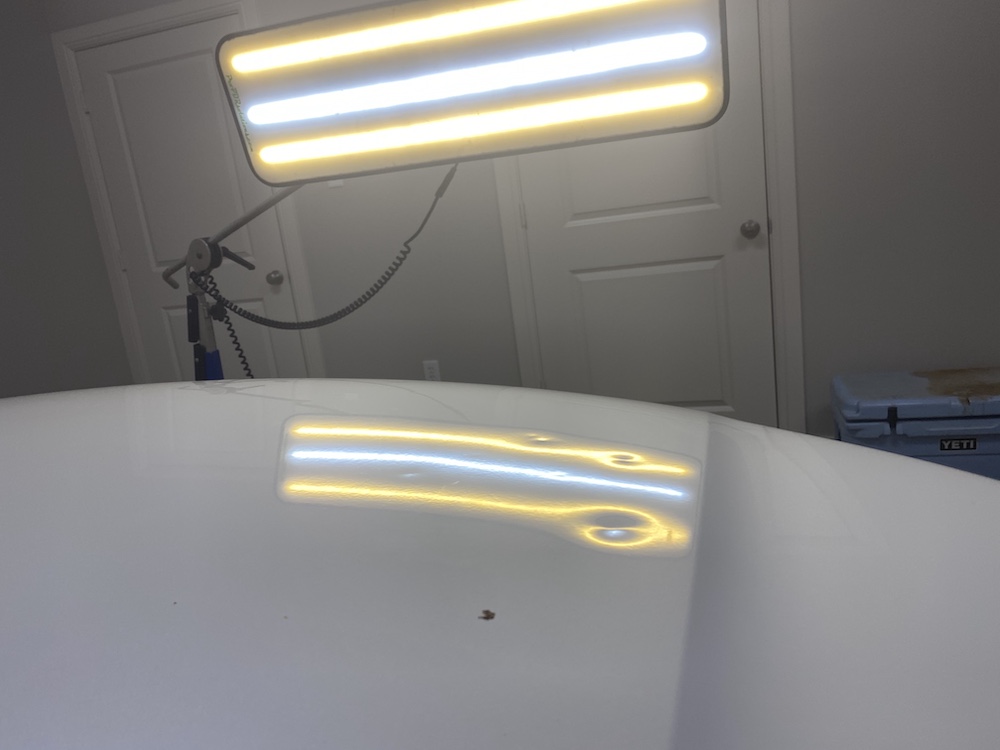
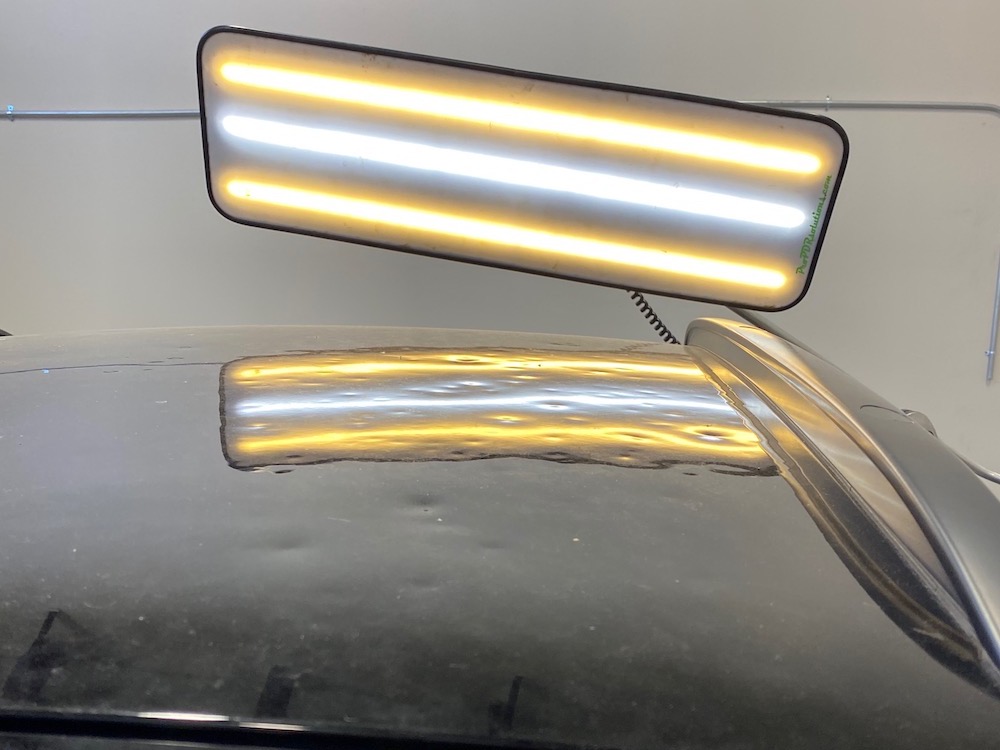
Small dents can disappear in shadows, reflections, metallic paint, or normal overhead lighting.
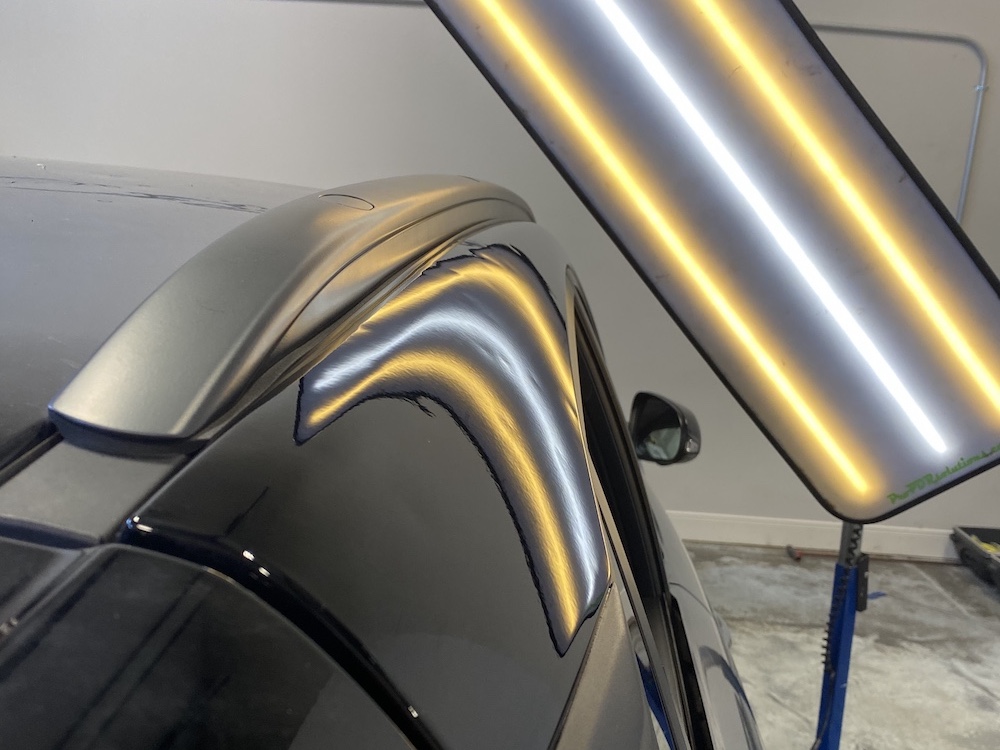
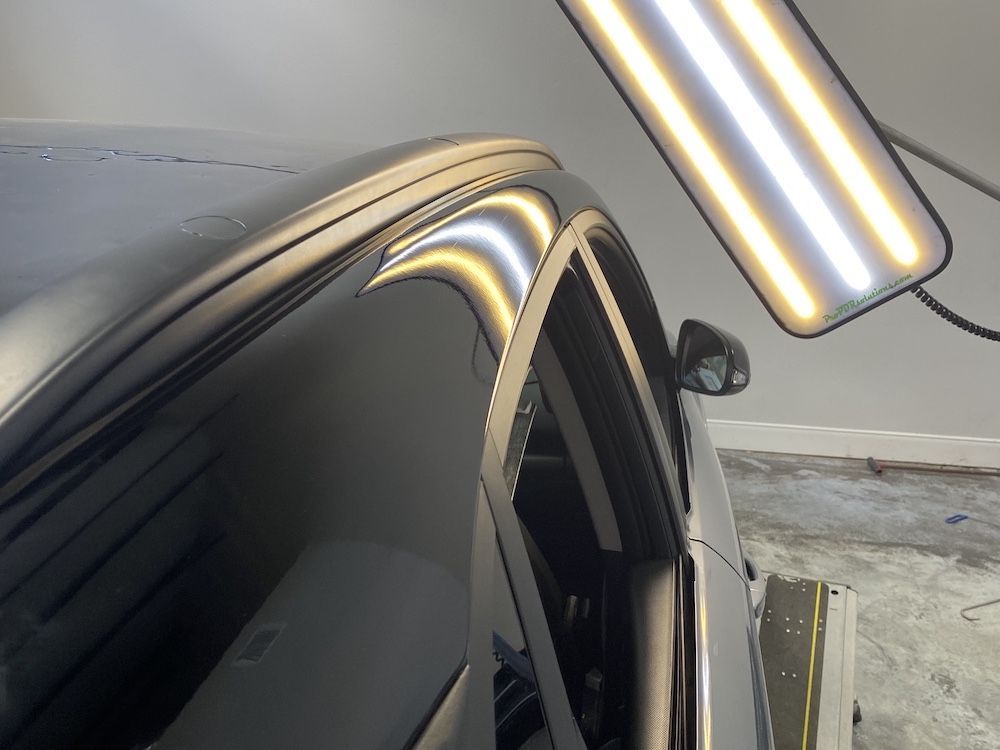
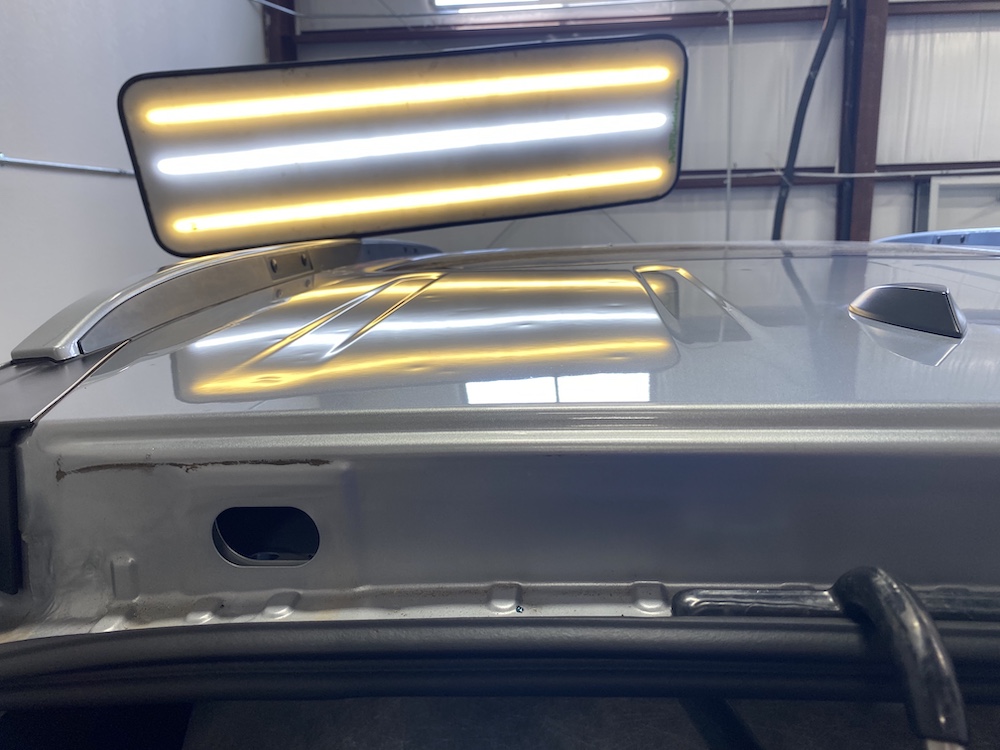
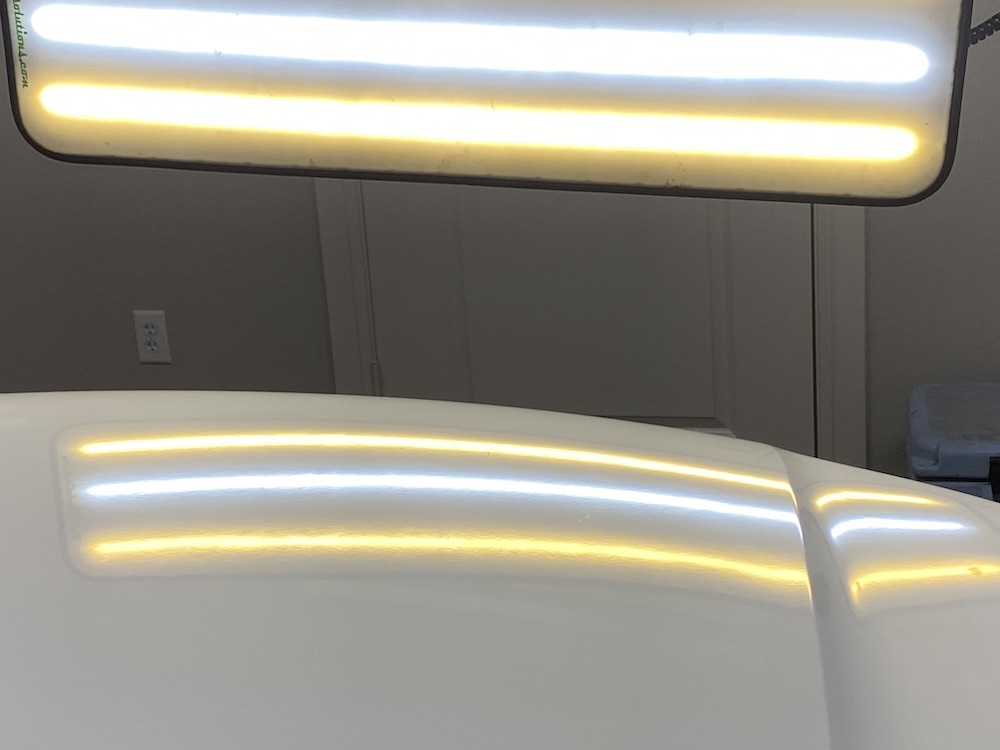
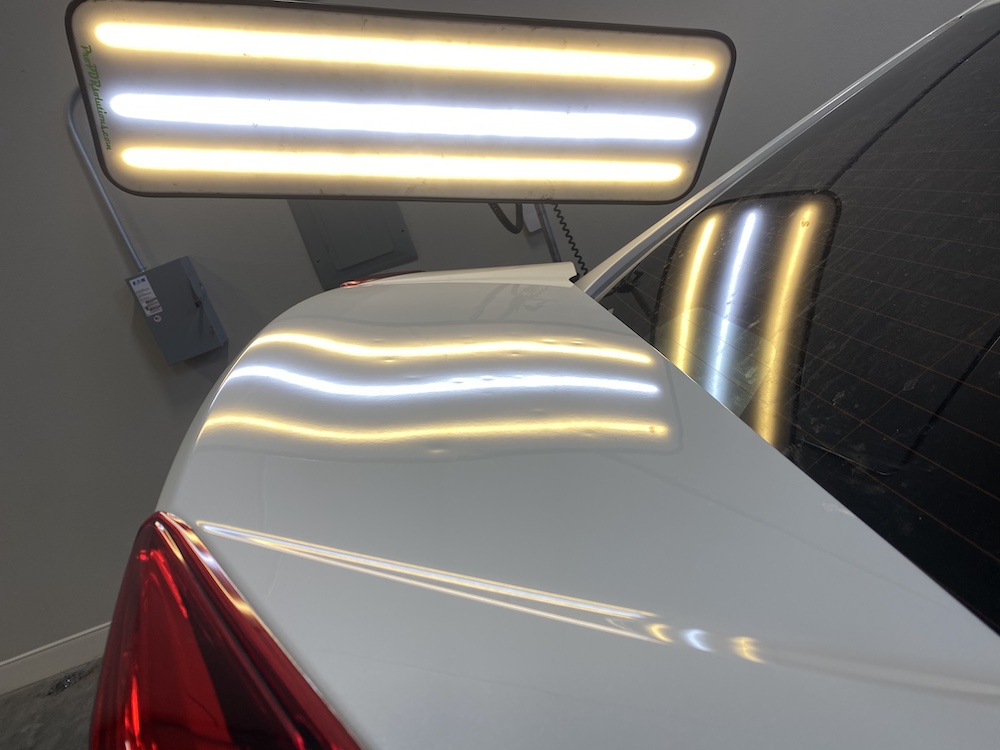
Professional PDR technicians use specialized lighting designed to reveal distortions in the panel’s reflection. That makes it possible to identify and evaluate dents that are difficult to see under ordinary conditions.
Common hail-damaged areas include:
- Hood
- Roof
- Trunk lid or liftgate
- Fender tops
- Doors
- Quarter panels
- Roof rails
- Pillars
- Trim and moldings
- Mirrors
- Headlights and taillights
- Windshield and other glass
That’s why a complete hail damage inspection should evaluate the entire vehicle rather than just counting the obvious dents on the hood.
Understanding Hail Damage Severity
Not all hail damage is the same.
A storm producing small hail may leave relatively shallow dents across several panels. Larger hailstones can create deeper dents, damage body lines, crack paint, break trim, and damage glass.
Repair complexity is influenced by both the number and severity of dents.
A vehicle with 100 shallow dents isn’t necessarily more difficult to repair than one with 30 severe dents located on difficult body lines or reinforced areas.
Technicians consider the complete damage pattern when developing the repair plan.
Aluminum and High-Strength Vehicle Panels
Modern vehicles aren’t all constructed from traditional mild steel.
Manufacturers increasingly use aluminum, high-strength steels, composites, and other materials to reduce weight while maintaining structural performance.
These materials can respond differently to hail impacts and repair techniques.
PDR technicians need to understand how the specific panel material behaves and adjust their repair methods accordingly.
This is another reason hail repair is a specialized skill rather than simply pushing dents out from behind the panel.
Hail Damage on Body Lines and Panel Edges
Dents located directly on body lines can be more challenging than dents on broad, relatively flat areas of a panel.
Body lines are deliberately shaped features in the vehicle’s design. Restoring them requires the technician to recreate the original contour while also removing the surrounding distortion.
Damage near panel edges can also present additional challenges because the metal may be reinforced or access may be limited.
These dents aren’t automatically impossible to repair with PDR, but they often require more advanced techniques and technician experience.
Hail Damage and Cracked Paint
Paint condition is one of the most important factors in determining whether PDR is appropriate.
If hail dents the metal but the paint and clear coat remain intact, paintless dent repair may be possible.
If the impact cracks, chips, or otherwise compromises the finish, conventional refinishing may be required after the panel is repaired.
Severe hail damage may therefore involve a combination of:
- Paintless dent repair
- Conventional dent repair
- Panel replacement
- Paint refinishing
- Trim replacement
- Glass replacement
The correct combination depends on the individual vehicle.
Our Hail Damage Repair Process
A thorough hail repair starts with identifying the complete extent of the storm damage.
1. Hail Damage Inspection
We inspect the vehicle panel by panel using appropriate lighting to identify both obvious and subtle hail dents.
Damage is documented so we can determine the scope of the repair.
2. Repair Planning
Each damaged area is evaluated to determine whether PDR, conventional body repair, component replacement, or a combination of methods is appropriate.
3. Insurance Coordination
If the repair involves an insurance claim, our team can assist with documentation and communication with the insurance carrier.
4. Disassembly When Necessary
Certain trim pieces, interior components, lights, liners, or other parts may need to be removed to safely access the back of damaged panels.
5. Paintless Dent Repair
Eligible dents are carefully restored using specialized PDR tools and techniques while preserving the original paint.
6. Conventional Repair When Required
Areas that aren’t appropriate for PDR can be repaired using traditional auto body methods when necessary.
7. Reassembly
Components removed for access are properly reinstalled after repairs are completed.
8. Final Inspection
The vehicle receives a final panel-by-panel inspection before delivery to verify the hail damage addressed in the repair plan has been completed.
Hail Damage Insurance Claims
Hail damage is generally handled under the comprehensive portion of an auto insurance policy, subject to the customer’s specific coverage, deductible, policy terms, and insurer determination.
The claims process can become confusing because the insurance company’s first estimate isn’t always the final repair amount.
Hail dents can be difficult to identify under ordinary lighting, and the full extent of the damage may become clearer during a professional inspection or once components are removed.
David’s Hail & Collision Repair assists customers with the insurance process, including:
- Damage documentation
- Insurance estimates
- Adjuster communication
- Supplemental damage documentation
- Repair authorization coordination
- Questions throughout the repair process
If additional covered damage is identified that wasn’t included in the insurer’s original estimate, documentation can be submitted to the insurance carrier for review as a supplement.
Insurance Estimates vs. Actual Hail Damage
Customers are sometimes surprised when a professional hail repair estimate differs from the insurance company’s initial estimate.
That doesn’t automatically mean either estimate is wrong.
The insurer may have completed an initial inspection under different lighting, based on photographs, or before certain damage was fully identified.
A repair facility evaluates the vehicle from the perspective of actually performing the repair.
Differences may involve:
- Dent quantity
- Dent severity
- Panel access
- Required removal and installation operations
- Damaged moldings or trim
- Broken components
- Conventional repair areas
- Necessary replacement parts
When legitimate differences exist, the supplement process allows the repair facility and insurer to address them.
Deductible Assistance for Hail Repair
David’s Hail & Collision Repair offers up to $500 in deductible assistance on qualifying repairs.
Eligibility can depend on the repair and insurance claim, so customers should speak with our team about their individual situation rather than assuming every repair qualifies for the maximum amount.
For qualifying customers, deductible assistance can significantly reduce the amount paid out of pocket for insured hail damage repairs.
How Much Does Hail Damage Repair Cost?
There is no single price for repairing hail damage.
A vehicle with a handful of shallow dents may require relatively limited work, while a vehicle caught in a severe Colorado hailstorm can have damage across nearly every upward-facing panel.
Hail repair cost can depend on:
- Number of dents
- Dent size
- Dent depth
- Panel location
- Vehicle size
- Panel material
- Body-line damage
- Accessibility
- Paint condition
- Required disassembly
- Broken trim or moldings
- Glass damage
- Conventional body repair
- Replacement panels or components
Significant hail damage can result in repair estimates reaching thousands of dollars or considerably more.
For insured repairs, the customer’s financial responsibility is generally determined by the applicable insurance coverage, deductible, policy terms, and any qualifying assistance—not simply the total repair estimate.
How Long Does Hail Damage Repair Take?
Repair time depends on the extent of the damage and the operations required.
A vehicle with moderate PDR-only damage may require considerably less time than a vehicle needing PDR, conventional body repair, refinishing, replacement parts, and insurance supplements.
Timing can also be affected by:
- Severity of the storm
- Number of damaged panels
- Parts availability
- Insurance approval
- Supplemental estimates
- Required conventional repairs
- Shop volume following a major hailstorm
Large hail events can damage thousands of vehicles across the same region in a short period, which can increase demand for qualified technicians and repair facilities.
After inspecting the vehicle and developing the repair plan, we can provide a more realistic expectation for the repair timeline.
Why Hail Damage Should Be Professionally Inspected
It can be tempting to ignore hail damage if the vehicle still drives normally.
But there are several reasons to have the vehicle inspected.
You May Have More Damage Than You Realize
The dents visible in normal lighting may represent only part of the actual damage.
Insurance Documentation Matters
If an insurance claim is involved, accurately documenting the storm damage helps establish what occurred during that particular event.
Existing Damage Can Affect Future Claims
Previous unrepaired damage can complicate future insurance claims involving the same areas of the vehicle because an insurer may need to distinguish old damage from new damage.
Hail Damage Can Affect Vehicle Value
Visible hail damage can affect resale and trade-in value even when the vehicle remains mechanically sound.
A professional inspection gives you the information needed to make an informed decision about the repair rather than simply guessing at the severity.
Hail Damage and Vehicle Resale Value
A hail-damaged vehicle may operate perfectly while still losing substantial cosmetic value.
Dealers and private buyers typically consider exterior condition when determining what they’re willing to pay for a vehicle.
Numerous dents across the roof, hood, trunk, or body panels can therefore affect:
- Trade-in offers
- Private-party resale value
- Overall vehicle condition assessments
- Buyer perception
Repairing hail damage can restore the vehicle’s appearance while protecting more of its value, particularly when PDR allows the original factory finish to remain intact.
Should You Repair Hail Damage Before Selling or Trading Your Vehicle?
That depends on the vehicle, severity of the damage, insurance coverage, deductible, repair cost, and anticipated value.
If comprehensive insurance covers qualifying hail damage, repairing the vehicle before selling or trading it may make considerably more sense than accepting a reduced value because of unrepaired dents.
However, every situation is different.
The first step should be determining the actual extent of the damage and understanding your insurance coverage before deciding whether to repair, sell, or trade the vehicle.
Can Hail Damage Cause a Vehicle to Be Totaled?
Yes.
A vehicle doesn’t have to be mechanically destroyed to be declared a total loss.
Severe hail can damage numerous panels, glass, trim, lights, and other components. When the cost of properly repairing the vehicle becomes sufficiently high relative to its value and applicable total-loss criteria, the insurer may determine that the vehicle is a total loss.
This is more likely with older or lower-value vehicles that sustain widespread severe hail damage.
The insurance carrier—not the body shop—ultimately makes the total-loss determination under the applicable claim and policy.
Choosing a Hail Damage Repair Shop
Colorado hailstorms can create enormous demand for dent repair almost overnight.
That can also attract temporary repair operations that arrive after major storms and leave when hail season slows down.
Before choosing a hail repair company, consider more than the promise of a fast repair.
Look for:
A permanent local facility.
Know where the business will be if you have a question months after the repair.
Trained technicians.
High-quality PDR requires specialized skills, tools, lighting, and considerable experience.
Insurance experience.
The shop should understand estimates, supplements, adjuster communication, and hail-specific documentation.
The ability to handle more than PDR.
Not every hail-damaged panel qualifies for paintless repair. A full-service body shop can address conventional repairs when necessary instead of forcing every dent into the same solution.
A meaningful warranty.
Understand what the shop actually guarantees after you leave.
An established reputation.
Look at the business itself rather than only advertisements appearing immediately after a storm.
Why Choose David’s Hail & Collision Repair?
David’s Hail & Collision Repair is a year-round auto body and hail repair facility located in Englewood, Colorado.
We’re here before hail season, during hail season, and after the temporary hail operations have moved on.
Customers choose David’s for:
- Professional paintless dent repair
- ASE and I-CAR certified technicians
- Complete hail and collision repair capabilities
- Insurance claims assistance
- Insurance supplement assistance
- Up to $500 in deductible assistance on qualifying repairs
- Limited lifetime warranty on qualifying repairs
- A+ Better Business Bureau rating
- Free hail damage inspections
- English and Spanish-speaking customer assistance
- Permanent Denver metro repair facility
When PDR is the right repair, we use it. When conventional body repair is required, we have the capability to handle that too.
That allows the repair method to be determined by what the vehicle actually needs rather than by the limitations of the shop doing the work.
Hail Damage Repair Throughout the Denver Metro
David’s Hail & Collision Repair is based in Englewood and provides professional hail damage repair for vehicle owners throughout the Denver metro area, including:
Denver • Englewood • Aurora • Lakewood • Littleton • Centennial • Highlands Ranch
Our individual service-area pages provide location-specific information for customers in those communities, while this page serves as our comprehensive resource for understanding hail damage, PDR, insurance claims, and the repair process.
Schedule Your Free Hail Damage Inspection
If your vehicle has been through a hailstorm, don’t rely on what you can see under normal lighting to determine the extent of the damage.
Our team can inspect the entire vehicle, document the damage, explain which areas qualify for paintless dent repair, identify any areas requiring conventional repair, and help you understand the next steps if insurance is involved.
Call David’s Hail & Collision Repair at (303) 815-3854 or schedule your free hail damage inspection online.
Hail Repair FAQs
Insurance checks are typically valid for 180 days, but your estimate is based on current labor and parts rates — waiting can result in higher costs. The sooner you schedule, the smoother the process.
Generally, no. Paintless dent repair does not involve replacing panels or repainting, so it typically does not get recorded on a vehicle history report. This helps preserve your car’s resale value.
If you have comprehensive coverage, the repair cost is typically covered by your insurance minus your deductible. The average full-vehicle hail repair in the Denver metro area runs anywhere from $3,000 to over $9,000 depending on severity — but your out-of-pocket is limited to your deductible, which David’s can help offset through our deductible assistance program.
Your insurance policy includes an “unrepaired damage waiver.” Any previously paid but unrepaired damage will be deducted from future claims on the same vehicle. It’s also worth noting that insurance companies often underwrite their initial estimates — waiting can cost you more in the long run.
Most hail repairs are completed within a week. More extensive damage requiring conventional repairs may take longer, especially if parts need to be ordered or if your insurance adjuster needs to approve a supplement. We’ll give you an estimated timeline upfront.
PDR is a technique where technicians carefully massage dents out from behind the panel without sanding, painting, or replacing parts. It preserves your factory finish and vehicle value. Most hail damage qualifies for PDR, unless the paint is cracked or the dents are too severe — in those cases, conventional repair is used on those specific areas.
No. You have the legal right under Colorado statute 10-4-618 to choose any licensed repair shop you want. Your insurance company cannot force you to use their preferred shop or threaten to deny your claim if you don’t.
No. In Colorado, hail damage is filed under comprehensive coverage, which is classified as an act of nature. By law, insurance companies cannot raise your premiums for a comprehensive claim. Getting your vehicle repaired will not affect your rates.

THE HAIL CLAIM PROCESS
We file your claim, fight for every dent, and restore your vehicle to pre-storm condition — all with up to $500 in deductible assistance on qualifying repairs.