




Insurance Estimate Too Low? What Happens When Your Auto Body Shop Finds More Damage
You filed an insurance claim, an adjuster inspected your vehicle, and the insurance company sent you an estimate.
Then you take the vehicle to a repair shop and hear something you weren’t expecting:
The actual repairs may cost more than the insurance estimate.
That doesn’t necessarily mean something went wrong.
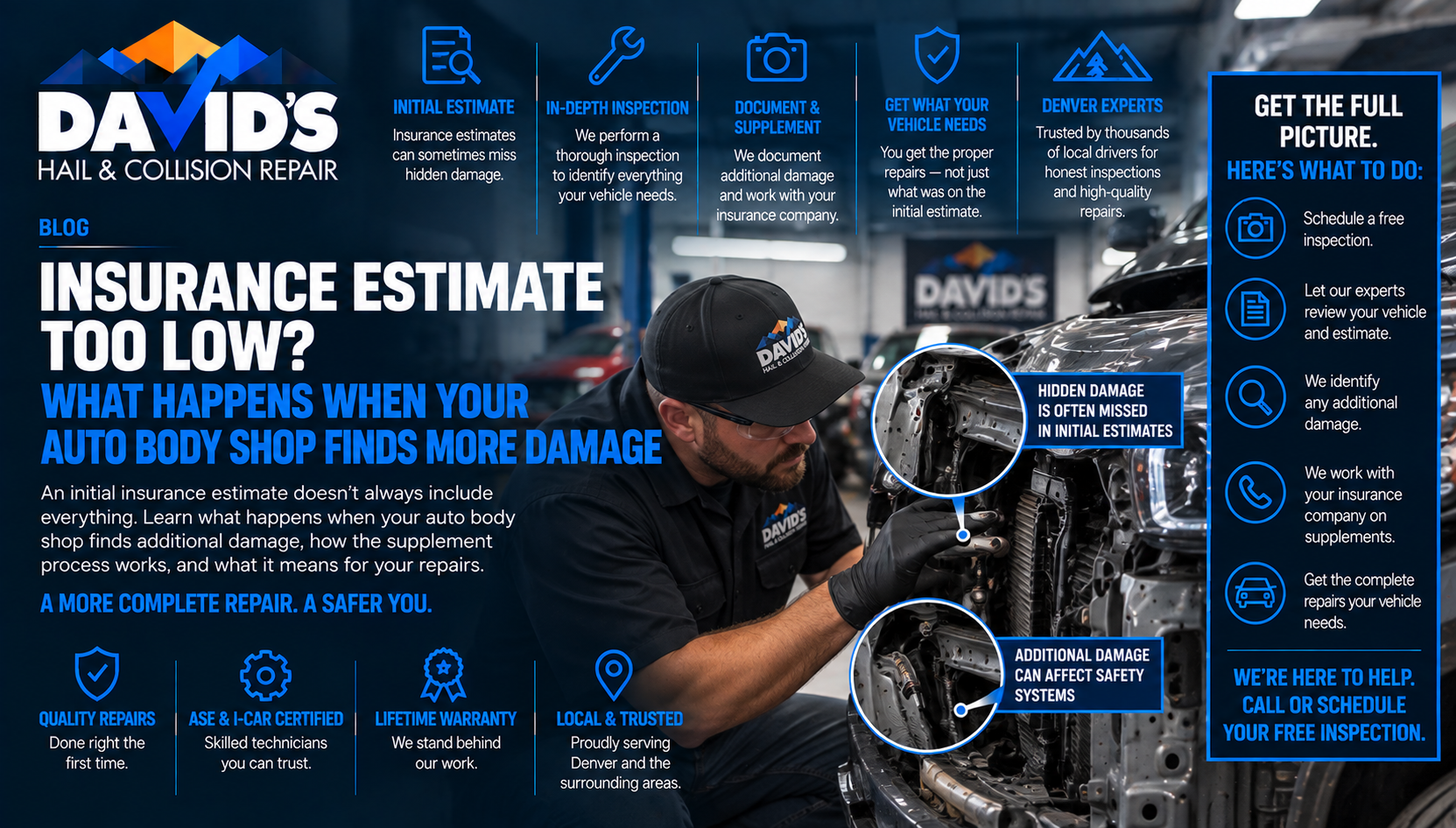
Insurance estimates are often written before a vehicle is disassembled, which means some damage may not be visible during the initial inspection. Once repairs begin, technicians can sometimes uncover additional damage or identify necessary repair procedures that weren’t included in the original estimate.
When that happens, the repair shop may prepare what’s called a supplement.
If you’re dealing with an insurance repair estimate that’s too low, here’s what Denver-area drivers should know about additional damage, supplements and how the insurance repair process works.
Why Can an Insurance Estimate Be Lower Than the Actual Repair Cost?
An insurance adjuster generally prepares an estimate based on the damage that can be identified at the time of the inspection and the information available for the claim.
But collision damage isn’t always limited to what you can see from outside the vehicle.
A damaged bumper cover, for example, may hide damage to components located behind it.
Additional damage may be discovered involving:
- Bumper reinforcement components
- Mounting brackets
- Absorbers
- Sensors
- Wiring
- Structural components
- Suspension components
- Interior mounting points
- Adjacent body panels
There may also be required repair procedures that become apparent once technicians have inspected the vehicle more thoroughly.
That’s why the first estimate shouldn’t automatically be viewed as the final repair plan.
What Is an Insurance Supplement?
A supplement is a request for additional repair costs that weren’t included in the original insurance estimate.
Suppose an insurance company initially approves $4,000 in repairs.
After the vehicle is disassembled, the collision repair facility discovers additional covered damage and determines that another $1,500 in repairs may be necessary.
The shop can document the additional damage and required procedures and submit that information to the insurance company for review.
The insurer then determines whether those additional items are covered under the claim.
A supplement doesn’t automatically mean the insurance company will approve every requested item. It gives the repair facility a way to document why additional work may be necessary.
Is It Normal for an Auto Body Shop to Submit a Supplement?
Supplements are a normal part of many collision repair claims.
Vehicles are complex, and technicians can’t always determine the full extent of collision damage without removing damaged exterior components.
Think about a bumper.
From the outside, you may see:
- Scratches
- Cracked paint
- A dent
- A small gap between panels
Once the bumper cover is removed, technicians may discover damaged brackets, reinforcement components, sensors or other parts that weren’t visible during the original inspection.
That additional damage can change the repair plan.
The same thing can happen with doors, fenders, quarter panels and other areas of the vehicle.
Does a Supplement Mean the Repair Shop Is Increasing the Price?
Not necessarily.
A legitimate supplement should document additional damage, parts, labor or repair procedures that the facility believes are necessary to properly complete the repair.
The shop should be able to explain why the additional work is being requested.
At David’s Hail & Collision Repair, our team can review the insurance estimate against the actual vehicle damage and document additional repair needs when necessary.
If something wasn’t included in the original insurance estimate, we can communicate with the carrier and submit the appropriate documentation for review.
The insurance company ultimately determines whether the additional work is covered under the claim.
What Happens After Additional Damage Is Found?
When additional damage is discovered, the repair facility will typically document what it found.
Depending on the situation, documentation may include:
- Photographs
- Updated repair estimates
- Parts information
- Labor operations
- Repair procedures
- Diagnostic information
- Additional damage discovered during disassembly
The repair facility can then submit the supplement to the insurance company.
The carrier may review the documentation remotely or request additional information. In some cases, an adjuster may need to reinspect the vehicle.
Once the insurer reviews the supplement, it can determine which additional repair items it will approve under the claim.
Will Repairs Stop While the Insurance Company Reviews a Supplement?
They can.
If additional damage is discovered and insurance authorization is required before moving forward, portions of the repair may need to wait while the supplement is reviewed.
That can sometimes affect the repair timeline.
This is one reason communication between the repair facility and insurance carrier is so important.
A shop experienced with insurance repairs can help keep the documentation organized and communicate with the adjuster when additional information is requested.
It doesn’t guarantee how quickly an insurer will respond, but it can help prevent unnecessary delays caused by missing information.
What If the Insurance Company Doesn’t Approve Everything the Shop Requests?
There can sometimes be differences between what a repair facility believes is necessary and what an insurance company initially agrees to pay.
Those differences can involve:
- Labor operations
- Labor rates
- Replacement versus repair decisions
- Parts
- Materials
- Diagnostic procedures
- Manufacturer-recommended procedures
- Additional damage
When there is a disagreement, the repair facility can provide documentation supporting the requested repair.
The insurance company then reviews that information according to the policy and claim.
If you’re the vehicle owner, you should ask questions whenever there’s a significant difference between the repair plan and insurance approval so you understand what is happening before making decisions.
What About OEM and Aftermarket Parts?
Parts can also create differences between an insurance estimate and a repair facility’s repair plan.
Depending on the vehicle and policy, an estimate may include:
- Original Equipment Manufacturer (OEM) parts
- Aftermarket parts
- Recycled parts
- Reconditioned components
A repair facility may identify circumstances where a different part or repair procedure is appropriate.
Your insurance policy can affect what types of replacement parts the carrier will pay for.
If there’s a difference between the parts included on the insurance estimate and those recommended by the repair facility, ask for an explanation of the options and any potential difference in cost.
Can Hidden Damage Be Found After a Minor Accident?
Yes.
A low-speed accident doesn’t necessarily mean damage is limited to a scratched or dented bumper.
Modern vehicles can have numerous components located behind exterior panels.
Depending on where the vehicle was hit, hidden damage could potentially involve:
- Bumper reinforcement
- Energy absorbers
- Mounting brackets
- Parking sensors
- Blind spot monitoring components
- Cameras
- Wiring
- Structural mounting points
That’s why it’s important to have collision damage professionally evaluated even when the exterior damage doesn’t initially appear severe.
What About Vehicle Sensors and Safety Technology?
Modern vehicles increasingly use cameras, radar sensors and other technology as part of Advanced Driver Assistance Systems, commonly called ADAS.
Depending on the vehicle, these systems may include:
- Forward collision warning
- Automatic emergency braking
- Blind spot monitoring
- Adaptive cruise control
- Lane departure warning
- Lane keeping assistance
- Parking assistance
- Surround-view cameras
Some of these components are located in or near areas commonly affected during collisions.
Depending on the vehicle and repairs performed, manufacturer procedures may call for diagnostic scans, inspections or calibrations.
Those procedures may not always be obvious from simply looking at the exterior damage.
Who Handles the Supplement With the Insurance Company?
This is where insurance claims assistance can make the repair process easier for the vehicle owner.
Instead of leaving you to communicate every repair detail to the adjuster yourself, David’s Hail & Collision Repair can work directly with your insurance carrier regarding the repair.
Our team can:
- Review the insurance company’s estimate
- Compare the estimate with the actual vehicle damage
- Document additional damage
- Prepare necessary supplements
- Submit supporting documentation
- Communicate with the insurance adjuster
- Provide additional repair information when requested
You remain the policyholder, and your insurance company remains responsible for making coverage decisions.
But you don’t necessarily have to manage every technical conversation between the shop and insurer yourself.
Does the Customer Have to Pay for Supplemental Repairs?
If the insurance company determines that additional repairs are covered under the existing claim, the carrier may issue additional payment according to the policy and claim.
That doesn’t mean every supplemental request will automatically be covered.
Your deductible, policy limits, exclusions and coverage decisions can still affect what you may owe.
If the insurer doesn’t cover a repair item that the shop believes is necessary, the shop should explain the situation so you understand your options before proceeding.
What About Your Insurance Deductible?
A supplement doesn’t normally eliminate or create a new deductible simply because additional covered damage is discovered under the same claim.
Your deductible is determined by your insurance policy and the circumstances of the claim.
David’s Hail & Collision Repair also offers up to $500 in deductible assistance on qualifying repairs.
If you’re concerned about your out-of-pocket cost, ask our team whether your repair qualifies and how much assistance may be available.
Don’t Panic If the Shop Finds More Damage
Hearing that your vehicle needs more work than the insurance company originally estimated can be frustrating, but it doesn’t automatically mean you’re facing a major problem.
The important thing is understanding why the additional repairs are necessary.
Ask the repair facility:
- What additional damage was found?
- Was the damage hidden before disassembly?
- What additional repairs are necessary?
- Has a supplement been submitted?
- What documentation was sent to insurance?
- Has the insurance company approved the supplement?
- Will the additional damage affect the repair timeline?
- Is there anything I’m expected to pay beyond my deductible?
A reputable repair facility should be willing to explain what’s happening throughout the process.
Insurance Claims Assistance in Denver and the Surrounding Metro Area
David’s Hail & Collision Repair is located in Englewood and helps drivers throughout Denver, Englewood, Aurora, Lakewood, Littleton and surrounding Denver Metro communities navigate the vehicle repair process after an insurance claim.
Our team can assist with:
- Reviewing insurance estimates
- Documenting vehicle damage
- Communicating with insurance adjusters
- Preparing and submitting supplements
- Collision repair
- Hail damage repair
- Paintless Dent Repair
- Deductible assistance on qualifying repairs
Our goal is to make the repair process easier to understand while helping ensure the necessary vehicle damage is properly documented.
Get Help With Your Insurance Repair Claim
If your insurance estimate doesn’t appear to cover all of the damage to your vehicle, you don’t have to sort through the repair process by yourself.
Contact David’s Hail & Collision Repair today.
Our team can inspect your vehicle, review the insurance estimate, identify additional repair needs and communicate with your insurance company when supplements or additional documentation are necessary.
We’ll help you understand what’s happening with your repair so you can make informed decisions throughout the process.