




How to Tell If Your Vehicle Has Frame Damage After an Accident
Not all collision damage is visible from the driver’s seat. A relatively minor-looking accident can sometimes affect your vehicle’s frame or unibody structure — the part of the car responsible for absorbing impact and keeping the cabin intact in a future collision. Knowing what to watch for can help you catch a structural issue before it becomes a safety problem.
Frame vs. Unibody: A Quick Distinction
Older vehicles and many trucks and SUVs use body-on-frame construction — a separate steel frame that the body sits on top of. Most modern cars use unibody construction instead, where the body and frame are a single welded structure. The term “frame damage” gets used loosely to cover both, but the underlying idea is the same either way: damage to the structural skeleton of the vehicle, not just its cosmetic panels.
Warning Signs Worth Taking Seriously
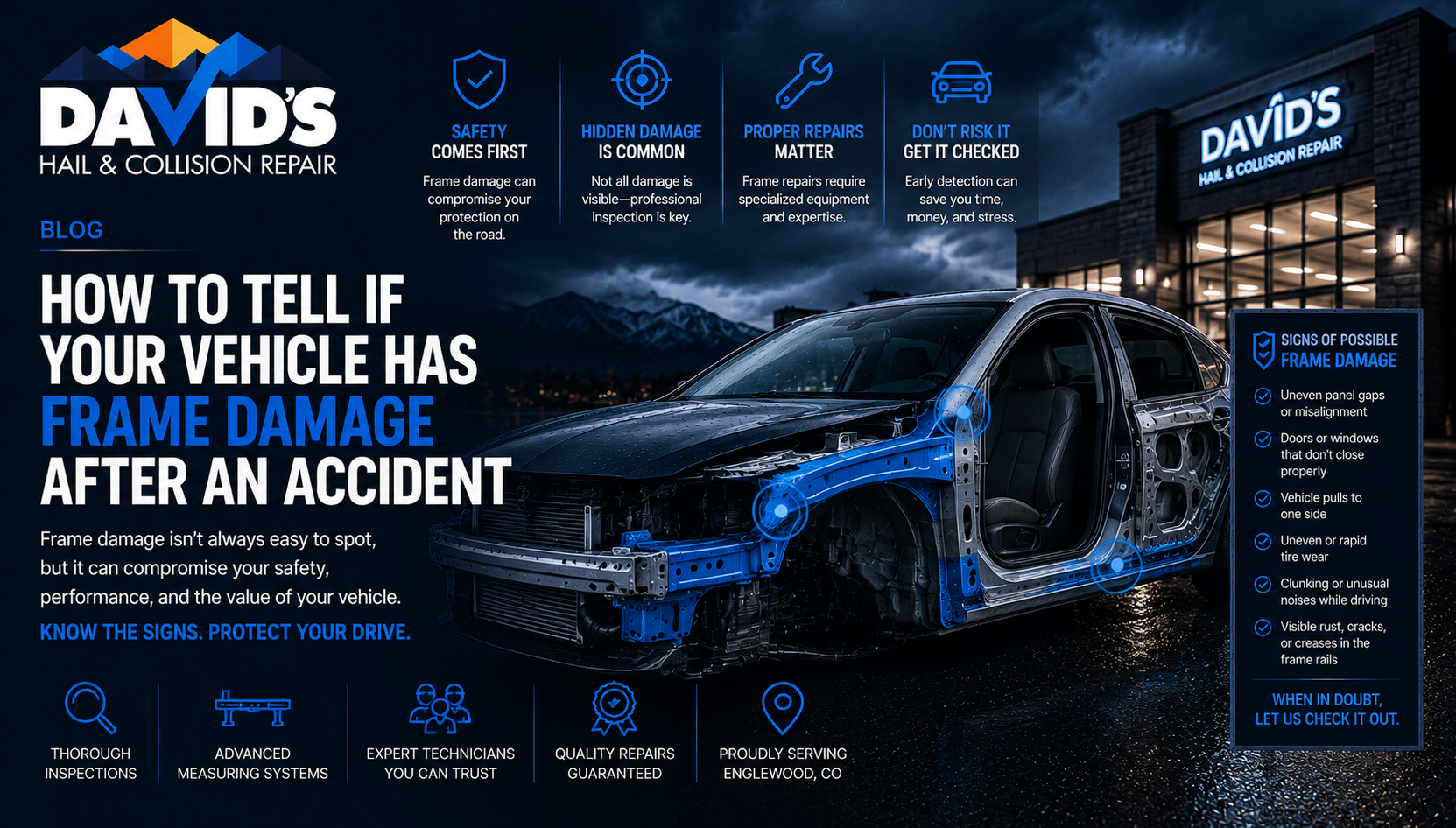
Doors, hood, or trunk that don’t close properly. If panels suddenly feel harder to close, don’t sit flush the way they used to, or leave uneven gaps compared to before the accident, that’s often a sign the frame has shifted slightly, even if the panels themselves look undamaged.
Uneven tire wear or a vehicle that pulls to one side. A bent frame can throw off your wheel alignment in ways that a standard alignment adjustment won’t fully correct, since the underlying structure — not just the suspension — is out of spec.
Visible ripples or wrinkles in the metal, particularly around the wheel wells, rocker panels, or firewall area. These are classic signs of stress transferred through the frame during impact.
Steering that feels off-center or inconsistent. If your steering wheel isn’t centered when driving straight, or feels different than it did before the accident, it’s worth having checked.
Warning lights that don’t fully explain themselves. Some sensors tied to structural components can trigger dashboard warnings that seem unrelated to the visible damage.
Why This Matters More Than It Might Seem
A frame or unibody’s entire job is to manage crash energy — absorbing and redirecting the force of an impact so it doesn’t transfer directly into the passenger cabin. A frame that’s been bent or weakened, even slightly, doesn’t perform that job the same way in a future collision. This isn’t about how the car drives day-to-day; it’s about how it protects you if something happens again.
This is also why frame damage should never be assessed by eye alone. Shops equipped for structural repair use frame measuring systems that check the vehicle against the manufacturer’s exact specifications, comparing dozens of measurement points to catch misalignments that aren’t visible to the naked eye.
What Happens If Frame Damage Is Found
Frame or structural damage isn’t automatically a total loss. Many frame and unibody repairs are entirely correctable using specialized frame straightening equipment, restoring the vehicle to factory structural specifications. The key is making sure it’s actually measured and corrected properly — not just visually estimated — before the vehicle is considered repaired.
When to Get It Checked
Even if your accident seemed minor — a low-speed parking lot collision, a moderate rear-end impact — it’s worth having your vehicle inspected for structural issues if anything feels different afterward, especially the signs above. It’s a lot easier to catch and correct early than to deal with the consequences of an unnoticed structural issue down the road.
The Bottom Line
Frame and structural damage isn’t always visible from a quick glance, and it’s not something to guess about. If your vehicle has been in any collision, a proper inspection — measured against manufacturer specifications, not just checked by eye — is the only way to know for sure whether the frame is truly sound.
Schedule a free inspection and we’ll check your vehicle’s structural integrity as part of the assessment.