



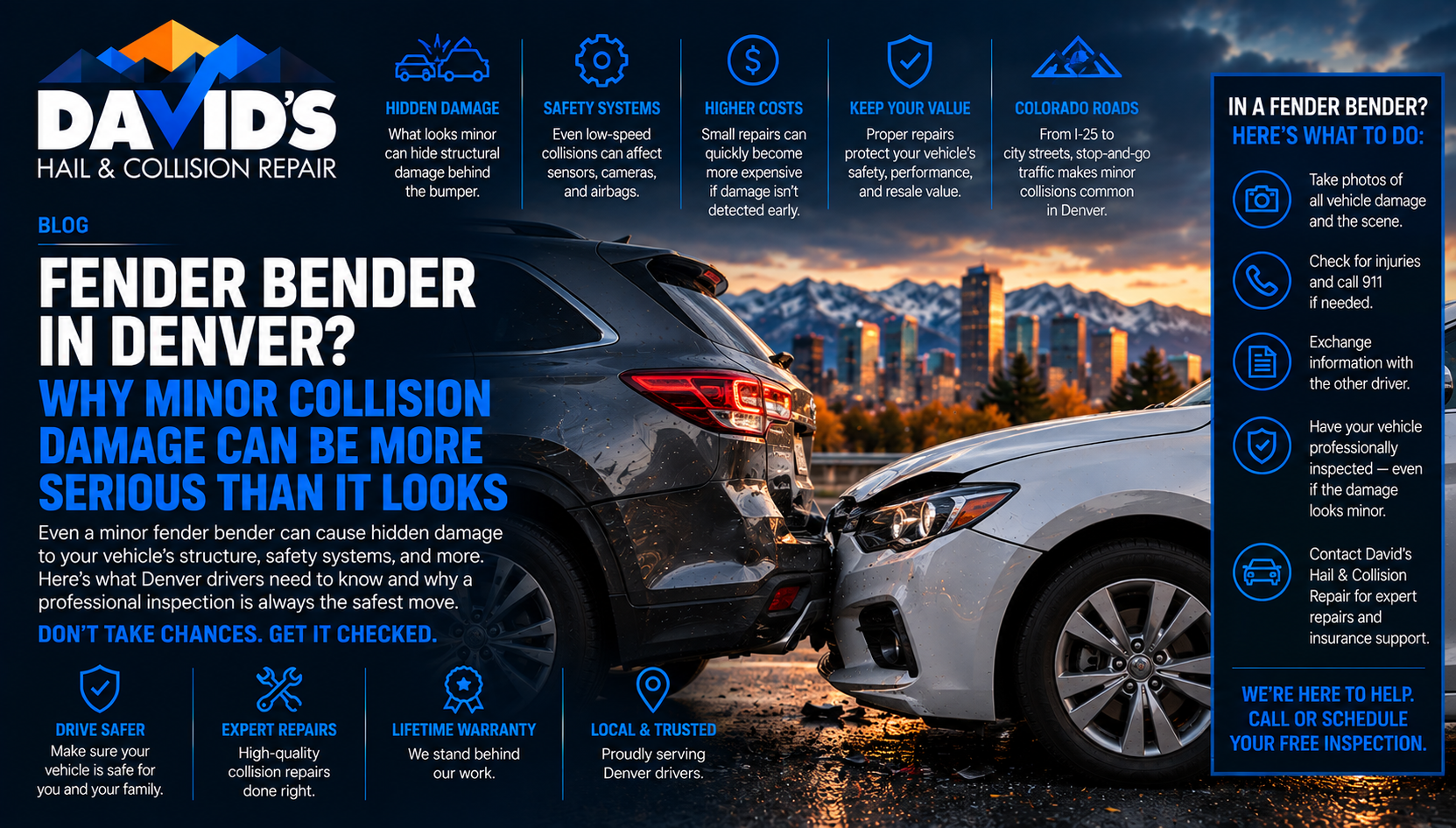
Fender Bender in Denver? Why Minor Collision Damage Can Be More Serious Than It Looks
A fender bender in Denver may seem like nothing more than a scratched bumper or small dent, but minor collisions can sometimes cause damage you can’t see from the outside.
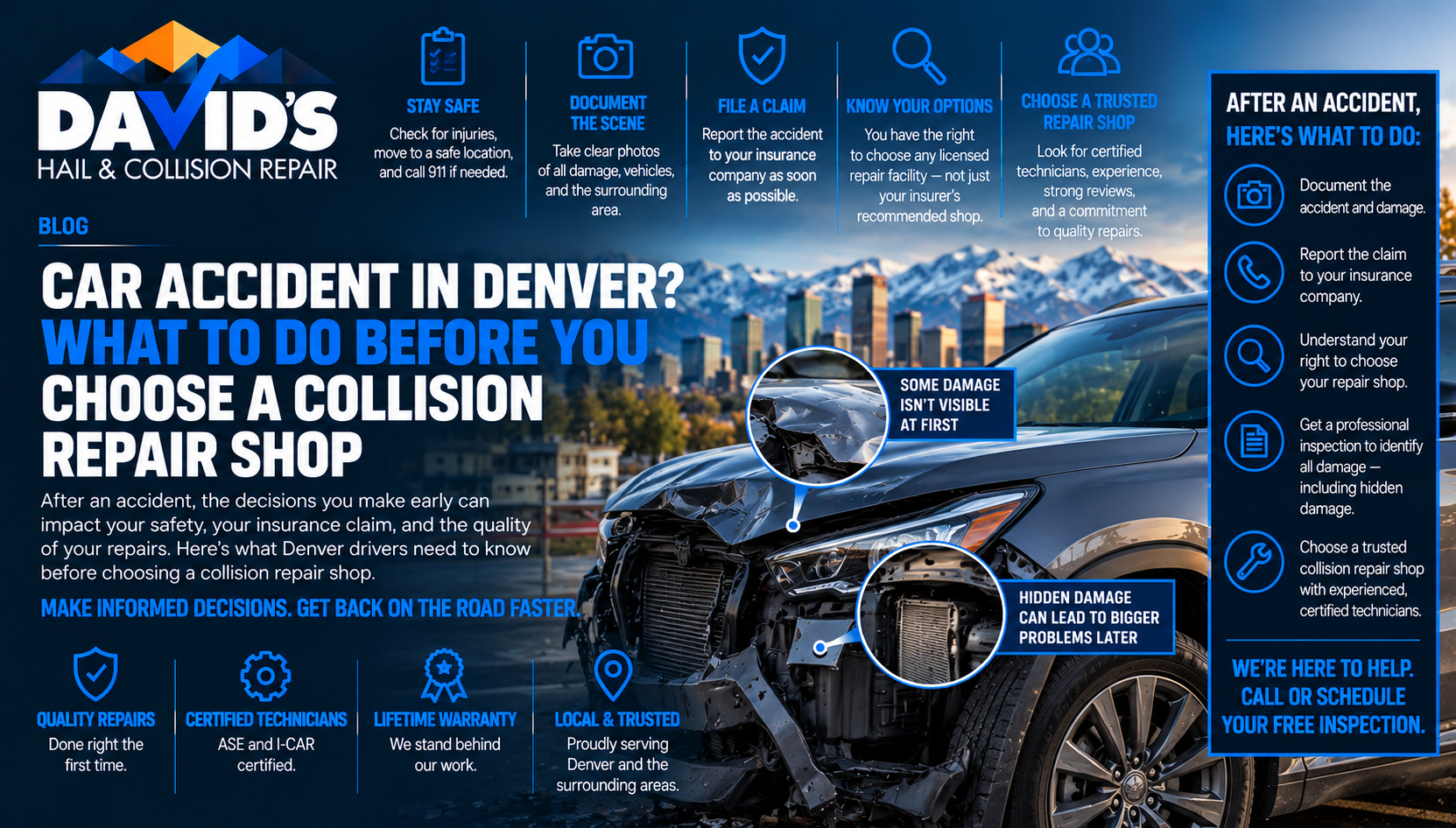
Modern vehicles contain impact absorbers, reinforcement components, sensors, cameras and mounting hardware behind exterior body panels. Even a relatively low-speed collision can affect these components while leaving surprisingly little visible damage.
If your vehicle still drives normally after a minor accident, it’s easy to assume everything is fine. But before you ignore the damage, here’s what Denver drivers should know about hidden collision damage and when a professional inspection makes sense.
What Is Considered a Fender Bender in Denver?
“Fender bender” is an informal term generally used to describe a relatively minor vehicle collision.
Common examples include:
- Rear-end collisions at low speeds
- Parking lot accidents
- Backing into another vehicle
- Minor sideswipes
- Bumping another vehicle at an intersection
- Low-speed impacts with poles or other objects
These accidents may not leave behind dramatic exterior damage.
That can make it tempting to assume the vehicle only needs cosmetic repairs—or doesn’t need repairs at all.
However, the severity of the visible damage isn’t always an accurate indication of what’s happening underneath the bumper or body panel.
Your Bumper Is More Than a Plastic Cover
When most people look at a vehicle’s bumper, they’re looking at the painted exterior bumper cover.
That’s only one part of the system.
Depending on the vehicle, components behind the bumper may include:
- Impact absorbers
- Reinforcement bars
- Mounting brackets
- Supports and retainers
- Wiring
- Parking sensors
- Radar sensors
- Cameras
- Blind-spot monitoring components
The exterior bumper cover can sometimes flex during an impact and partially return to its original shape.
That means the bumper may look relatively normal even though something behind it has been damaged.
A professional collision inspection can help identify problems that aren’t visible from outside the vehicle.
Hidden Damage After a Fender Bender
One of the most common concerns following a minor collision is hidden damage behind the bumper cover.
An impact can crack or deform energy-absorbing material, bend mounting brackets, damage reinforcement components or break plastic mounting points.
You may notice clues such as:
- Uneven gaps around the bumper
- One side of the bumper sticking out
- Loose trim
- Rattling noises
- A trunk or liftgate that doesn’t close normally
- New warning lights
- Parking sensors behaving differently
But hidden damage doesn’t always create an obvious symptom.
That’s why simply looking at the bumper isn’t necessarily enough to determine whether the vehicle is undamaged.
Modern Vehicles Have Sensors Behind the Body Panels
Collision repair has changed significantly as vehicles have become more technologically advanced.
Many newer vehicles use Advanced Driver Assistance Systems (ADAS) that rely on cameras, radar sensors, ultrasonic sensors and other components.
These systems may support features such as:
- Adaptive cruise control
- Automatic emergency braking
- Blind-spot monitoring
- Lane departure warning
- Lane-keeping assistance
- Parking assistance
- Rear cross-traffic alerts
- Forward collision warning
Some of these sensors are mounted behind bumpers, grilles, mirrors and other exterior components.
A relatively minor impact can affect a sensor, its mounting position or the components surrounding it.
The sensor may still appear to work, but even a change in its position can potentially affect how the system operates.
Why ADAS Calibration May Be Necessary After a Collision
Depending on the vehicle and the repairs performed, ADAS components may require calibration after collision repair.
Calibration helps ensure that cameras and sensors are positioned and operating according to the vehicle manufacturer’s specifications.
A calibration may be required after certain procedures involving:
- Bumper removal or replacement
- Windshield replacement
- Camera removal
- Radar sensor replacement
- Suspension or alignment work
- Structural repairs
- Certain collision repairs
The exact requirements vary by manufacturer and vehicle.
A qualified collision repair facility should review the manufacturer’s repair procedures rather than assuming a calibration is or isn’t necessary.
A Small Impact Can Affect Vehicle Alignment
Another issue that may not be obvious immediately is alignment or suspension damage.
Even if the vehicle still drives, an impact involving a wheel, tire or corner of the vehicle can potentially affect steering and suspension components.
Possible signs include:
- Vehicle pulling to one side
- Steering wheel no longer centered
- Uneven tire wear
- Vibration while driving
- Changes in steering feel
- Vehicle feeling unstable at highway speeds
If something feels different after an accident, don’t ignore it just because the exterior damage looks minor.
Have the vehicle inspected.
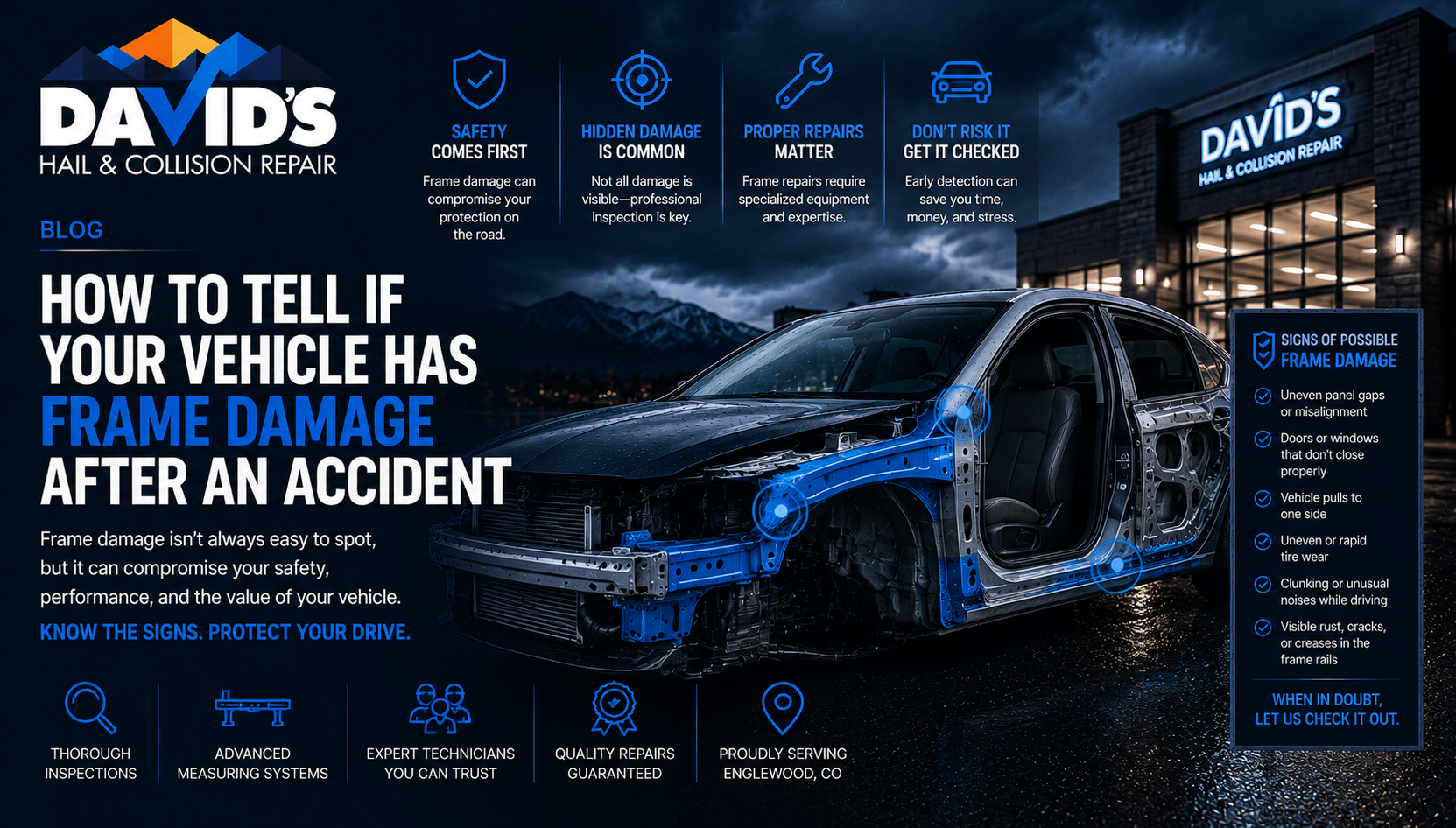
What About Hidden Structural Damage?
Not every fender bender causes structural damage.
However, collision forces travel through the vehicle, and certain impacts can affect components beyond the area where the vehicle was visibly struck.
Modern vehicles are engineered with specific structural components and energy-management systems designed to respond in particular ways during a collision.
If there is concern about structural damage, proper measurements and inspection procedures can determine whether the vehicle remains within manufacturer specifications.
This is especially important after impacts that are stronger than they initially appear or involve the corners, wheels or structural areas of the vehicle.
Why You Shouldn’t Rely Only on Photos
Photos can be useful for documenting an accident, but they have limitations.
A photograph generally shows the exterior surface of the vehicle.
It can’t necessarily show:
- Damage behind the bumper
- Broken mounting tabs
- Crushed impact absorbers
- Bent brackets
- Sensor mounting issues
- Suspension damage
- Structural movement
That’s why a repair estimate based only on exterior photos may change once the vehicle is inspected more thoroughly or disassembled for repair.
Additional damage discovered during the repair process may need to be documented and submitted to the insurance company as a supplement.
What Is an Insurance Supplement?
An insurance company’s initial estimate is a starting point based on the damage that can be identified during the first inspection.
Once the repair facility begins working on the vehicle, additional damage may become visible.
When covered damage or necessary repair procedures weren’t included in the original estimate, the repair shop can document those items and submit a supplement to the insurance carrier for review.
Supplements are a normal part of many collision repairs.
David’s Hail & Collision Repair works directly with insurance companies during the repair process to document additional damage and communicate necessary repair information.
The insurance carrier ultimately determines coverage under your individual policy.
Can You Choose Your Own Collision Repair Shop?
Yes.
You have the right to choose the repair facility that works on your vehicle.
Your insurance company may recommend a particular repair shop or provide a list of preferred facilities, but you aren’t required to use a shop simply because your insurance company suggested it.
Choose a collision repair facility you’re comfortable with and that will properly inspect the vehicle, follow appropriate repair procedures and communicate clearly with you throughout the process.
Should You Get a Fender Bender Inspected?
In many cases, yes.
A vehicle being drivable doesn’t necessarily mean it escaped damage.
If you’ve been involved in a collision, especially one involving the bumper, wheels, suspension or areas containing driver-assistance technology, a professional inspection can help determine whether anything beyond the visible cosmetic damage needs attention.
An inspection can identify issues early and give you a clearer understanding of the repairs that may actually be necessary.
Collision Repair in Englewood and the Denver Metro Area
David’s Hail & Collision Repair provides professional collision repair for drivers throughout Englewood and the Denver Metro area.
Our team repairs everything from minor accident damage to more extensive collision repairs and can inspect your vehicle for damage that may not be immediately visible from the outside.
When insurance is involved, we can help with the claims and repair process, communicate with your insurance carrier, review estimates and submit supplements when additional covered damage is discovered.
We proudly serve drivers throughout Englewood, Denver, Aurora, Lakewood, Littleton and surrounding Denver Metro communities.
Our repair work is backed by a lifetime warranty, giving you confidence long after you leave the shop.
Schedule a Collision Damage Inspection
If you’ve recently been in a fender bender, don’t judge the condition of your vehicle based only on what you can see from the outside.
What looks like a scratched bumper or small dent could be the only visible sign of additional damage underneath.
Contact David’s Hail & Collision Repair today to schedule a collision damage inspection. We’ll evaluate the vehicle, explain what we find and help you understand the next steps for getting it repaired properly.