




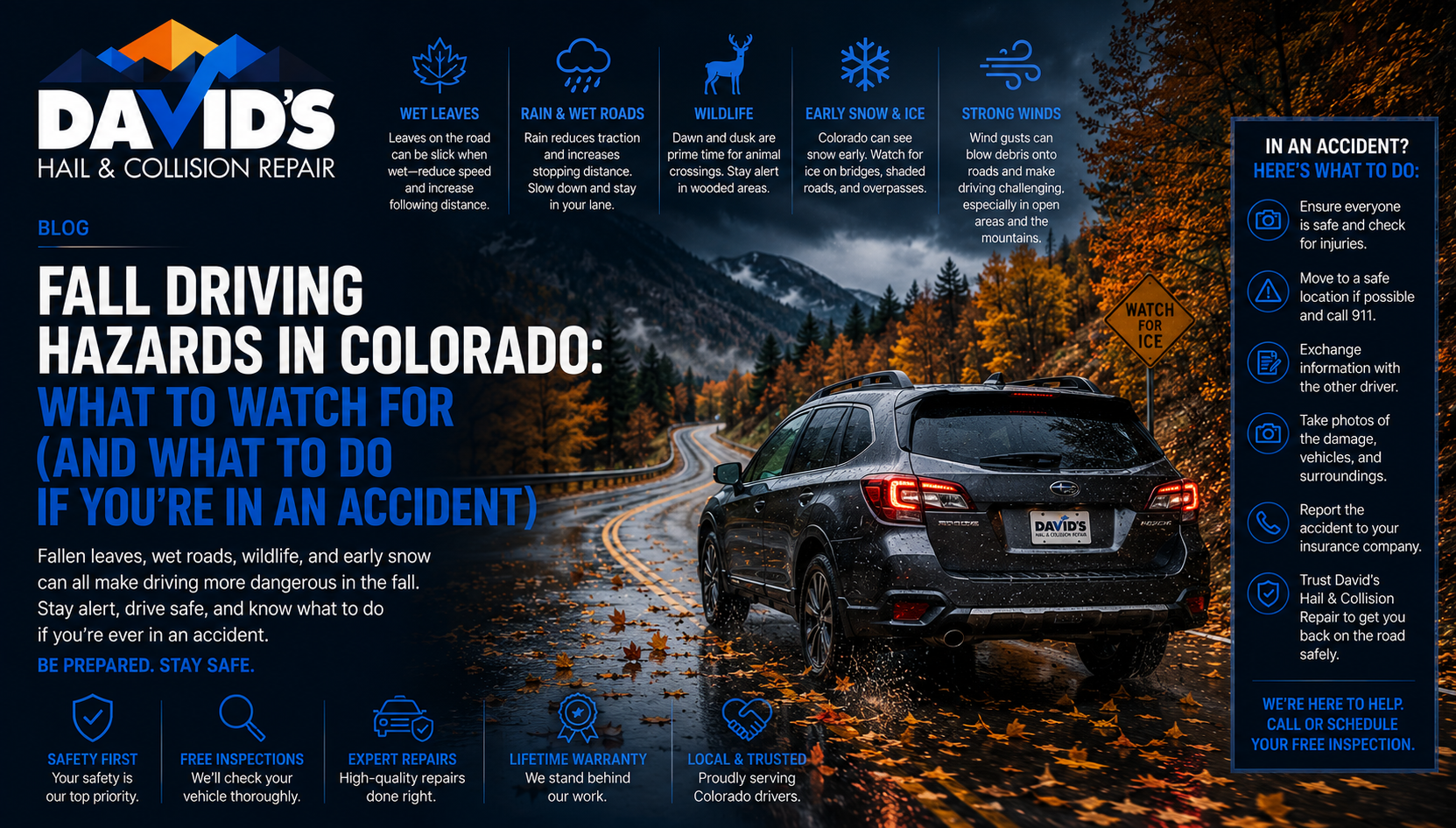
Fall Driving Hazards in Colorado: What to Watch For (and What to Do If You’re in an Accident)
The Season Changes, and So Do the Risks
Colorado’s hail season gets most of the attention, but the shift from summer into fall brings its own set of driving hazards — different enough from summer conditions that it’s worth a quick refresher before they catch you off guard.
Increased Deer Activity
Fall is peak mating season for deer and elk across Colorado, which means significantly more animal activity near roadways, especially around dawn and dusk. Foothill communities and areas bordering open space see a real spike in animal-related collisions this time of year. If a deer does step into the road, most safety experts advise against swerving hard to avoid it — a controlled hard brake in your lane is generally safer than an evasive swerve that can cause you to lose control or cross into oncoming traffic.
Lower Sun Angle and Glare
As days shorten, the sun sits lower in the sky during both morning and evening commutes, creating glare conditions that catch a lot of drivers off guard compared to summer’s more overhead sun angle. This is especially relevant on east-west corridors during commute hours. Keeping your windshield clean (glare shows up far worse on a dirty windshield) and having a pair of polarized sunglasses in the car are simple habits that reduce risk meaningfully.
Wet Leaves and Early Frost
Wet leaves on the road create a surprisingly slick surface, closer to black ice than most drivers expect, particularly on shaded residential streets. Combined with Colorado’s early-season overnight frost, road surfaces that look dry can still carry a thin, hard-to-see layer of ice in shaded spots or bridges well into the morning.
Increased Traffic From Back-to-School Schedules
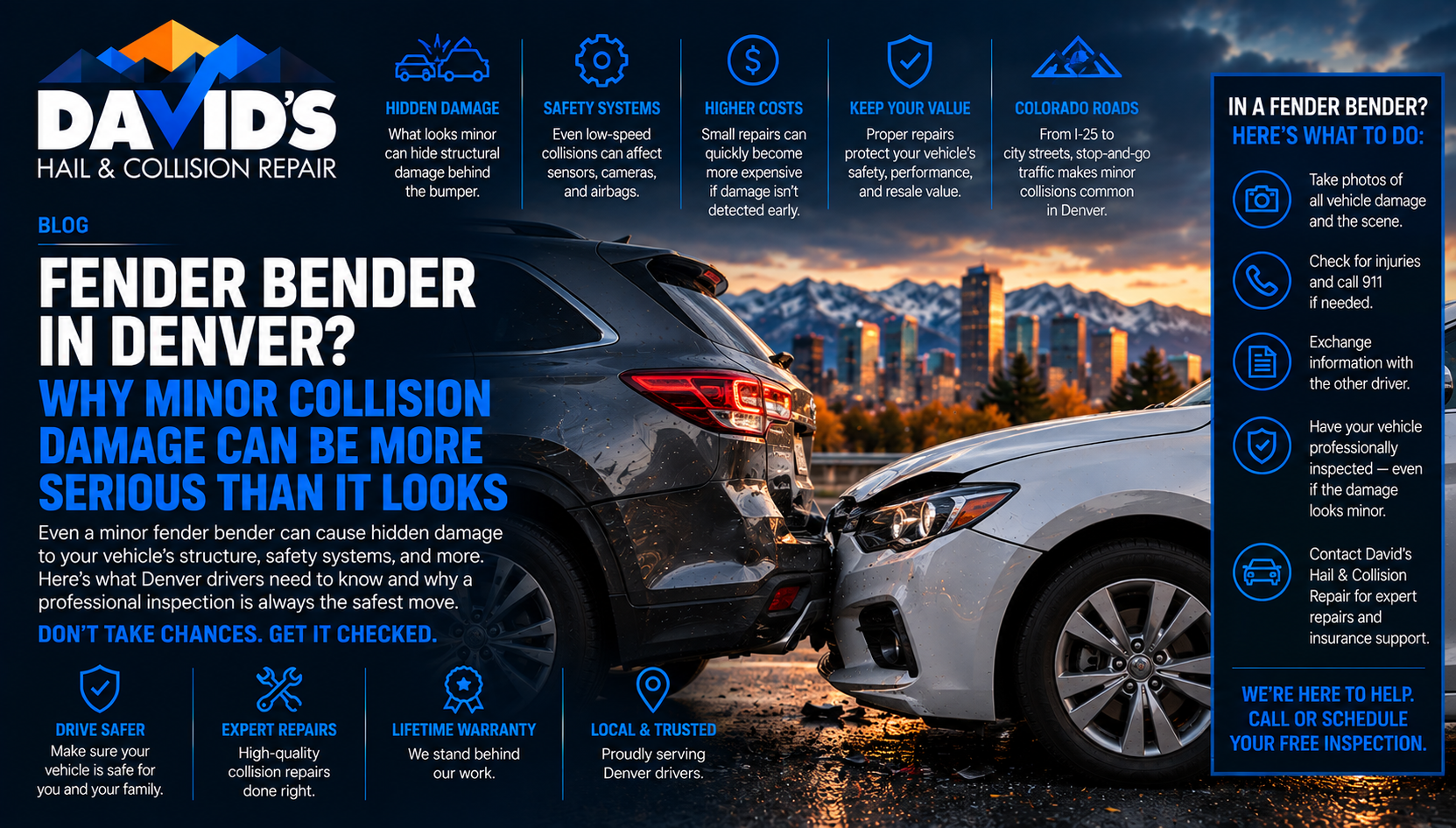
With schools back in session, morning and afternoon traffic patterns shift, often adding congestion near schools at times that weren’t a factor over the summer. More stop-and-go traffic in these zones means more opportunity for rear-end collisions and low-speed fender-benders, especially from drivers still on a summer-schedule autopilot.
What to Do If You’re in an Accident This Season
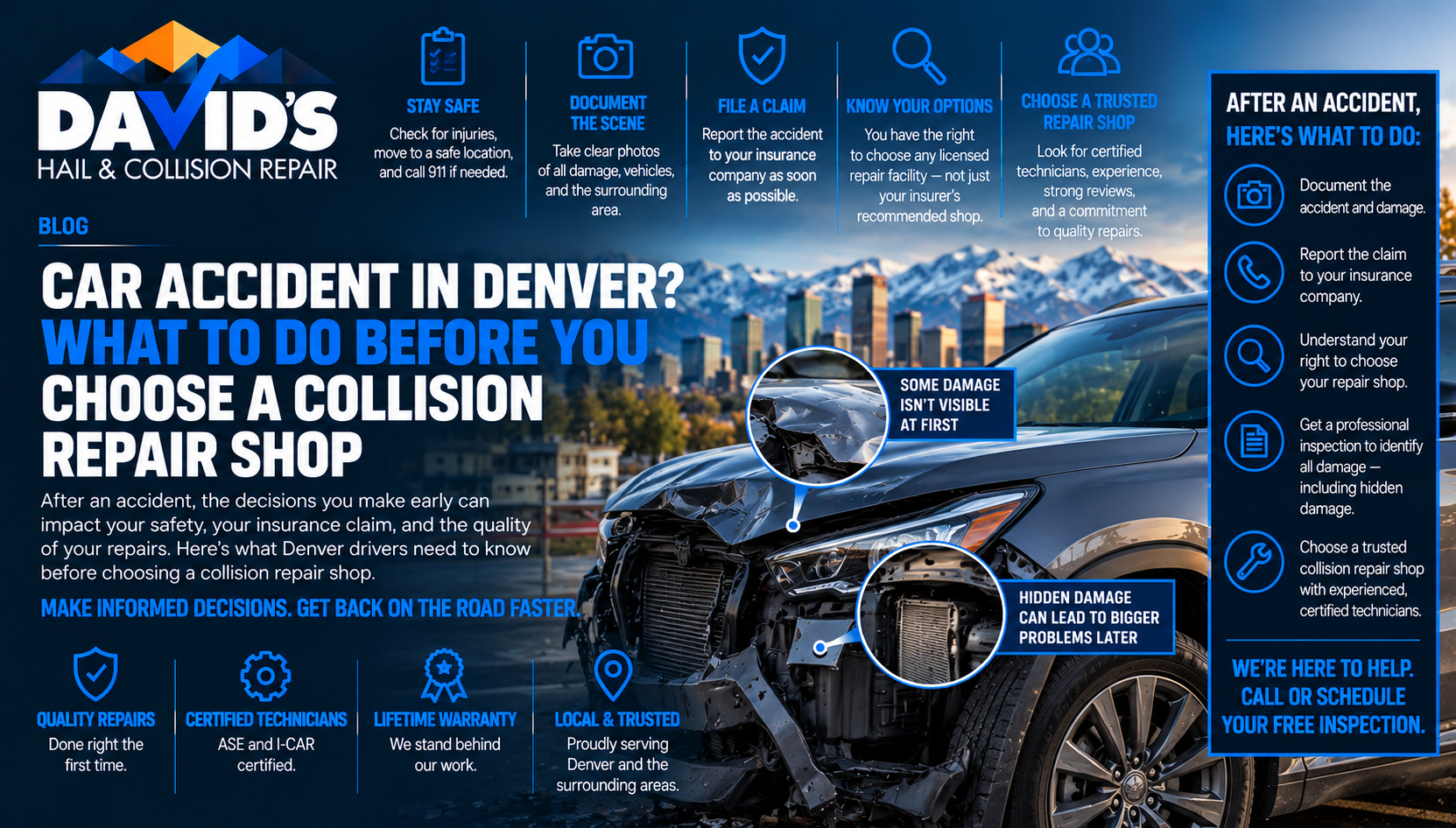
If any of these seasonal factors lead to a collision, the basics stay the same regardless of the season:
- Check for injuries and move to a safe location if possible
- Call 911 if there’s significant damage or any injury
- Document the scene with photos, including any relevant conditions like wet leaves, sun glare, or animal remains if applicable
- Exchange insurance information with the other driver
- Contact your insurance company to start the claim process
- Choose a repair shop you trust — remember, Colorado law gives you the right to pick your own, regardless of what your insurer initially suggests
The Bottom Line
Fall in Colorado brings a genuinely different set of driving hazards than summer’s hail-heavy months — deer activity, glare, slick leaves, and shifting traffic patterns all deserve a bit more attention behind the wheel this time of year. And if any of it does lead to an accident, having a repair shop already in mind, rather than scrambling to pick one in the moment, makes the whole process considerably less stressful.