


Car Accident in Denver? What to Do Before You Choose a Collision Repair Shop
A car accident can turn an ordinary day into a stressful one in seconds.
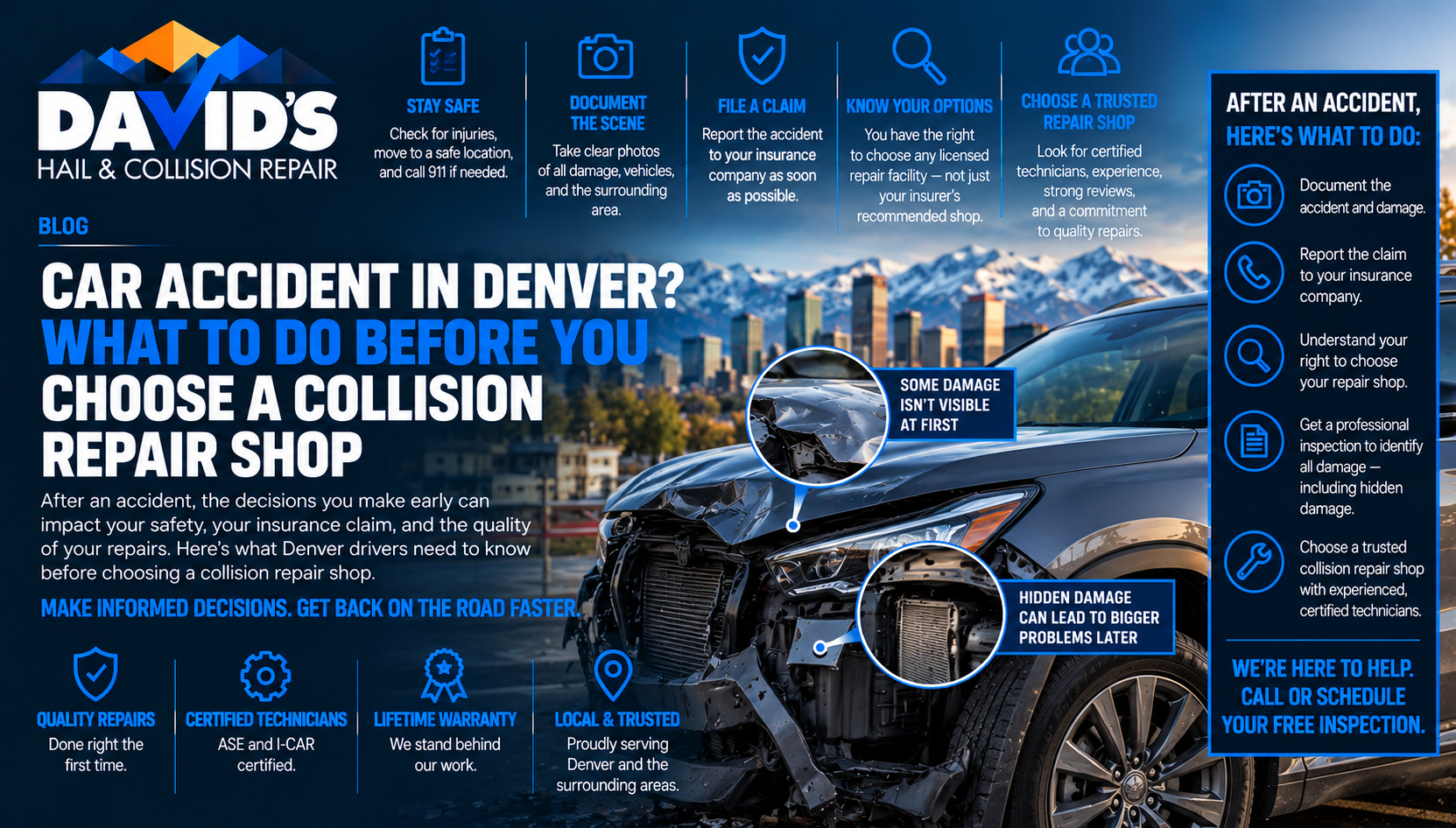
Once everyone is safe and the immediate situation is under control, the next questions usually come quickly: Can I still drive my car? Do I call insurance first? Where should I take it? Do I have to use the body shop my insurance company recommends?
Choosing the right collision repair shop in Denver is an important part of getting your vehicle back on the road safely and properly.
Before you authorize repairs, here’s what Denver-area drivers should know after an accident.
First, Make Sure the Vehicle Is Safe to Drive
A vehicle doesn’t have to look severely damaged to be unsafe to drive.
After a collision, damage can affect components that aren’t immediately visible from outside the vehicle.
Before driving away, look for warning signs such as:
- Fluid leaking underneath the vehicle
- A tire rubbing against damaged bodywork
- Wheels that appear bent or out of position
- Loose bumpers or body panels
- Broken headlights or taillights
- Airbags that deployed
- Warning lights on the dashboard
- Steering that feels different
- The vehicle pulling strongly to one side
- Damage interfering with the doors, hood or trunk
If you’re unsure whether the vehicle is safe to drive, don’t take the risk.
Have it towed to a qualified collision repair facility for an inspection.
Document the Accident and Vehicle Damage
If you’re still at the accident scene and it’s safe to do so, take photos before the vehicles are moved.
Photograph:
- All sides of your vehicle
- Close-ups of visible damage
- The other vehicle or vehicles involved
- License plates
- The overall accident scene
- Road conditions
- Traffic signs or signals
- Any relevant debris or skid marks
You may also want to photograph the vehicle again afterward in better lighting.
Having good documentation can be helpful when communicating with your insurance carrier and collision repair shop.
Do You Have to Use the Collision Repair Shop Your Insurance Company Recommends?
Insurance companies may provide a list of repair facilities or recommend shops that participate in their repair networks.
That doesn’t necessarily mean you have to use one of those shops.
Colorado law generally allows vehicle owners to choose where their covered vehicle is repaired. An insurer may recommend a repair business, but it cannot require an insured to use a particular shop.
That means you can research collision repair shops in Denver and decide where you’re comfortable having the work performed.
The important thing is choosing a repair facility you trust to properly evaluate the damage and explain the repair process.
Don’t Choose a Body Shop Based Only on the First Estimate
Price matters, but the lowest initial estimate doesn’t necessarily tell you what the complete repair will ultimately cost.
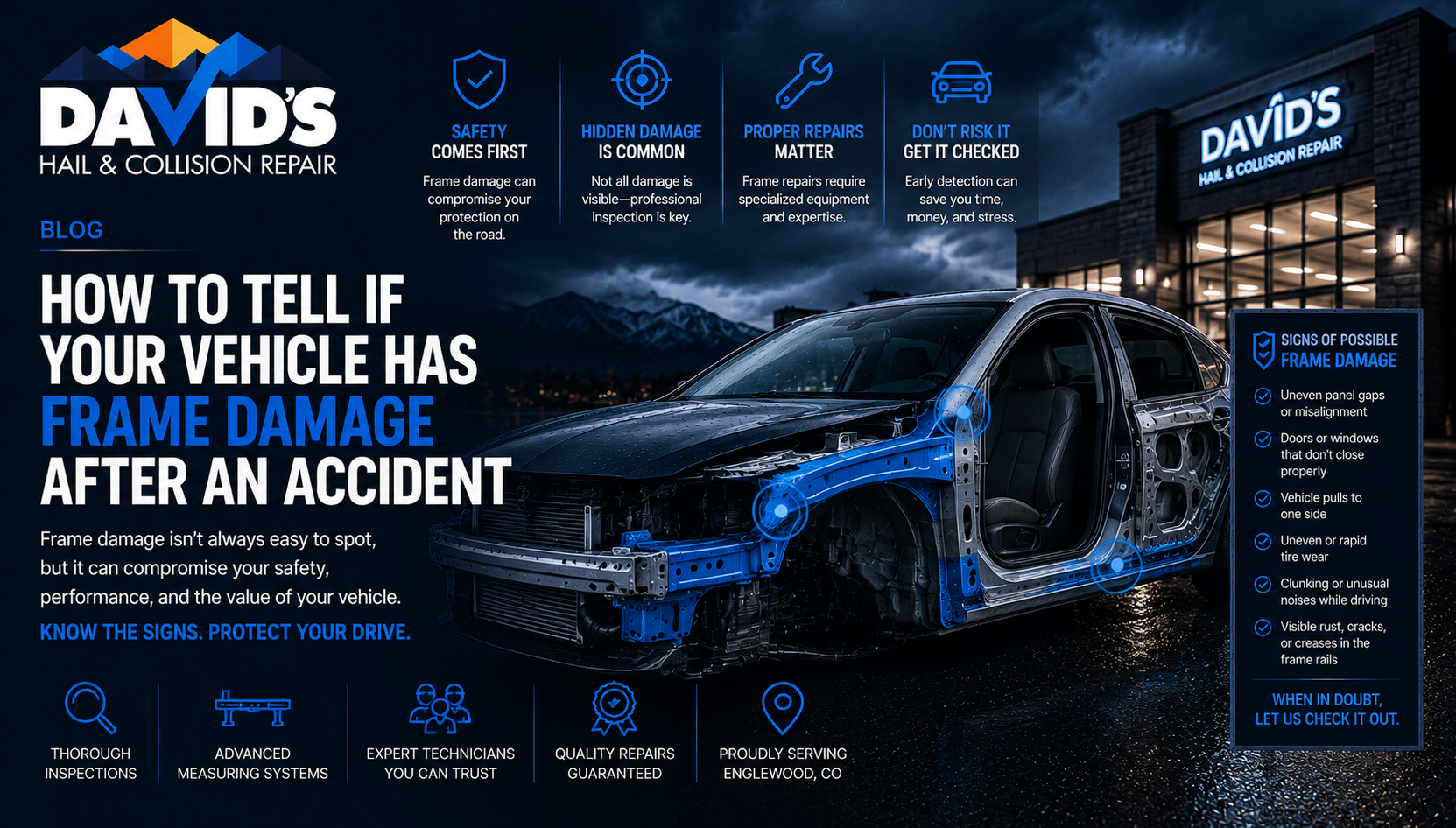
Collision damage can extend beyond what is visible during an initial exterior inspection.
Once damaged components are removed, technicians may discover additional damage behind:
- Bumpers
- Fenders
- Doors
- Quarter panels
- Exterior trim
- Reinforcement components
- Interior panels
This is one reason an initial insurance estimate and the final repair plan may differ.
A reputable collision repair shop in Denver should focus on identifying what is necessary to properly repair the vehicle rather than simply trying to match the lowest preliminary estimate.
What Happens If the Insurance Estimate Is Too Low?
An insurance estimate is an initial assessment of the covered damage based on the information available to the adjuster.
It isn’t unusual for a collision repair facility to identify additional necessary repairs after inspecting the vehicle or beginning disassembly.
When covered damage or required repair procedures are missing from the original estimate, the repair facility may prepare a supplement documenting the additional work and submit it to the insurance company for review.
At David’s Hail & Collision Repair, our team can review the insurance estimate, document additional damage and communicate with the insurance carrier regarding supplements when necessary.
The insurance company ultimately determines what it will cover under your individual policy and claim.
Ask Who Will Communicate With Your Insurance Company
This is one of the biggest differences between simply finding someone who can fix the visible damage and choosing a full-service collision repair facility.
Collision claims can involve communication between:
- The customer
- Repair facility
- Insurance adjuster
- Parts suppliers
- Rental company
- Other parties involved in the claim
Ask the repair shop how much of that communication they handle.
David’s Hail & Collision Repair offers insurance claims assistance and can work directly with your carrier during the repair process, helping reduce the amount of back-and-forth you have to manage yourself.
Ask About Certifications and Technician Training
Modern vehicles can be considerably more complicated to repair than vehicles from even a decade or two ago.
Collision repairs may involve structural components, advanced materials, electronics, cameras, radar sensors and other vehicle systems.
When comparing shops, ask about technician training and industry certifications.
David’s Hail & Collision Repair is ASE and I-CAR certified, demonstrating an ongoing commitment to professional repair standards and technician education.
Certifications don’t replace the need to properly evaluate an individual repair, but they can help you understand the training and standards a facility has invested in.
Modern Collision Repair Is About More Than Body Panels
Today’s vehicles increasingly rely on Advanced Driver Assistance Systems, commonly called ADAS.
Depending on the vehicle, these systems can include:
- Automatic emergency braking
- Forward collision warning
- Lane departure warning
- Lane keeping assistance
- Blind spot monitoring
- Adaptive cruise control
- Parking sensors
- Surround-view cameras
Sensors and cameras for these systems may be located behind bumpers, in mirrors, near the windshield or elsewhere around the vehicle.
Depending on the vehicle and the repairs performed, manufacturer procedures may require inspections, diagnostic scans or calibrations involving these systems.
That’s another reason seemingly minor collision damage shouldn’t automatically be treated as purely cosmetic.
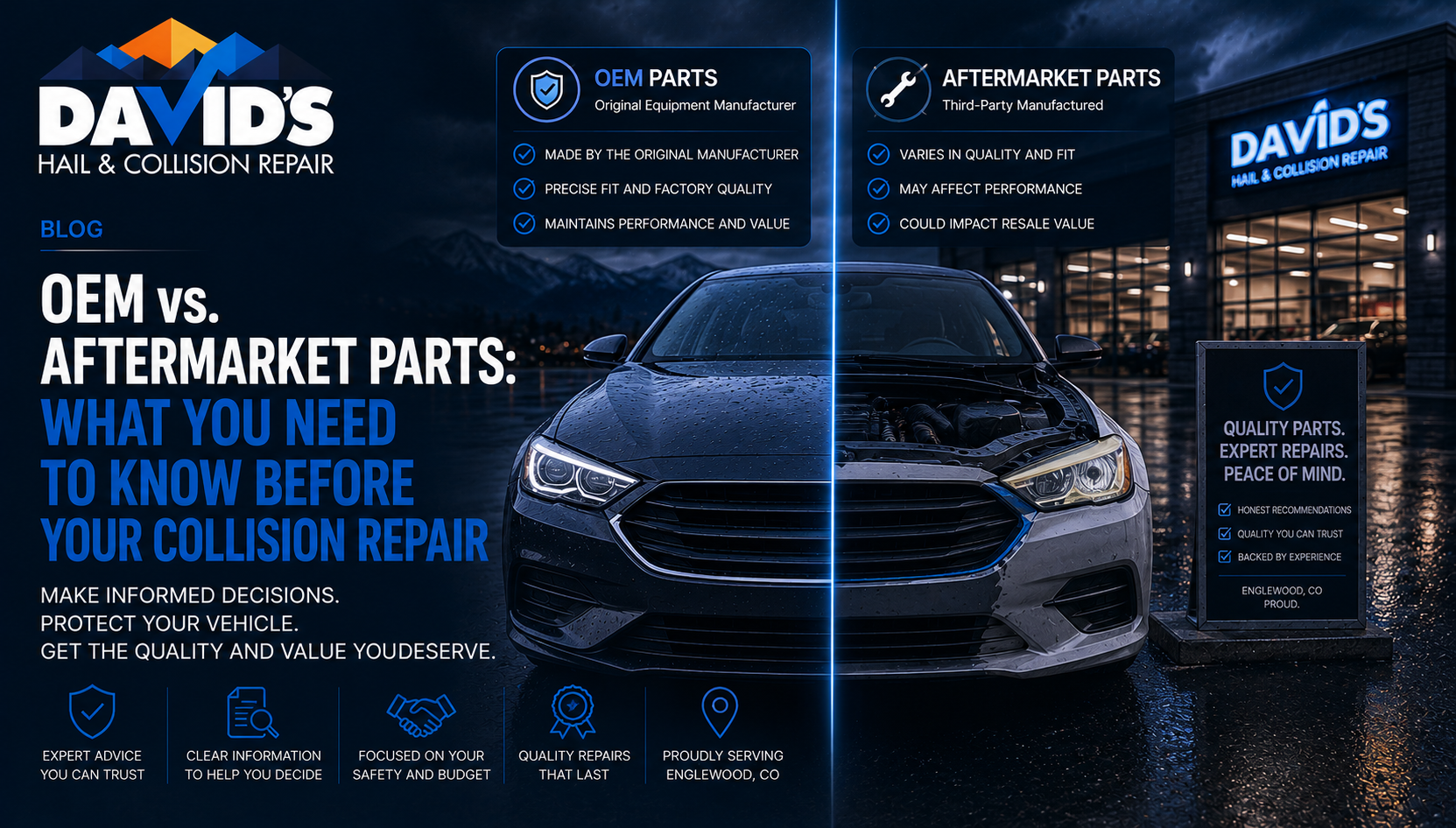
Ask What Kind of Parts Will Be Used
Replacement parts can be another important consideration during collision repair.
Depending on the vehicle, repair and insurance policy, parts may include:
- Original Equipment Manufacturer (OEM) parts
- Aftermarket parts
- Recycled or salvage parts
- Reconditioned components
Ask the repair facility what parts are included in the repair plan and why.
Your insurance policy can also affect what types of replacement parts are covered.
If there’s a difference between the parts recommended by the repair facility and what the insurer has included in its estimate, ask both parties to explain the options before repairs proceed.
Ask About the Repair Warranty
Before choosing a collision repair facility, find out what happens if you experience an issue with the completed repair.
A reputable shop should be willing to explain its warranty clearly.
David’s Hail & Collision Repair backs its repair work with a lifetime warranty, giving customers additional confidence in the work performed on their vehicle.
Ask about the applicable warranty terms before authorizing repairs so you understand the coverage.
What About Your Insurance Deductible?
Depending on your policy and claim, you may be responsible for paying a deductible before insurance covers the remaining approved repair costs.
David’s Hail & Collision Repair offers up to $500 in deductible assistance on qualifying repairs.
Eligibility and the amount of assistance can depend on the repair and applicable requirements, so customers should confirm whether their specific repair qualifies.
If your deductible is one of your concerns after an accident, ask about deductible assistance when discussing your repair.
Questions to Ask a Collision Repair Shop Before You Commit
Before authorizing repairs, consider asking:
- Do you work with my insurance company?
- Will you communicate directly with the adjuster?
- What happens if you find additional damage?
- Do you submit supplements when necessary?
- What types of replacement parts may be used?
- Does my vehicle require scanning or calibration?
- What certifications does the shop have?
- Is the repair covered by a warranty?
- Do you offer deductible assistance?
- How will I receive updates during the repair?
A good collision repair facility should be willing to answer these questions and clearly explain what you can expect throughout the repair process.
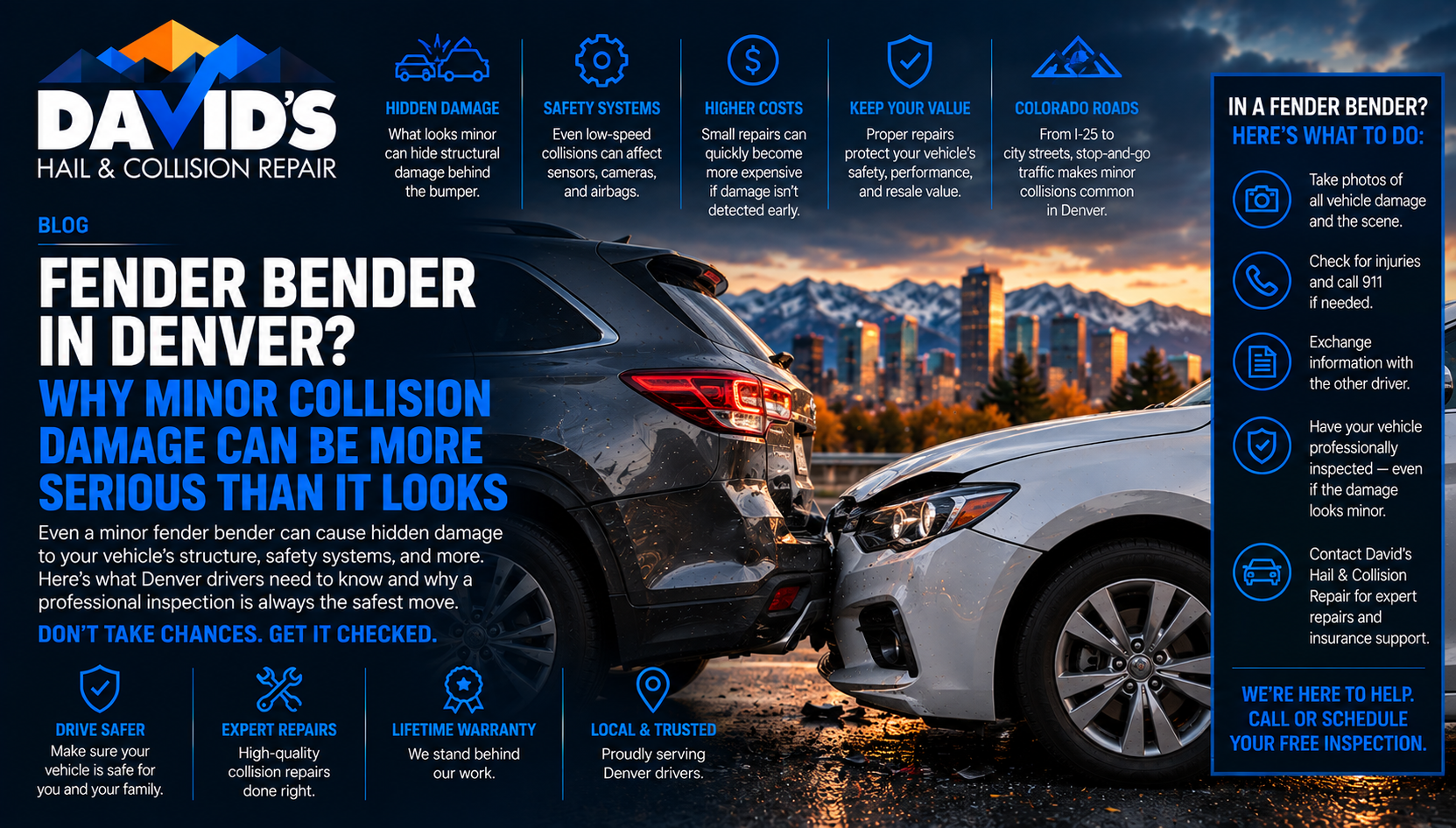
Don’t Ignore Minor Collision Damage
Not every accident leaves a vehicle with dramatic visible damage.
A low-speed collision or fender bender might leave behind only a damaged bumper, small dent or minor paint damage.
But what you see from the outside doesn’t always tell the entire story.
Components behind a bumper can absorb impact, mounting points can become damaged, sensors can be affected and alignment or structural issues may not be immediately obvious.
If something doesn’t look or feel right after an accident, having the vehicle professionally inspected can help determine whether there’s additional damage that needs attention.
Collision Repair in Denver and the Surrounding Metro Area
David’s Hail & Collision Repair is located in Englewood and provides professional collision repair for Denver-area drivers.
We serve customers throughout Denver, Englewood, Aurora, Lakewood, Littleton and surrounding Denver Metro communities.
Our team provides:
- Collision repair
- Professional damage assessments
- Insurance claims assistance
- Supplement documentation
- Deductible assistance on qualifying repairs
- Paint and body repair
- Lifetime warranty on repairs
Whether you’ve been involved in a major accident or what appears to be a minor fender bender, we’ll help you understand the damage, your repair options and the next steps involved in getting your vehicle repaired.
Get Your Free Collision Repair Estimate
If you’ve recently been in an accident, you don’t have to figure out the repair process on your own.
Get your free estimate from David’s Hail & Collision Repair today.
Our team will evaluate your vehicle, explain the damage and recommended repairs, and help coordinate with your insurance company when applicable.
The sooner you understand what’s actually damaged, the sooner you can make an informed decision about getting your vehicle safely and properly repaired.