




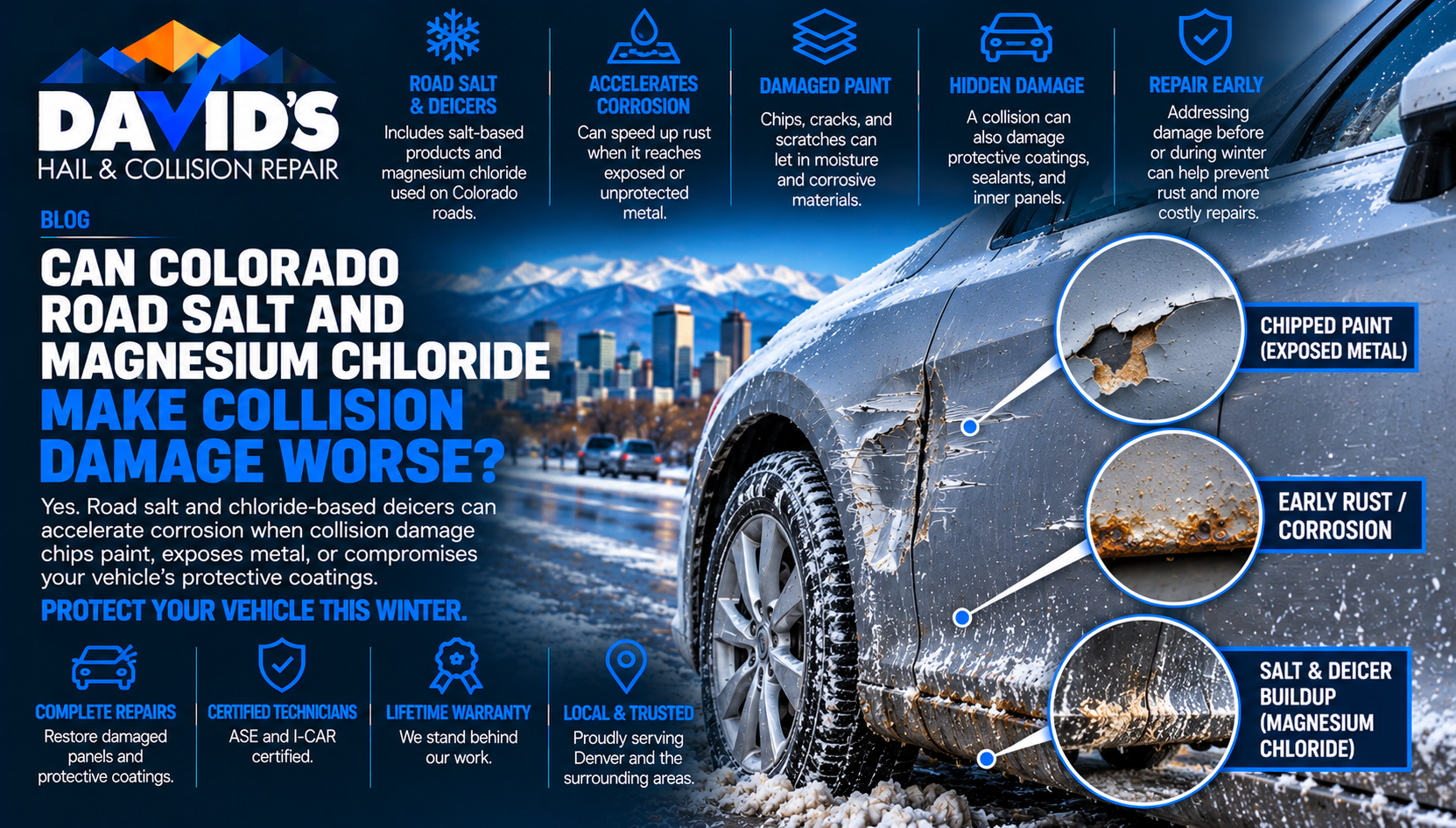
Can Colorado Road Salt and Magnesium Chloride Make Collision Damage Worse?
Colorado drivers know winter roads can be tough on their vehicles. Between freezing temperatures, snow-packed highways, and the chemicals used to keep roads passable, your car faces conditions that can accelerate wear throughout the colder months.
But there’s a problem many drivers overlook: road salt and magnesium chloride can contribute to corrosion when collision damage exposes bare metal or compromises your vehicle’s protective coatings.
That small scrape on your bumper, chipped paint along a fender, or damaged rocker panel might seem like something you can put off repairing. Once winter moisture and road deicers enter the picture, however, exposed metal can become more vulnerable to rust.
At David’s Hail & Collision Repair, we help Denver-area drivers identify accident-related body damage and determine which repairs should be addressed before winter conditions make the situation worse.
Here’s what Colorado drivers should know about road deicers, corrosion, and protecting a damaged vehicle.
Can Road Salt Make Collision Damage Worse?
Yes. Road salt and chloride-based deicers can accelerate corrosion when they come into contact with exposed steel or other vulnerable metal surfaces. Collision damage that chips paint, cracks protective coatings, or exposes seams can create pathways for moisture and corrosive materials to reach those areas.
Modern vehicles have multiple layers of corrosion protection, including paint, primer, sealants, and protective underbody coatings.
When those barriers remain intact, they help protect the metal underneath.
But a collision can damage more than the visible paint finish.
Scratches, dents, cracks, and displaced panels can compromise protective materials and allow moisture to reach surfaces that weren’t previously exposed.
That doesn’t mean every scratch will turn into rust. It does mean damaged protective coatings deserve attention, especially before prolonged winter exposure.
Why Colorado Uses Road Deicers During Winter
Snow and ice can make Denver-area roads dangerous, particularly during overnight freezing, rapidly changing temperatures, and heavy winter storms.
Transportation agencies use several methods to improve road conditions, including plowing, traction materials, and chemical deicers.
Depending on the roadway, weather conditions, and maintenance agency, those materials may include salt-based products and liquid deicers containing chlorides.
Magnesium chloride is one of the materials associated with Colorado winter road maintenance, although treatment practices vary by jurisdiction and conditions.
These materials help manage ice and snow, but chloride exposure can also contribute to corrosion on susceptible vehicle components.
For drivers with existing collision damage, the concern is whether protective surfaces have been compromised.
1. Chipped Paint Can Expose Metal to Winter Moisture
Automotive paint does more than make a vehicle look attractive.
The paint system helps protect underlying materials from environmental exposure.
When a collision chips or removes paint, the exposed area may become more susceptible to moisture and corrosion, particularly on steel panels.
Common areas include:
- Fenders
- Doors
- Quarter panels
- Hoods
- Trunk lids
- Rocker panels
- Wheel arches
A small paint chip may initially appear harmless.
But repeated exposure to snow, slush, moisture, and road deicers can increase corrosion risk when bare steel is exposed.
The longer damaged metal remains unprotected, the greater the opportunity for corrosion to develop.
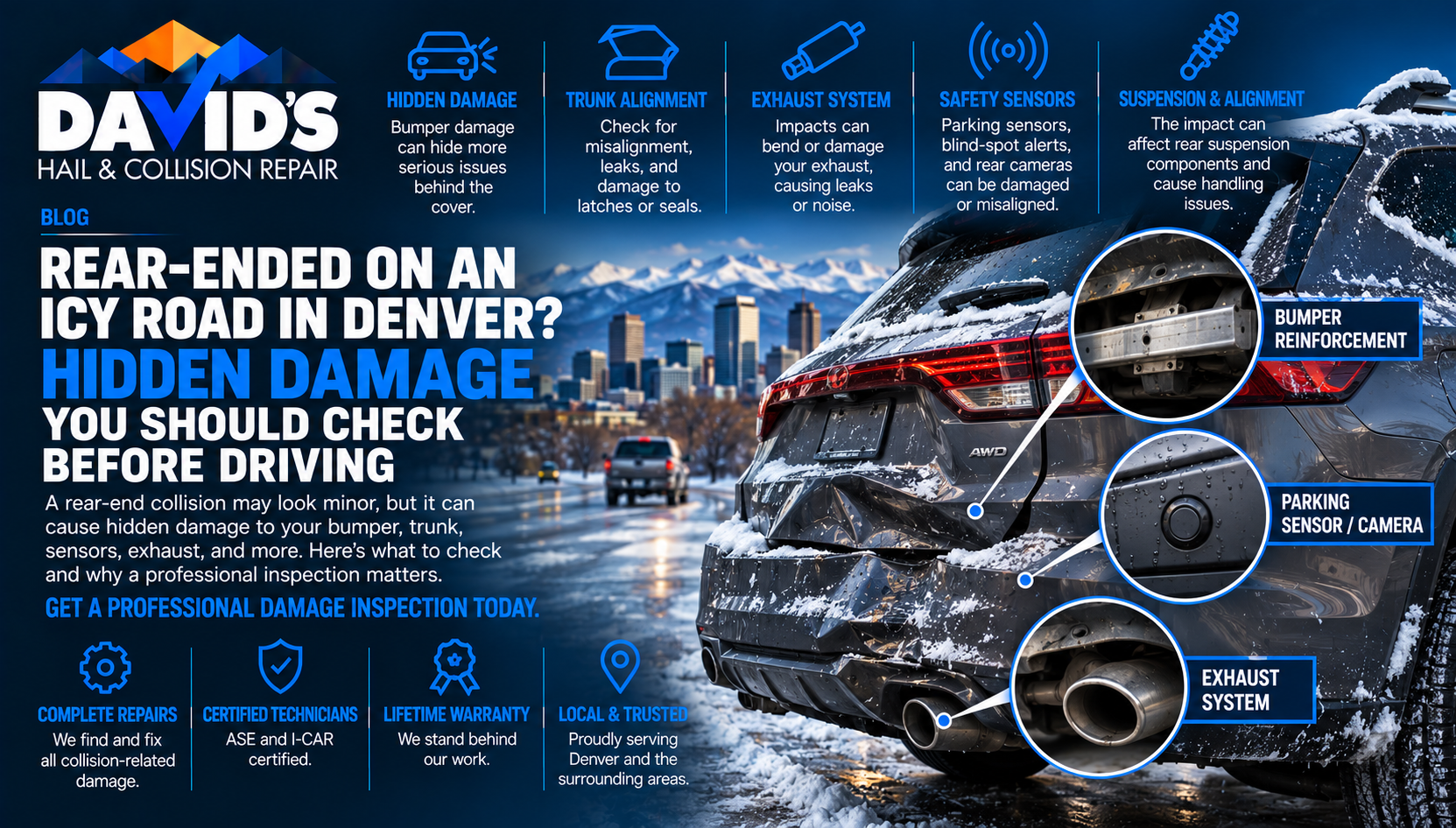
2. Damaged Bumpers Can Hide Problems Behind the Cover
Most modern vehicles use plastic bumper covers, which don’t rust like steel.
However, that doesn’t mean a damaged bumper assembly is immune to winter-related problems.
Behind the exterior cover may be:
- Metal reinforcement components
- Mounting brackets
- Fasteners
- Wiring
- Sensors
- Energy-absorbing materials
- Adjacent structural components
A collision can crack the bumper cover, displace components, or damage protective finishes on underlying metal parts.
Snow, road spray, and deicing chemicals may then reach areas that are normally better protected.
A professional inspection can help determine whether the impact damaged components beyond the visible bumper cover.
3. Rocker Panels and Wheel Wells Face Heavy Winter Exposure
Some of the most vulnerable areas of a vehicle are located close to the road.
Rocker panels, wheel arches, and lower body sections regularly encounter water, gravel, slush, and road debris.
During winter, tires can throw deicing chemicals and moisture directly onto these surfaces.
If a previous collision has damaged the paint, seam sealer, or protective coatings, these areas may become more susceptible to corrosion.
Pay particular attention to:
- Scratches along lower doors
- Dented rocker panels
- Damaged wheel arches
- Exposed metal near panel seams
- Missing or loose wheel-well liners
- Cracked protective undercoating
Damage near seams or overlapping metal sections can be especially concerning because moisture may become trapped in areas that are difficult to clean or inspect.
4. Cracked Paint Around a Dent Can Lead to Rust
Not every dent damages the paint.
Some shallow dents leave the factory finish intact, while sharper impacts can crack or fracture the coating.
A dent with intact paint is different from one where bare metal is exposed.
When paint cracks, moisture can potentially penetrate the damaged area and reach the underlying metal.
Over time, corrosion may develop around the affected section.
Signs worth watching for include:
- Rust-colored discoloration
- Bubbling paint
- Flaking paint
- Rough or uneven surfaces
- Visible cracks around the dent
- Corrosion developing near panel edges
If you notice these changes, have the area inspected before the damage progresses.
5. Hidden Collision Damage Can Compromise Corrosion Protection
One reason professional collision repair matters is that accidents can damage protective materials that aren’t visible from outside the vehicle.
Depending on the impact, damage may affect:
- Seam sealers
- Underbody coatings
- Factory corrosion-resistant finishes
- Panel joints
- Mounting points
- Inner body panels
- Structural components
For example, a collision that damages a lower quarter panel may also affect coatings or seams behind the visible exterior panel.
Even after cosmetic damage is corrected, appropriate corrosion protection may need to be restored as part of the repair.
Proper collision repair involves addressing the damaged components and restoring applicable protective coatings—not simply making the exterior look smooth again.
Does Magnesium Chloride Cause Rust on Cars?
Magnesium chloride can contribute to corrosion under certain conditions, particularly when chloride-containing moisture contacts susceptible metals. However, corrosion depends on several factors, including the material, protective coatings, exposure time, and environmental conditions.
Magnesium chloride isn’t the only winter material that can contribute to corrosion.
Sodium chloride and other chloride-based deicers can also increase corrosion risk.
The important distinction is that chloride exposure doesn’t automatically mean a vehicle will rust.
Vehicles with intact protective coatings generally have better protection than areas where paint or corrosion-resistant finishes have been damaged.
For a vehicle with exposed metal from a collision, repeated winter exposure makes prompt inspection and appropriate repairs worthwhile.
Can Road Salt Damage Aluminum Body Panels?
Aluminum doesn’t develop the same reddish-brown rust associated with steel, but it can still corrode.
Some modern vehicles use aluminum in hoods, doors, fenders, and structural components.
When protective coatings are compromised, aluminum may experience corrosion under certain conditions, including chloride exposure.
Corrosion on aluminum can appear as:
- White or gray powdery residue
- Surface discoloration
- Pitting
- Bubbling beneath paint
- Deterioration around damaged coatings
Repair methods and corrosion protection requirements vary by material and vehicle manufacturer.
That’s why it’s important to identify the panel material before deciding how damaged areas should be repaired.
Should You Repair Collision Damage Before Winter?
If collision damage has exposed metal, cracked paint, damaged protective coatings, or affected structural components, having it inspected before prolonged winter exposure is a sensible precaution.
Not every cosmetic scratch requires extensive bodywork.
However, certain types of damage deserve more immediate attention.
These include:
- Bare metal exposed to moisture
- Cracked paint around dents
- Damaged rocker panels
- Loose or missing protective liners
- Bent or displaced panels
- Damaged seam sealer
- Structural damage
- Water entering the vehicle
Addressing these problems early may help limit additional deterioration.
Waiting until spring can allow existing damage to remain exposed through months of snow, slush, and repeated freeze-thaw cycles.
How to Protect Your Car From Road Salt After an Accident
If your vehicle has minor collision damage and you’re waiting for repairs, there are steps you can take to reduce unnecessary exposure.
1. Wash Away Winter Road Residue
Regular washing can help remove accumulated road salt, dirt, and deicing chemicals.
Pay attention to lower body panels, wheel wells, and other areas exposed to road spray.
Use appropriate washing methods and avoid forcing water into damaged electrical components or open body cavities.
2. Keep Drainage Areas Clear
Leaves, dirt, ice, and debris can block drainage openings.
Trapped moisture may increase corrosion risk in vulnerable areas.
Make sure accessible drainage areas remain clear without disturbing factory plugs, seals, or protective components.
3. Inspect Damaged Paint
Look for chipped paint, cracks, bubbling, or visible corrosion.
Small defects can sometimes be addressed before more extensive refinishing becomes necessary.
4. Avoid Improvised Repairs
Household adhesives, inappropriate coatings, and poorly applied sealants may trap moisture or interfere with proper repairs.
A qualified technician can recommend the appropriate treatment for the damaged material and location.
5. Schedule a Professional Damage Inspection
If the vehicle was involved in a collision, an inspection can help identify both visible and hidden damage.
This is particularly important when the accident affected lower body panels, wheel wells, or structural areas.
Can Waiting to Repair Collision Damage Make Repairs More Expensive?
Potentially, yes.
When damaged paint or protective coatings leave susceptible metal exposed, corrosion can develop over time.
If deterioration spreads beyond the original damaged area, additional repair work may be needed.
For example, a panel that initially required localized repair and refinishing could eventually require more extensive corrosion treatment if rust develops.
However, the outcome depends on the type of damage, material, exposure, and how long the area remains unprotected.
The best approach is to have the damage evaluated rather than assume it will remain unchanged until spring.
Will Insurance Cover Rust That Develops After a Collision?
Insurance coverage depends on the specific policy, claim circumstances, and the relationship between the original accident and any later damage.
A covered collision may include necessary repairs to damaged panels and protective finishes.
However, corrosion that develops over time may be treated differently from the original sudden accident damage.
Insurance policies can contain exclusions or limitations involving wear, deterioration, corrosion, and failure to prevent additional damage.
That’s why documenting accident-related damage promptly is important.
If you have an open insurance claim, David’s Hail & Collision Repair can help document the repair requirements and communicate with the insurance carrier.
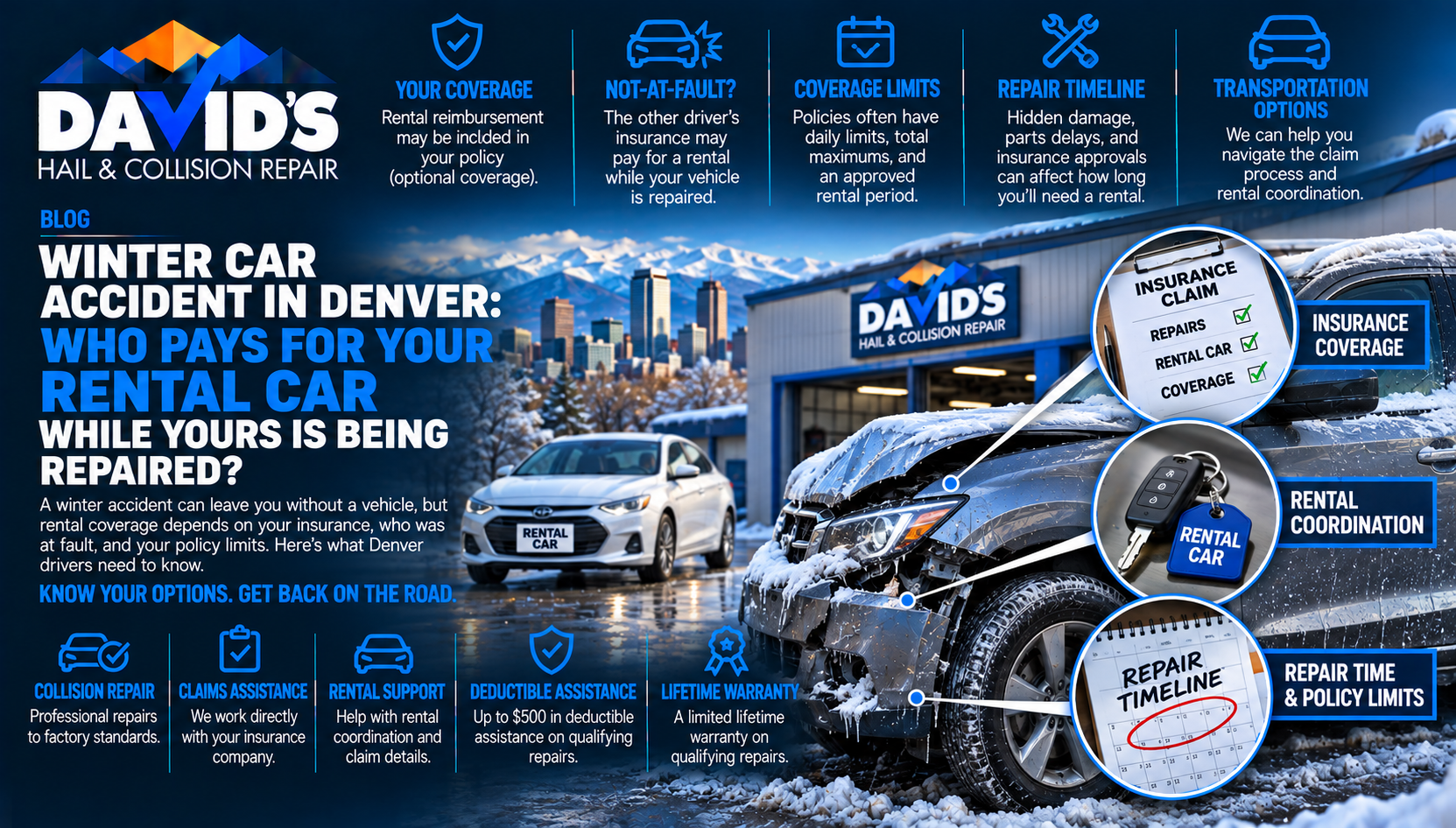
Learn more about our Insurance Claims Assistance service.
Professional Collision Repair Includes More Than Paint
A quality collision repair isn’t simply about making damaged panels look good again.
Depending on the vehicle and repair, the process may involve:
- Damage inspection
- Panel repair or replacement
- Structural repair
- Surface preparation
- Paint matching and refinishing
- Seam sealer restoration
- Corrosion protection
- Reassembly
- Final quality inspection
Manufacturer repair procedures may specify particular coatings, sealers, and corrosion-protection methods for repaired areas.
Following appropriate repair requirements helps protect the integrity and appearance of the finished repair.
For more information, visit our Collision Repair service page.
Why Denver Drivers Choose David’s Hail & Collision Repair
David’s Hail & Collision Repair helps vehicle owners throughout the Denver metro area address collision damage before winter conditions create additional concerns.
Our Englewood facility provides:
- ASE and I-CAR certified technicians
- Professional collision and auto body repair
- Structural and body-panel repair
- Automotive paint and refinishing
- Insurance claims assistance
- Insurance supplement coordination
- Up to $500 in deductible assistance on qualifying repairs
- Limited lifetime warranty on qualifying repairs
- A+ Better Business Bureau rating
- Free damage inspections
- English and Spanish-speaking customer assistance
Our team focuses on identifying the full scope of accident-related damage and developing an appropriate repair plan.
Collision Repair for Denver and Surrounding Communities
David’s Hail & Collision Repair is located in Englewood and serves drivers throughout Denver, Aurora, Lakewood, Littleton, Centennial, Highlands Ranch, and surrounding communities.
Whether your vehicle has a scratched fender, damaged rocker panel, cracked bumper, or more significant collision damage, don’t assume winter road conditions won’t affect the damaged area.
A professional inspection can help determine what needs attention.
Schedule Your Free Collision Damage Inspection
Winter road conditions can make existing collision damage more vulnerable to deterioration—especially when metal or protective coatings are exposed.
If your vehicle has unrepaired body damage, chipped paint, or other accident-related concerns, David’s Hail & Collision Repair can inspect the damage and explain your repair options.
Don’t wait until a small problem becomes a larger one.
Call (303) 815-3854 or schedule your free inspection online.