




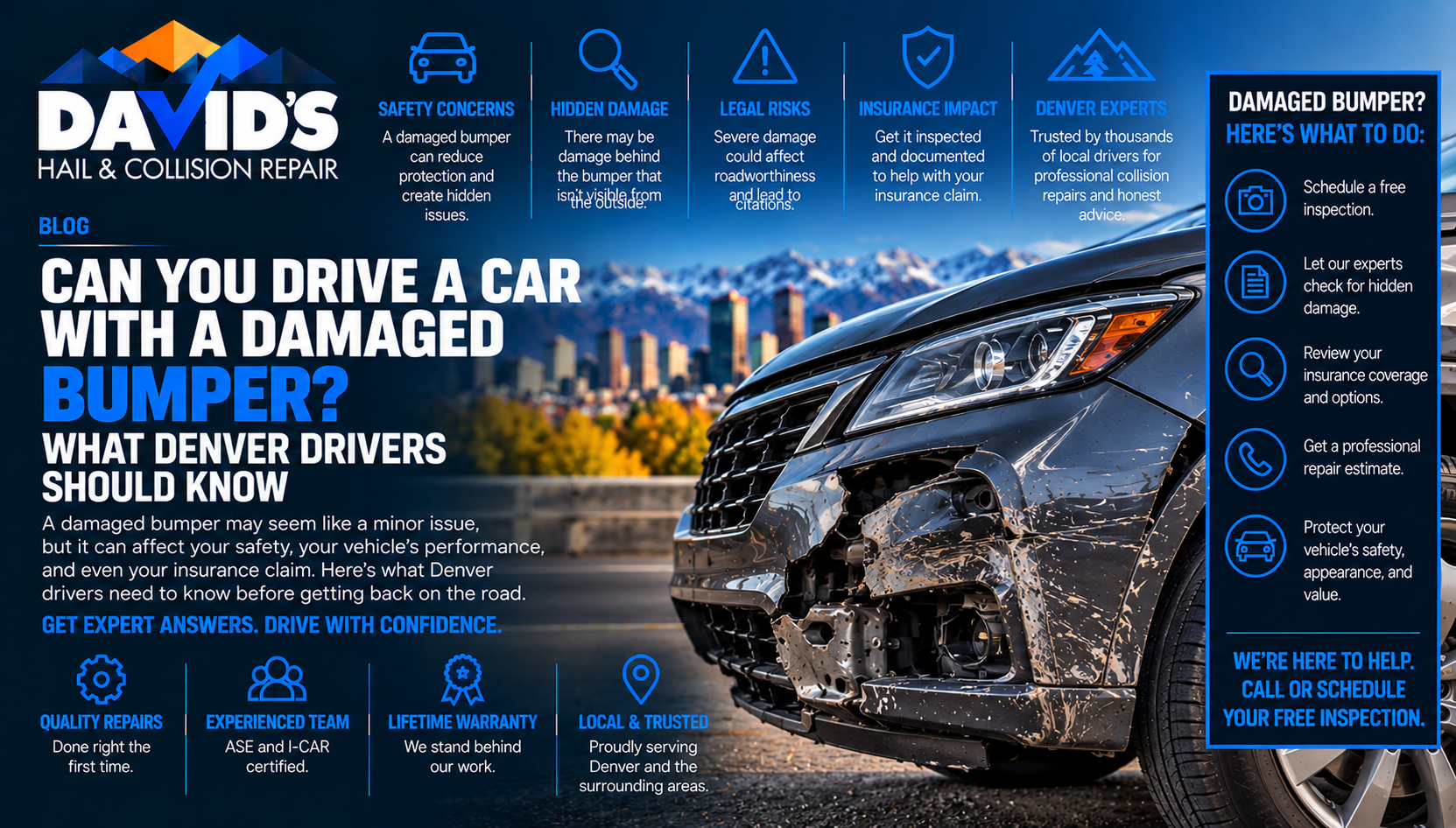
Can You Drive a Car With a Damaged Bumper? What Denver Drivers Should Know
A cracked bumper. A dented corner. A piece of plastic hanging loose after a parking lot accident.
At first glance, bumper damage might not seem like a serious problem. Your vehicle still starts, the steering feels normal, and the damage appears to be mostly cosmetic.
But is it actually safe to keep driving?
The answer depends on more than how your bumper looks.
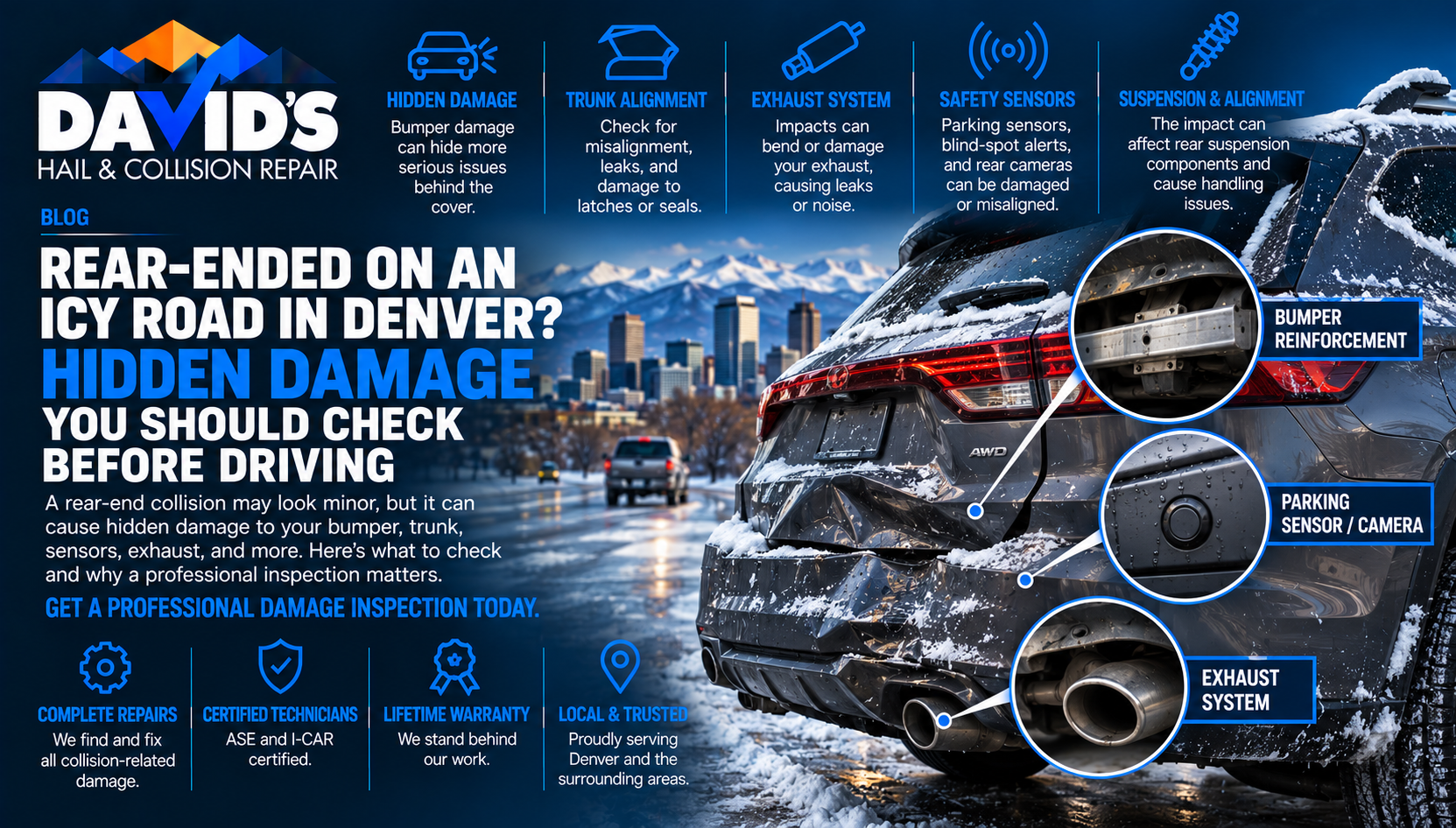
Modern vehicle bumpers are part of a larger system designed to help manage collision forces and protect critical components. Even relatively minor impacts can damage parts you can’t see, including reinforcement structures, energy absorbers, mounting brackets, and electronic safety systems.
If you’re wondering whether you can drive a car with a damaged bumper, understanding the potential risks can help you make a safer decision.
At David’s Hail & Collision Repair in Englewood, Colorado, we help Denver-area drivers evaluate collision damage, navigate insurance claims, and restore their vehicles using appropriate repair procedures.
Is It Safe to Drive With a Damaged Bumper?
Sometimes minor cosmetic bumper damage doesn’t prevent a vehicle from being driven safely. However, other types of damage can create immediate safety concerns.
The difference depends on the location, severity, and underlying effects of the collision.
For example, a small surface scratch on an otherwise intact bumper cover is very different from a bumper that’s partially detached, exposing sharp edges, or interfering with the vehicle’s tires.
You should avoid driving a vehicle when bumper damage creates conditions such as:
-
Loose components that could detach while driving.
-
Sharp or protruding pieces that could injure someone.
-
Damage that interferes with steering or tire movement.
-
Broken or obstructed headlights, taillights, or turn signals.
-
Exposed wiring or damaged electrical components.
-
Leaking fluids or damage affecting critical vehicle systems.
-
Significant damage to the bumper’s underlying structure.
If you’re uncertain whether your vehicle is safe to operate, have it professionally evaluated before continuing to drive.
A bumper that looks relatively normal from the outside can still conceal damage beneath its painted exterior.
Understanding How Modern Car Bumpers Actually Work
Many drivers think of a bumper as the painted plastic piece covering the front or rear of their vehicle.
That visible piece is generally called the bumper cover.
But the complete bumper system often includes several additional components.
Bumper Cover
The bumper cover is the exterior component that gives the front or rear of your vehicle its finished appearance.
Depending on the vehicle, it may contain openings or mounting points for lighting, sensors, cameras, and other equipment.
A bumper cover can become scratched, cracked, dented, or detached during a collision.
Energy Absorbers
Many vehicles contain energy-absorbing materials behind the bumper cover.
These components are designed to help manage impact energy under specific collision conditions.
Depending on their construction and the severity of the impact, they may require replacement after being damaged.
Bumper Reinforcement
The bumper reinforcement is a structural component positioned behind the exterior bumper cover.
Its purpose is to help manage and distribute collision forces as part of the vehicle’s overall crash-management design.
Damage to the reinforcement may not be visible until the bumper cover is removed.
Mounting Brackets and Supports
Bumper assemblies also rely on brackets, clips, retainers, and mounting structures.
A collision can break or deform these components, leaving the bumper loose or improperly positioned.
Replacing or repairing the visible bumper cover alone may not address underlying damage.
Can a Cracked Bumper Affect Your Car’s Safety?
Yes, depending on the severity of the damage and which components are affected.
A cracked bumper cover doesn’t automatically mean the vehicle is unsafe to drive. However, it may indicate that the bumper system experienced an impact significant enough to damage other components.
For example, a collision could crack the cover while also deforming the reinforcement or damaging mounting structures.
Because these components are hidden, the full extent of the damage may not be apparent during a casual visual inspection.
Why Cosmetic Appearance Can Be Misleading
Some bumper covers are flexible enough to partially return to their original shape after an impact.
That means the exterior may appear relatively undamaged even when components behind it have absorbed collision forces.
A professional inspection helps determine whether the damage is limited to the exterior or involves other parts of the bumper assembly.
The appropriate repair depends on the vehicle manufacturer’s procedures and the condition of the affected components.
What Happens if Your Bumper Is Hanging Off?
A loose or partially detached bumper can create several hazards.
If the bumper separates from the vehicle while driving, it could become road debris and endanger other motorists.
A hanging bumper may also rub against a tire, interfere with wheel movement, or damage surrounding body panels.
In some cases, exposed brackets or sharp edges can create additional risks.
Can You Temporarily Tape a Bumper Back Into Place?
You may have seen vehicles with bumper covers secured using duct tape, zip ties, or other temporary materials.
While these methods might appear to hold a loose component in place, they don’t restore the bumper assembly’s original mounting system or structural function.
Temporary fastening also doesn’t establish that the vehicle is safe to drive.
If your bumper is loose, damaged, or at risk of detaching, arrange an appropriate inspection or towing assistance rather than relying on an improvised repair.
Can Bumper Damage Affect Parking Sensors and Driver-Assistance Systems?
Absolutely.
Modern vehicles frequently integrate electronic systems into or around their bumper assemblies.
Depending on the make, model, and equipment, these may include:
-
Parking assistance sensors.
-
Blind-spot monitoring radar units.
-
Rear cross-traffic alert systems.
-
Automatic emergency braking sensors.
-
Adaptive cruise control radar.
-
Cameras and related wiring.
A collision may damage these components or change their positioning.
Even when the sensors themselves remain functional, damage to mounting brackets or surrounding structures may affect their operation.
Why Sensor Positioning Matters
Some advanced driver-assistance systems depend on precisely positioned sensors and cameras.
If a collision changes a sensor’s alignment or mounting position, the system may not perform as intended.
Certain repairs or component replacements may require diagnostic testing, calibration, or other manufacturer-specified procedures.
The exact requirements depend on the vehicle and the affected system.
That’s why bumper repair should involve more than simply restoring the painted exterior.
Is It Illegal to Drive With a Damaged Bumper in Colorado?
Not every scratched, dented, or cracked bumper automatically makes a vehicle illegal to operate in Colorado.
However, vehicle condition and equipment requirements still apply.
Damage that creates hazardous protrusions, allows parts to detach, interferes with required lighting, or otherwise makes a vehicle unsafe may result in a vehicle failing to meet applicable safety requirements.
The legal implications depend on the specific condition of the vehicle and the applicable law.
Rather than assuming any amount of bumper damage is acceptable, drivers should focus on whether the vehicle can be operated safely and whether required equipment remains functional.
When in doubt, have the vehicle evaluated before continuing to drive.
Should You Repair or Replace a Damaged Bumper?
Whether a damaged bumper can be repaired or needs replacement depends on several factors.
These include the material, location of the damage, severity of the impact, manufacturer repair procedures, and condition of the underlying components.
When Bumper Repair May Be Appropriate
Some superficial scratches, minor cosmetic damage, or limited surface imperfections may be repairable.
However, the repair method must be appropriate for the bumper material and the vehicle manufacturer’s requirements.
Certain areas of a bumper cover may also have restrictions related to embedded or nearby radar and sensor systems.
When Bumper Replacement May Be Necessary
Replacement may be required when the bumper cover or underlying components have damage that cannot be safely repaired according to applicable procedures.
Examples may include significant cracks, broken mounting points, damaged reinforcement components, or damage in areas where the manufacturer restricts repairs.
A professional collision repair inspection helps determine which components require repair or replacement.
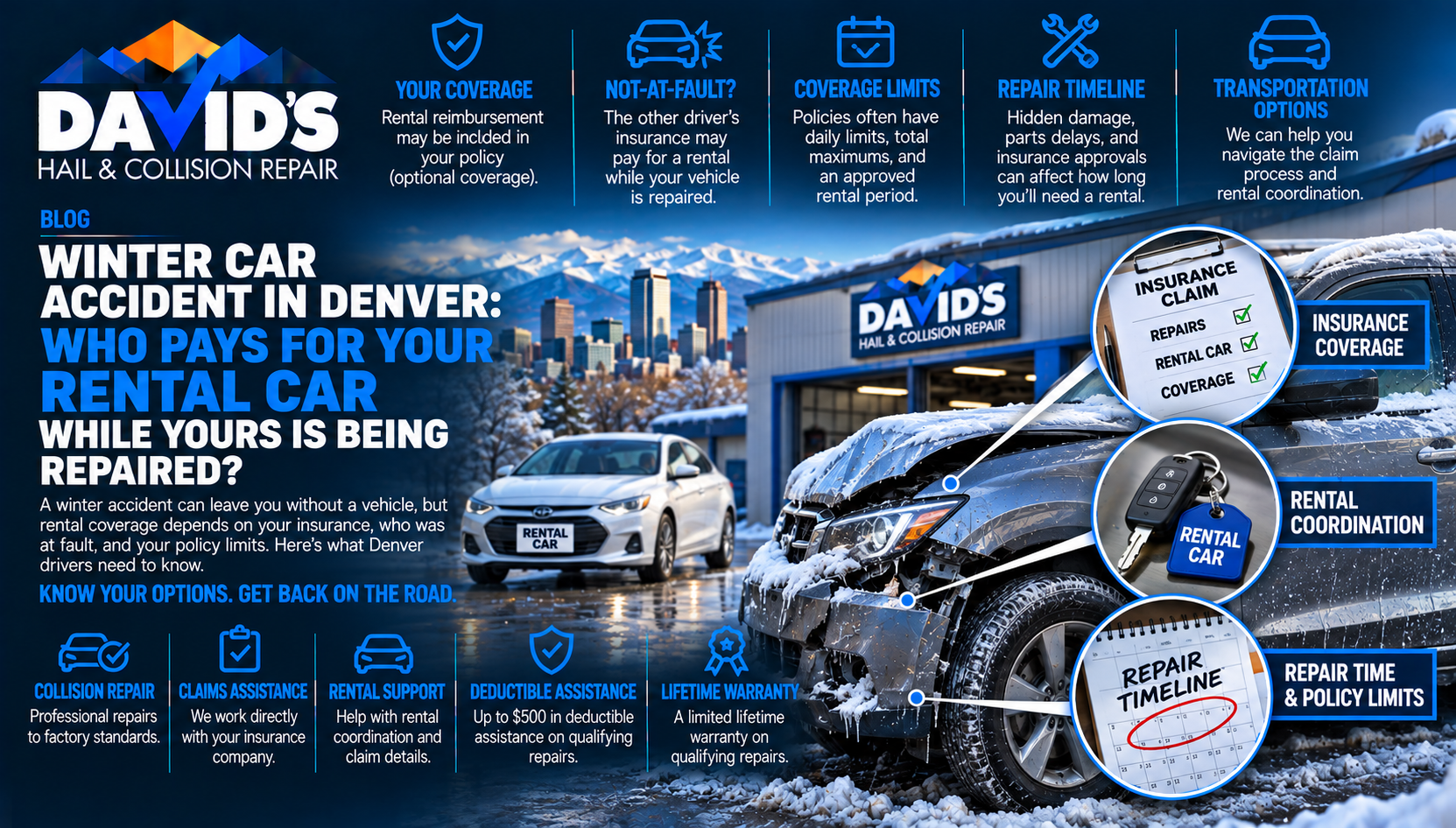
Will Insurance Cover a Damaged Bumper?
Bumper damage may be covered under an applicable auto insurance policy, depending on how the damage occurred and the coverage available.
For example:
-
Collision coverage may apply when the bumper is damaged in a covered accident involving another vehicle or object.
-
Comprehensive coverage may apply to certain non-collision events, depending on the cause and policy.
-
Another driver’s liability insurance may apply when that driver is responsible for the accident and coverage is available.
Your deductible, policy limits, and the insurer’s claim determination can affect your out-of-pocket costs.
What if the Insurance Estimate Misses Hidden Bumper Damage?
An initial estimate may only account for damage visible before disassembly.
Once the bumper cover is removed, a repair facility may discover additional damage to reinforcements, brackets, sensors, or other components.
When this happens, the shop may document the findings and submit a supplemental estimate for the insurer to review.
At David’s Hail & Collision Repair, we assist customers with insurance claims and communicate with insurance adjusters throughout the repair process.
We can help explain the documented damage and the steps involved in pursuing approval for necessary repairs.
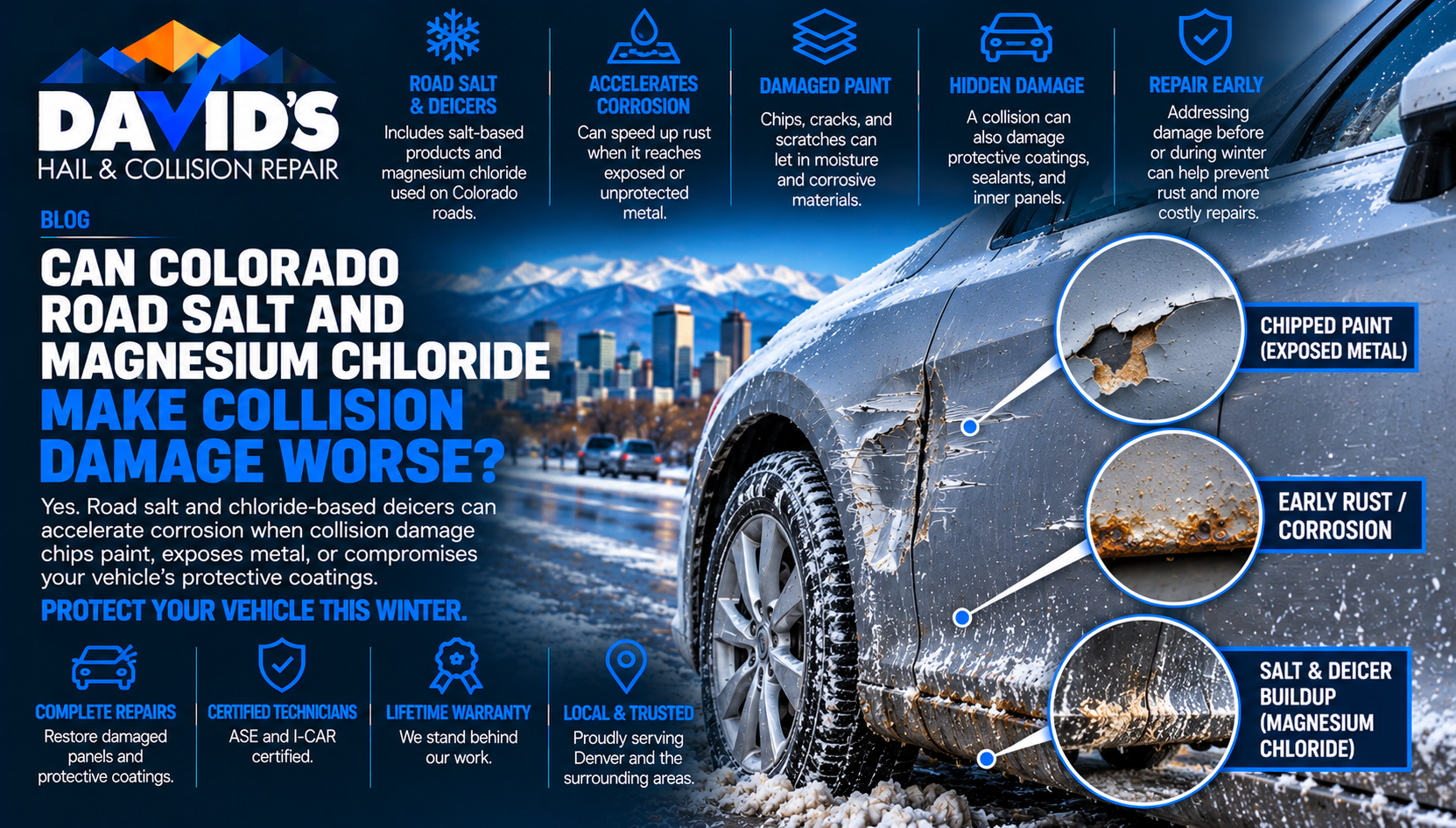
Why You Shouldn’t Ignore Bumper Damage Before Winter
Denver’s fall and winter weather can make existing vehicle damage more problematic.
Snow, moisture, freezing temperatures, and road deicing materials can expose damaged areas to additional environmental conditions.
If a collision has damaged protective coatings or exposed metal components, corrosion may become a concern over time.
Loose bumper components may also be more vulnerable to vibration, road debris, and additional contact with snow or ice.
And when visibility is reduced during winter weather, properly functioning lights and safety systems become especially important.
A professional inspection before winter driving conditions intensify can help identify problems that should be addressed.
Professional Bumper and Collision Repair in Denver, Colorado
If your bumper is cracked, dented, loose, or damaged after an accident, David’s Hail & Collision Repair can help you understand the appropriate next steps.
Located in Englewood, Colorado, our collision repair facility serves drivers throughout the Denver metro area, including Denver, Aurora, Lakewood, Littleton, and surrounding communities.
Our services include professional collision repair, insurance claims assistance, and paintless dent repair when appropriate for the damage.
We also offer a lifetime warranty on qualifying repairs and deductible assistance of up to $500 on eligible insurance-approved repairs.
Our goal is to help customers understand their vehicle’s damage and receive repairs that follow applicable manufacturer procedures.
Get Your Free Bumper Damage Estimate
A damaged bumper isn’t always just a cosmetic issue.
Whether your vehicle was involved in a parking lot accident, rear-end collision, or winter weather incident, identifying the full extent of the damage is an important first step.
David’s Hail & Collision Repair can inspect your vehicle, explain the repair options, and help you navigate the insurance process.
Don’t wait for a loose bumper or hidden damage to become a bigger concern.