



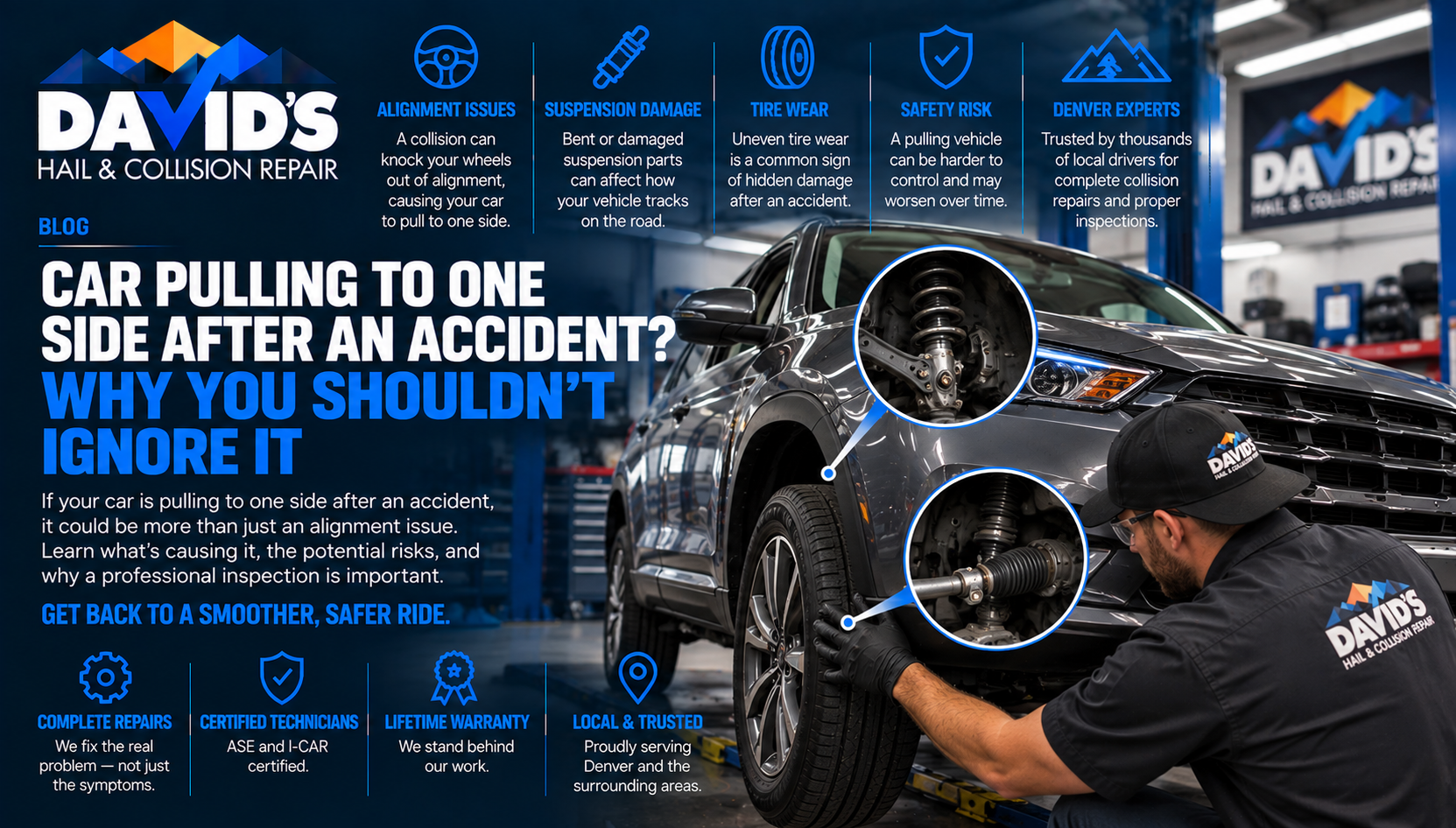
Car Pulling to One Side After an Accident? Why You Shouldn’t Ignore It
You survived the accident, exchanged insurance information, and drove away thinking the damage wasn’t too serious. But now something doesn’t feel right.
Your steering wheel isn’t quite centered. Your car seems to drift toward one side of the road. Maybe you have to constantly correct the steering just to keep the vehicle traveling straight.
If your car is pulling to one side after an accident, don’t dismiss it as a minor inconvenience.
Even a relatively low-speed collision can affect your vehicle’s alignment, suspension, steering components, or underlying structure. And while some problems are immediately obvious, others may not become noticeable until you drive the vehicle again.
At David’s Hail & Collision Repair in Englewood, Colorado, we help Denver-area drivers identify collision-related damage and understand what repairs may be necessary to restore their vehicles properly.
Why Is My Car Pulling to One Side After a Collision?
A vehicle should generally track straight on a reasonably level road without requiring constant steering corrections. If your car suddenly begins pulling left or right following an accident, something may have changed.
The cause isn’t always obvious, and the direction of the pull doesn’t necessarily identify the damaged component.
Several collision-related issues can produce similar symptoms.
1. Wheel Alignment Problems
Wheel alignment refers to the angles at which your wheels contact the road and relate to the vehicle’s suspension geometry.
A collision can change those angles, particularly when an impact involves a wheel, tire, curb, or suspension component.
Three important alignment measurements are:
-
Camber: The inward or outward tilt of the wheel when viewed from the front.
-
Caster: The angle of the steering axis when viewed from the side.
-
Toe: The direction the wheels point relative to one another when viewed from above.
When these angles fall outside manufacturer specifications, your vehicle may pull, handle unpredictably, or develop uneven tire wear.
However, a wheel alignment alone won’t necessarily solve the problem if underlying suspension or structural components are damaged.
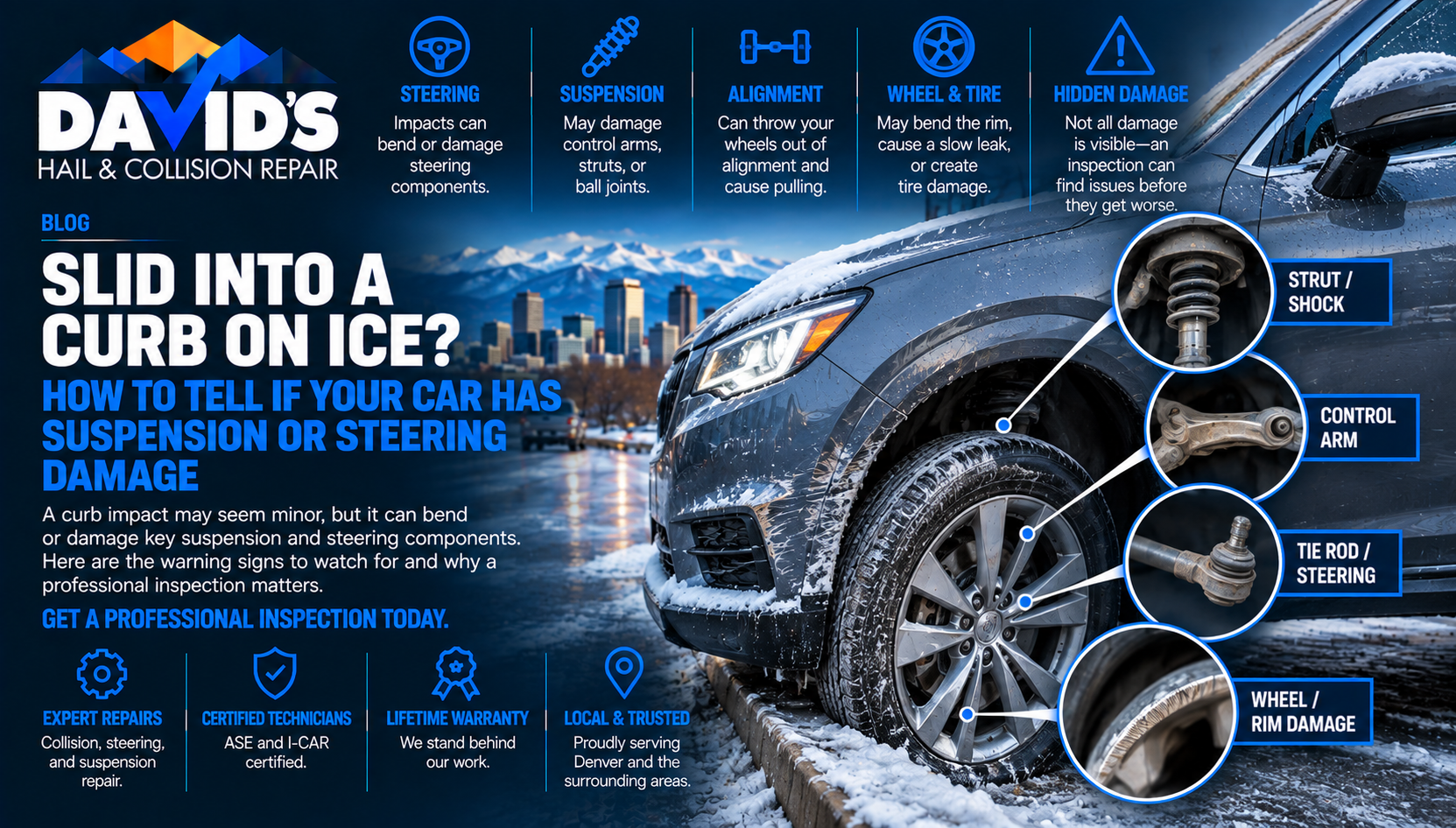
2. Bent or Damaged Suspension Components
Your vehicle’s suspension system helps maintain tire contact with the road while supporting predictable handling.
Components such as control arms, tie rods, struts, steering knuckles, and related mounting points can be affected during a collision.
Even a seemingly minor impact can create problems if the force is concentrated on a wheel or suspension assembly.
For example, sliding into a curb during icy weather may damage a control arm or steering component without causing significant visible damage to the vehicle’s body.
Possible warning signs include:
-
Pulling to the left or right.
-
A steering wheel that no longer sits straight.
-
New vibrations while driving.
-
Clunking or unusual noises when turning.
-
Uneven tire wear.
-
Changes in steering response.
These symptoms deserve professional attention, especially when they begin immediately after an accident.
3. Steering System Damage
Modern steering systems are designed to provide precise control under a variety of driving conditions.
A collision can affect steering linkages, tie rods, mounting components, or other parts of the steering system.
Depending on the vehicle and the location of the impact, damage may cause steering resistance, excessive play, inconsistent response, or a persistent pull.
Steering-related damage should never be treated as purely cosmetic.
If your vehicle becomes difficult to steer, responds unpredictably, or feels unsafe, avoid driving it until it has been evaluated.
4. Wheel and Tire Damage
Not every post-accident pull originates in the alignment or suspension system.
An impact can also damage a wheel, tire, or both.
A bent wheel, damaged tire structure, or sudden change in tire pressure can affect how a vehicle handles.
After an accident, watch for:
-
Tire pressure warnings.
-
Visible sidewall damage or bulges.
-
Bent or cracked wheels.
-
Unusual vibration.
-
Air leaking from a tire.
-
Changes in how the vehicle tracks.
A tire may have internal damage even when the exterior appears relatively normal.
If you suspect significant wheel or tire damage, do not continue driving simply because the tire is still holding air.
5. Collision-Related Structural Damage
Some collisions transfer force beyond the point of visible impact.
Depending on the severity and direction of the collision, structural mounting points or other underlying components may be affected.
When this happens, wheel alignment measurements may be outside specification because the components supporting the suspension are no longer positioned correctly.
This is one reason a professional collision inspection is important.
Simply adjusting the alignment without identifying and correcting collision-related damage may leave the underlying problem unresolved.
Can a Minor Car Accident Cause Alignment Problems?
Yes. A relatively minor accident can sometimes cause alignment or suspension problems, particularly if the impact involves a wheel, tire, or curb.
Consider a common Colorado winter driving scenario.
You’re traveling through a parking lot when your vehicle slides on ice and strikes a curb.
The bumper may look fine, and there may be little or no visible body damage.
But the impact could have transferred force directly into the wheel and suspension.
Afterward, you notice the steering wheel is slightly off-center and the vehicle pulls toward one side.
That change in handling is a reason to have the vehicle inspected.
The amount of visible exterior damage does not reliably indicate the extent of mechanical damage beneath the vehicle.
Is It Safe to Drive a Car That Pulls After an Accident?
That depends on the cause and severity of the problem, but a new pulling sensation following a collision should be treated as a potential safety concern.
Some vehicles may pull because of tire pressure differences or alignment changes. Others may have damaged steering, suspension, or wheel components that affect control.
Without an inspection, it’s difficult to know which situation applies.
Warning Signs You Shouldn’t Ignore
Stop driving when safe and arrange professional assistance if you notice:
-
Strong or sudden pulling that makes the vehicle difficult to control.
-
Significant steering resistance or looseness.
-
Grinding, scraping, or loud clunking noises.
-
A visibly damaged wheel or tire.
-
A tire rubbing against the vehicle.
-
Fluid leaking after the collision.
-
Severe vibration or unstable handling.
If the vehicle cannot be driven safely, arrange towing rather than attempting to drive it to a repair facility.
Even when symptoms seem mild, scheduling a professional inspection promptly is the safer approach.
Will a Wheel Alignment Fix the Problem After an Accident?
Not necessarily.
A wheel alignment adjusts suspension geometry within the range permitted by the vehicle’s design.
But alignment equipment cannot repair a bent control arm, damaged steering component, compromised mounting point, or other underlying collision damage.
If damaged components remain in place, the alignment may not be adjustable to manufacturer specifications.
Even when an alignment can be completed, the vehicle may continue experiencing handling problems if the underlying cause hasn’t been identified.
Why a Collision Inspection Should Come First
After an accident, the goal shouldn’t be to make the steering wheel appear straight temporarily.
The goal should be to determine what changed during the collision and what is necessary to restore the affected systems properly.
A professional inspection can help identify whether the issue involves wheel alignment, suspension components, steering systems, structural damage, or a combination of problems.
Depending on the findings, the vehicle may require additional diagnostic testing, component replacement, measurements, or alignment procedures.
Can a Car Accident Cause Problems That Show Up Later?
Yes. Some collision-related issues aren’t immediately apparent.
You might drive away from an accident without noticing anything unusual, only to discover a handling problem during your next highway trip.
Other symptoms may become more noticeable as the vehicle is driven.
Examples include:
-
Uneven tire wear developing over time.
-
Steering wheel vibration at certain speeds.
-
Changes in handling during braking or cornering.
-
Unusual noises when traveling over bumps.
-
Warning lights associated with affected vehicle systems.
Not every symptom that appears after an accident is necessarily caused by the collision. A proper inspection helps determine the likely cause rather than relying on assumptions.
If your vehicle behaved normally before the accident but begins handling differently afterward, document the symptoms and explain them to the repair facility.
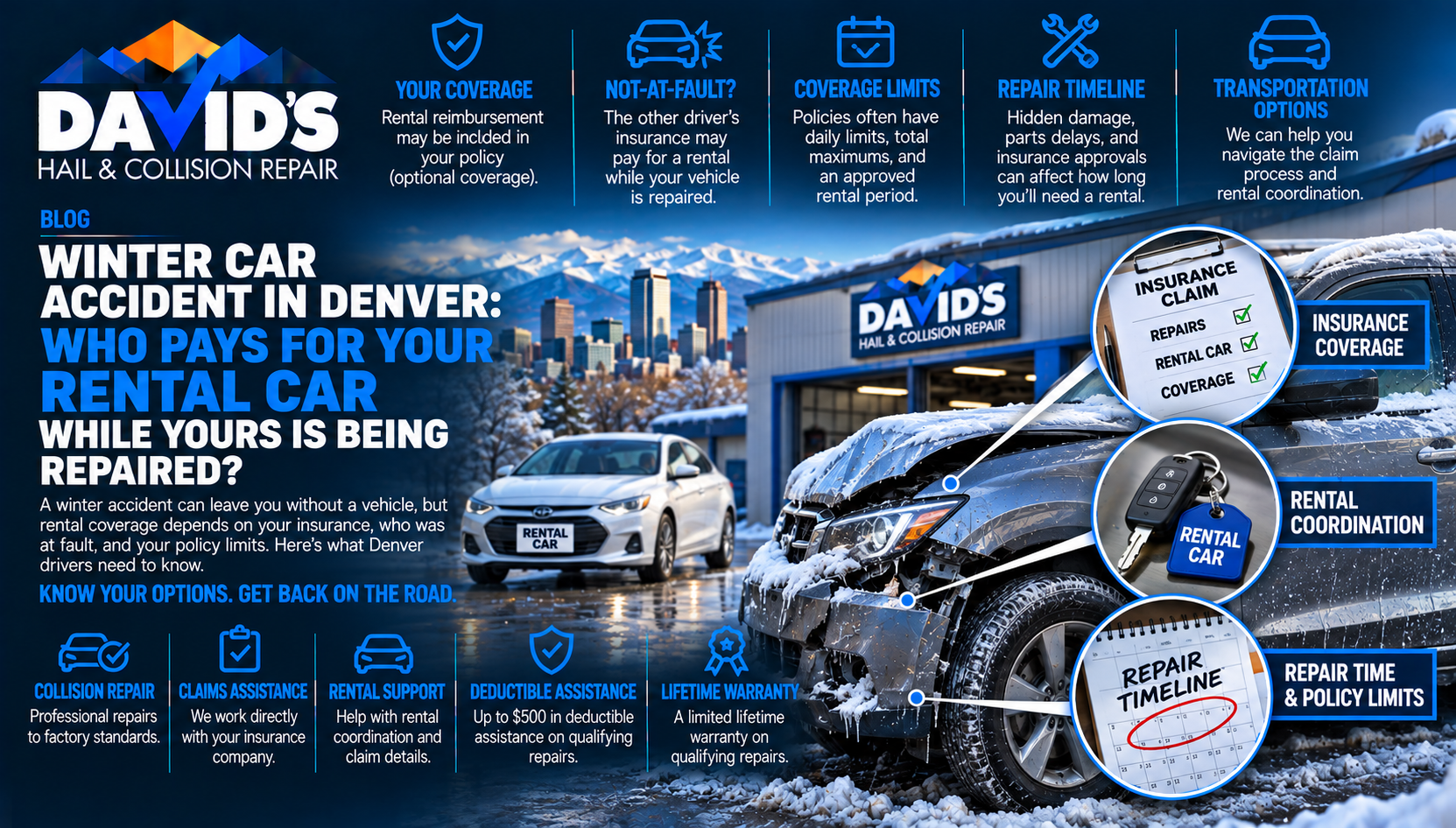
Will Insurance Cover Alignment or Suspension Damage After a Collision?
Collision-related alignment, steering, and suspension repairs may be covered by an applicable auto insurance policy, depending on the circumstances, coverage, and claim determination.
For example, if a covered accident damages a control arm or steering component, the necessary repairs may be considered as part of the collision claim.
However, coverage isn’t automatic.
Insurance companies evaluate the damage, policy terms, and available documentation before determining what repairs are covered.
What If the Insurance Estimate Only Includes Body Damage?
An initial insurance estimate may focus on visible damage.
If additional collision-related damage is identified during a professional inspection or repair process, the repair facility may document those findings and submit a supplemental estimate for insurer review.
This can be especially important when steering or suspension problems are discovered after the original estimate was prepared.
At David’s Hail & Collision Repair, we assist customers with insurance claims and communicate with insurance adjusters throughout the collision repair process.
Our team can help explain the repair findings and the next steps involved in seeking approval for additional documented damage.
Why Professional Collision Repair Matters
Modern vehicles depend on numerous interconnected systems to provide predictable handling, braking, steering, and occupant protection.
A collision can affect several of those systems at once.
That’s why professional collision repair involves more than replacing damaged body panels or making the exterior look new again.
Depending on the vehicle and the damage, proper repair may involve:
-
Inspecting affected steering and suspension components.
-
Identifying damaged mounting points.
-
Evaluating collision-related structural concerns.
-
Following applicable manufacturer repair procedures.
-
Completing necessary diagnostic testing.
-
Verifying alignment and handling after repairs.
The exact procedures depend on the vehicle, the damage, and the repair requirements.
A qualified collision repair facility should evaluate the full extent of the damage before determining the appropriate repair plan.
Collision Repair for Denver, Englewood, and Surrounding Communities
If your vehicle begins pulling to one side after an accident, David’s Hail & Collision Repair can help you take the next step toward identifying the problem.
Located in Englewood, Colorado, we serve drivers throughout the Denver metro area, including Aurora, Lakewood, Littleton, and surrounding communities.
Our team provides professional collision repair services, insurance claims assistance, and a lifetime warranty on qualifying repairs.
We also offer deductible assistance of up to $500 on qualifying insurance-approved repairs, subject to applicable eligibility requirements.
Whether you’ve been involved in a winter weather accident, rear-end collision, intersection accident, or another type of vehicle collision, our goal is to help you understand the damage and the repair process.
Get Your Free Collision Repair Estimate
If your car is pulling left or right after an accident, don’t assume a quick alignment is all it needs.
Changes in steering and handling may indicate damage that deserves professional attention.
David’s Hail & Collision Repair can help evaluate your collision-related concerns and explain the appropriate next steps.
Get your free collision repair estimate and let our team help you move forward with confidence.