




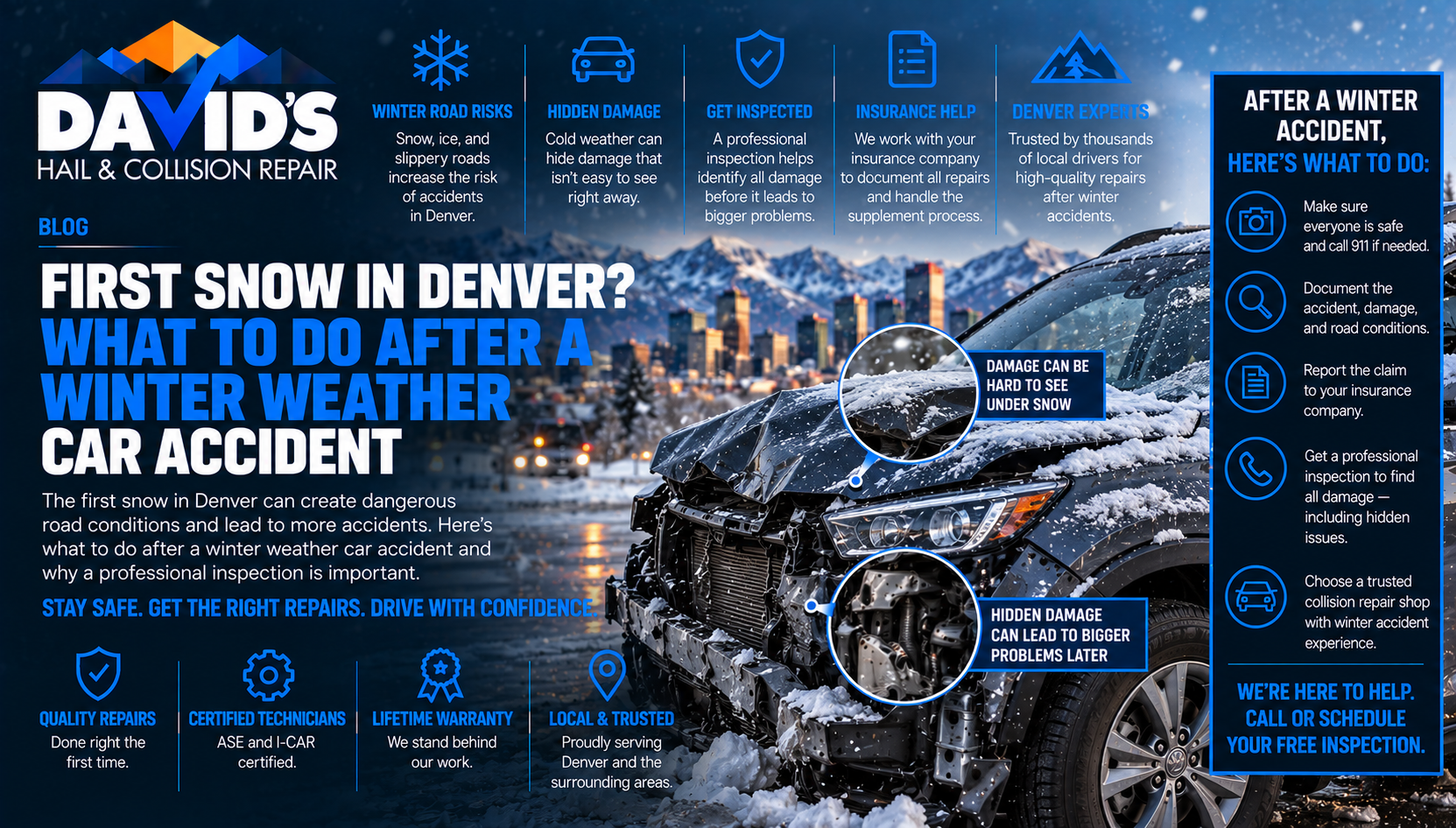
First Snow in Denver? What to Do After a Winter Weather Car Accident
Denver’s first snowfall can transform familiar roads into hazardous driving conditions in a matter of hours. A morning commute that seemed routine yesterday can suddenly involve slick intersections, reduced visibility, black ice, and drivers struggling to adjust to winter conditions.
Even a relatively minor accident on a snow-covered road can leave your vehicle with damage that goes far beyond what you can see.
Whether you’ve been rear-ended at an icy intersection, slid into another vehicle, or lost traction and struck a curb or guardrail, knowing what to do next can help protect your safety, your insurance claim, and your vehicle.
At David’s Hail & Collision Repair, we help drivers throughout Denver and the surrounding communities navigate the collision repair process, from the initial damage inspection to insurance coordination and professional repairs.
Why Denver’s First Snow Can Lead to Unexpected Car Accidents
Colorado drivers are familiar with unpredictable weather, but the first significant snowfall of the season presents some unique challenges.
Road surfaces can become slippery before drivers realize conditions have changed. Bridges, overpasses, shaded intersections, and elevated roadways can freeze before surrounding pavement.
The transition from dry roads to winter conditions also means drivers may not immediately adjust their following distances or braking habits.
Common winter weather accidents in the Denver metro area include:
-
Rear-end collisions: Vehicles sliding into stopped traffic at icy intersections or congested roadways.
-
Intersection accidents: Drivers unable to stop before entering an intersection.
-
Single-vehicle collisions: Sliding into curbs, barriers, guardrails, or other stationary objects.
-
Parking lot accidents: Low-speed collisions caused by limited traction and reduced maneuverability.
-
Multi-vehicle accidents: Chain-reaction collisions on slick highways and major roads.
Even when an accident happens at a relatively low speed, the resulting damage can affect more than the vehicle’s exterior.
1. Make Sure Everyone Is Safe Before Assessing Vehicle Damage
Immediately following a winter weather accident, your first priority should be the safety of everyone involved.
If possible and safe, move your vehicle out of active traffic. Turn on your hazard lights and avoid standing in the roadway, particularly when surrounding vehicles may have difficulty stopping.
Check yourself and your passengers for injuries. Call 911 when someone is injured, there is an immediate hazard, or emergency assistance is necessary.
If your vehicle cannot be safely moved, stay in a protected location while waiting for assistance.
Remember that icy conditions don’t disappear simply because your vehicle has stopped. Other drivers may encounter the same slippery road conditions that contributed to your accident.
2. Document the Accident Before Leaving the Scene
Once everyone is safe, gather information that may be helpful when filing an insurance claim.
Take photographs of the accident scene when it is safe to do so, including:
-
Damage to all involved vehicles.
-
Vehicle positions and surrounding roadway conditions.
-
Snow, ice, debris, and other relevant road hazards.
-
License plates and visible damage.
-
Traffic signals, intersections, and nearby landmarks.
Exchange contact, vehicle, and insurance information with the other driver.
If law enforcement responds, request information about obtaining the accident report.
Detailed documentation can help establish what happened and provide useful information during the insurance claims process.
Avoid placing yourself in danger simply to take additional photographs.
3. Don’t Assume Your Vehicle Is Safe to Drive Because the Damage Looks Minor
One of the most common mistakes drivers make after a winter collision is assuming their vehicle is safe because the visible damage appears insignificant.
A cracked bumper, small dent, or misaligned body panel may seem cosmetic, but modern vehicles contain numerous components beneath their exterior surfaces.
Depending on the location and severity of the impact, a collision may affect:
-
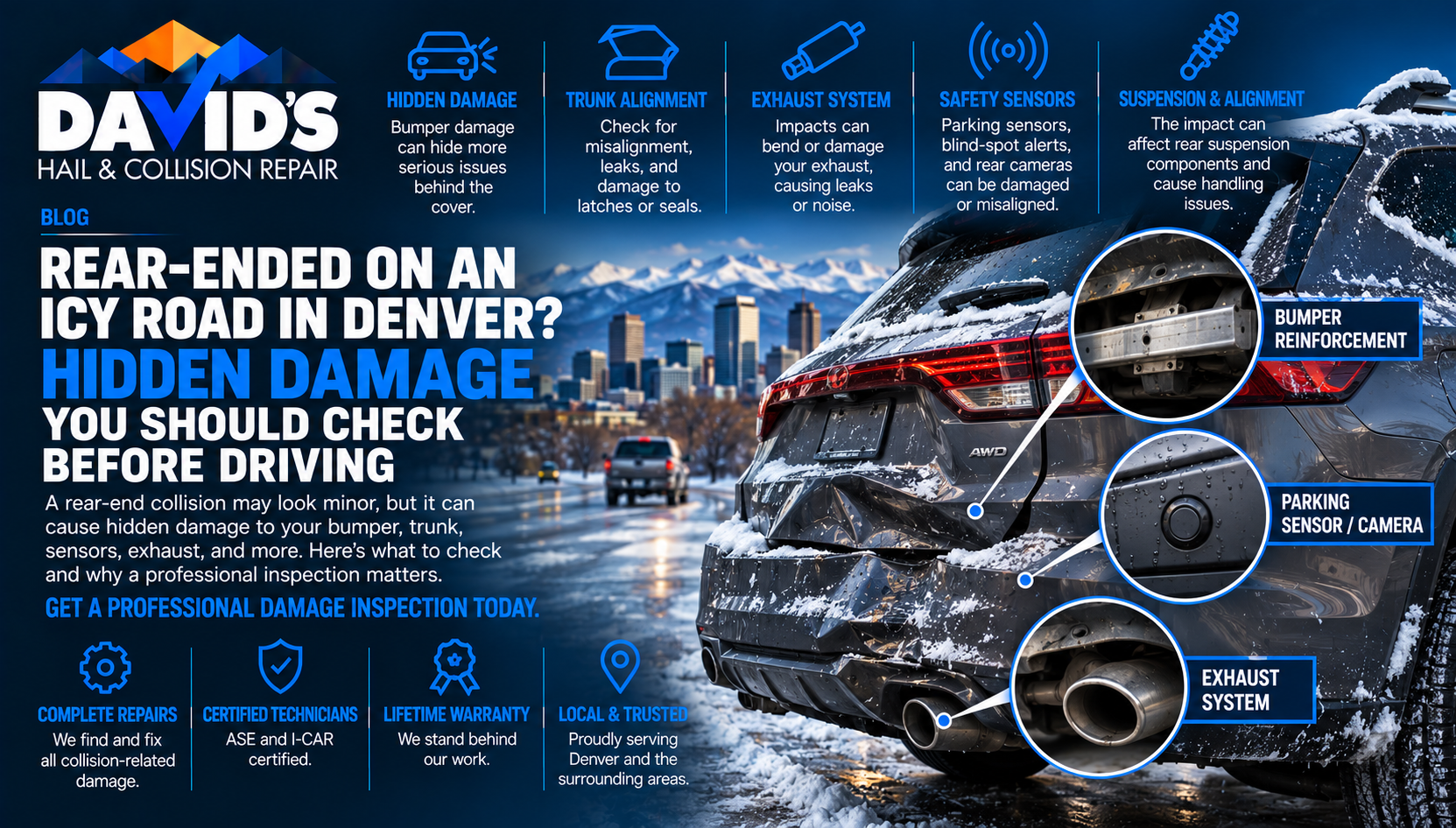
Bumper reinforcement structures and energy absorbers.
-
Mounting brackets and internal supports.
-
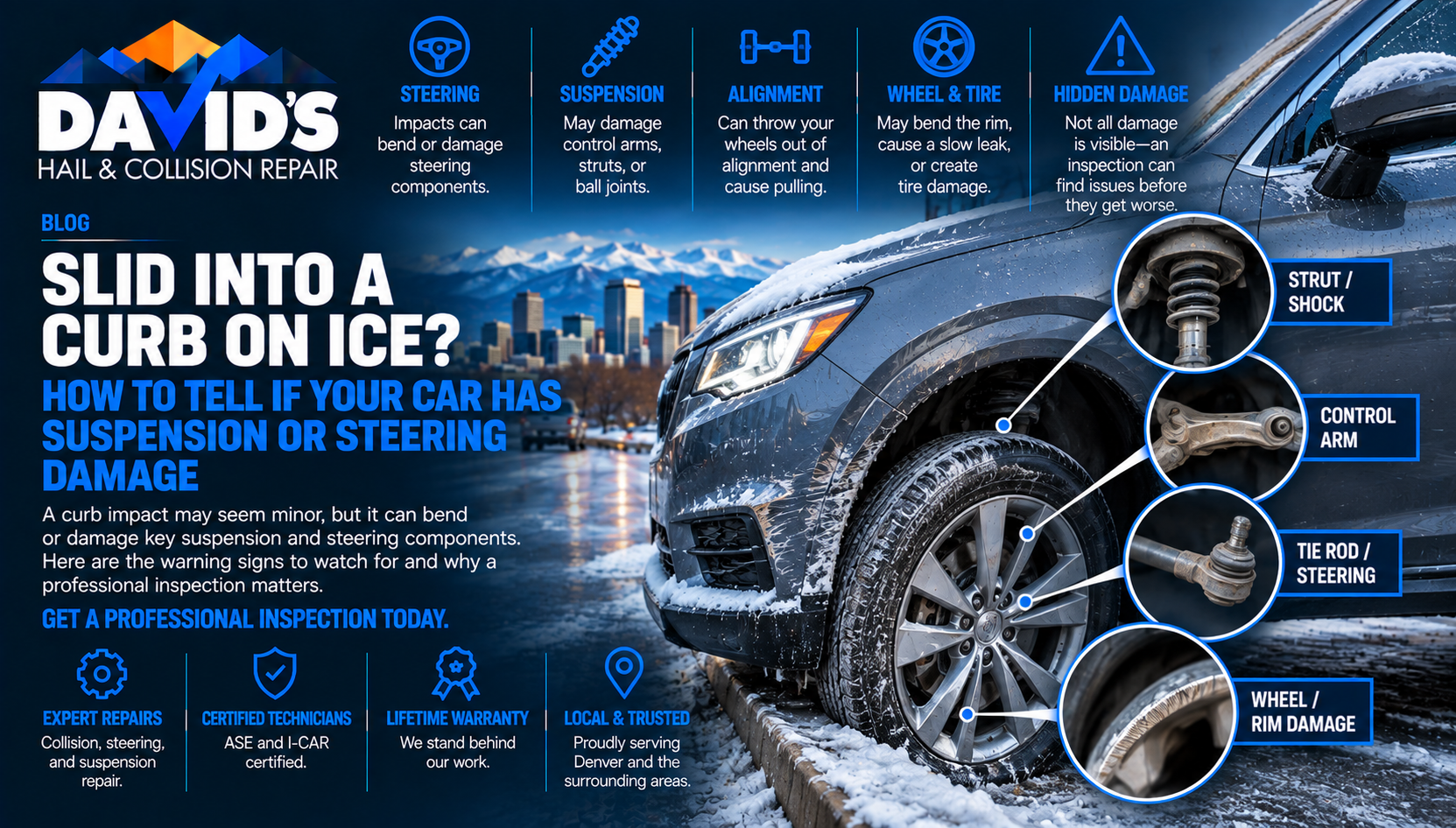
Suspension and steering components.
-
Vehicle alignment.
-
Headlights and electrical connections.
-
Parking sensors, radar units, and driver-assistance systems.
-
Structural components beneath exterior body panels.
For example, sliding into a curb may damage suspension or steering components without leaving significant body damage.
Similarly, a rear-end collision can damage bumper components that aren’t visible until the vehicle is professionally inspected.
A vehicle that starts and drives after an accident isn’t necessarily a vehicle that’s safe to continue driving.
If you notice unusual steering, fluid leaks, rubbing tires, warning lights, damaged lighting, or loose components, avoid driving until the vehicle has been evaluated.
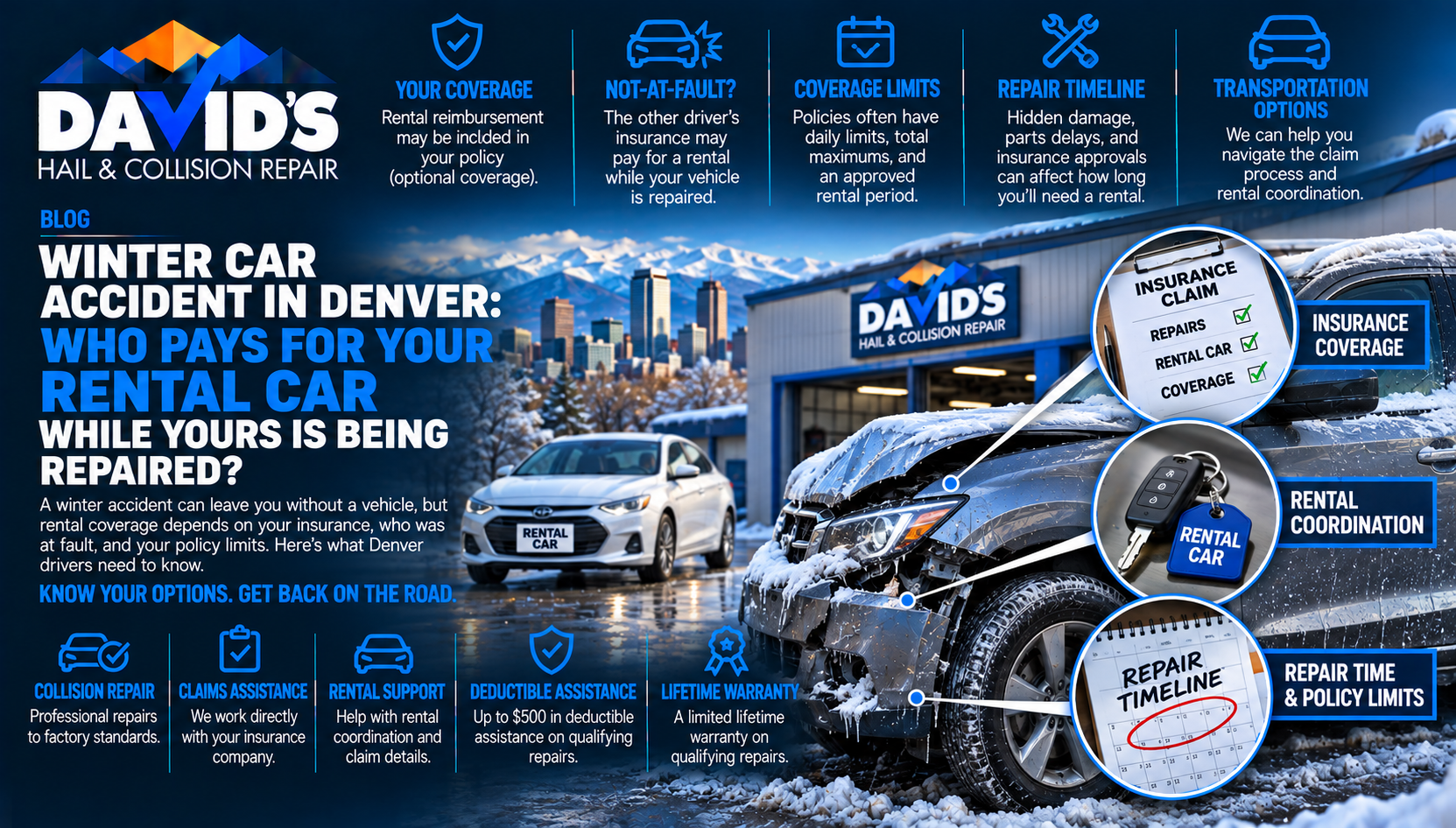
4. Contact Your Insurance Company and Understand the Claims Process
After addressing immediate safety concerns, notify your insurance company about the accident.
Depending on your policy and the circumstances, your insurer may request photographs, an accident report, or an initial repair estimate.
It’s important to understand that the insurance company’s first estimate may not reflect every repair the vehicle ultimately requires.
Some collision damage cannot be fully identified until damaged exterior components are removed and underlying structures can be inspected.
If additional damage is discovered during the repair process, the repair facility may prepare a supplemental estimate for the insurance company to review.
Can You Choose Your Own Collision Repair Shop?
Yes. Colorado drivers generally have the right to choose which repair facility performs their vehicle repairs.
Your insurance company may recommend a preferred repair facility, but you are not required to select that shop solely because your insurer recommends it.
Choosing a collision repair shop should involve evaluating its experience, repair procedures, certifications, warranty coverage, and ability to communicate throughout the insurance claims process.
At David’s Hail & Collision Repair, our team assists customers with insurance claims and communicates with insurance adjusters as part of the repair process.
5. Have Your Vehicle Professionally Inspected for Hidden Collision Damage
After a winter weather accident, a professional collision damage inspection can help determine the full extent of the damage and identify appropriate repair procedures.
A thorough evaluation may include examining exterior panels, underlying structures, safety-related components, and affected vehicle systems.
The exact inspection and repair requirements depend on the vehicle, the impact, and the manufacturer’s procedures.
Why Hidden Damage Matters
Modern vehicles are engineered with structures designed to manage collision forces.
When an impact occurs, some components may deform or absorb energy to help protect occupants.
That damage isn’t always obvious from the outside.
For example, a bumper cover may return close to its original shape after an impact while underlying components remain damaged.
Ignoring this type of damage can potentially compromise the performance of affected components in a future collision.
Professional collision repair focuses on restoring the vehicle according to applicable manufacturer repair procedures—not simply making the exterior look good again.
6. Ask About Your Repair Options, Insurance Assistance, and Warranty
Before authorizing collision repairs, make sure you understand the proposed repair process.
Questions worth asking include:
-
What damage has been identified?
-
Could additional damage be discovered during disassembly?
-
Will the shop communicate with my insurance company?
-
What happens if supplemental repairs are needed?
-
Are manufacturer repair procedures being followed?
-
What warranty is provided on completed repairs?
David’s Hail & Collision Repair offers collision repair services, insurance claims assistance, and a lifetime warranty on qualifying repairs.
Our team can also explain available deductible assistance for qualifying insurance-approved repairs, with savings of up to $500 where applicable.
Eligibility and coverage depend on the repair and insurance circumstances.
7. Don’t Put Off Collision Repairs Just Because Your Car Still Runs
Winter weather doesn’t always provide a convenient opportunity to schedule vehicle repairs.
Between work, school, holiday travel, and unpredictable road conditions, it’s tempting to delay addressing damage that appears minor.
However, postponing a collision damage inspection can allow certain problems to go unnoticed.
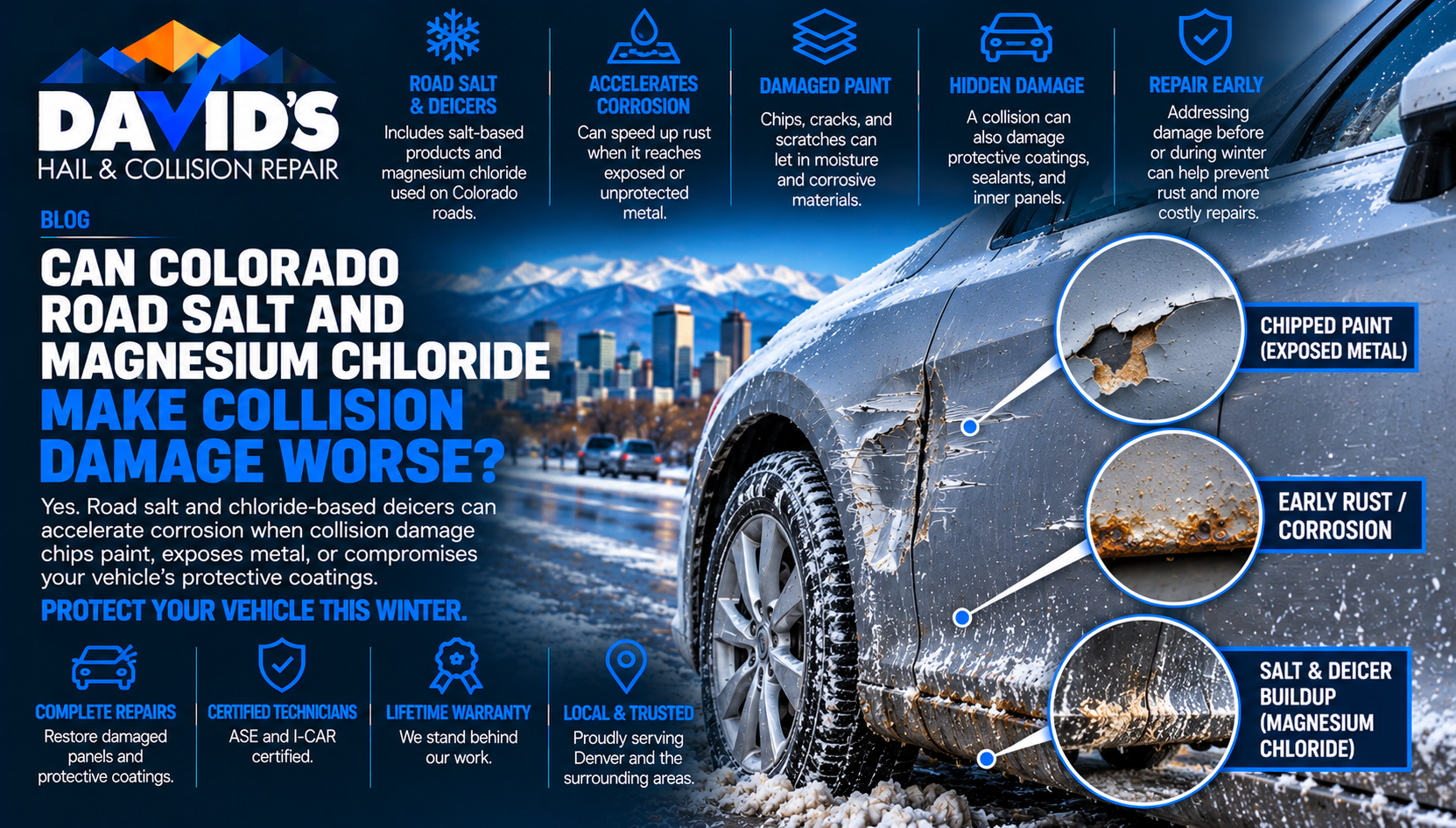
Exposed metal may become more vulnerable to corrosion, particularly when moisture and road deicing materials are present.
Loose exterior components can worsen with continued driving, and damaged lighting, sensors, or suspension components may create additional safety concerns.
Scheduling an inspection sooner helps you understand what needs attention and whether your vehicle is safe to continue operating.
What If Your Vehicle Isn’t Drivable?
If your vehicle cannot be safely driven following an accident, don’t attempt to drive it to the repair facility.
Arrange for appropriate towing assistance.
David’s Hail & Collision Repair can help coordinate the next steps for vehicles requiring collision repairs, including discussing the appropriate inspection or drop-off arrangements.
Why Denver Drivers Choose David’s Hail & Collision Repair
When your vehicle is damaged during a Colorado snowstorm, you need more than a shop that can replace a bumper or straighten a dent.
You need a repair team that understands the importance of identifying collision damage, following appropriate repair procedures, and helping you navigate the insurance process.
Located in Englewood, Colorado, David’s Hail & Collision Repair serves drivers throughout the Denver metro area, including Aurora, Lakewood, Littleton, and surrounding communities.
Our collision repair services include:
-
Professional collision damage inspections and repairs.
-
Assistance navigating automotive insurance claims.
-
Paintless Dent Repair when appropriate for the damage.
-
Deductible assistance on qualifying repairs.
-
A lifetime warranty on qualifying repairs.
Our team is committed to clear communication, professional workmanship, and helping customers get back on the road with confidence.
Get Your Free Collision Repair Estimate After a Winter Accident
If Denver’s first snowstorm leaves your vehicle damaged, don’t wait until a small problem becomes a bigger concern.
Whether you’ve experienced a rear-end collision, slid into a curb, or been involved in a more serious accident, David’s Hail & Collision Repair can help you understand the damage and the next steps.
Get Your Free Estimate and let our team help you move forward with your collision repair.