




OEM vs. Aftermarket Parts: What You Need to Know Before Your Collision Repair
If your car needs a new bumper, fender, or headlight after an accident, one of the choices that gets made — sometimes without you even realizing it — is whether the shop uses OEM parts or aftermarket parts. It’s a decision that affects fit, safety, and even your vehicle’s resale value, and it’s worth understanding before repairs begin, not after.
What “OEM” and “Aftermarket” Actually Mean
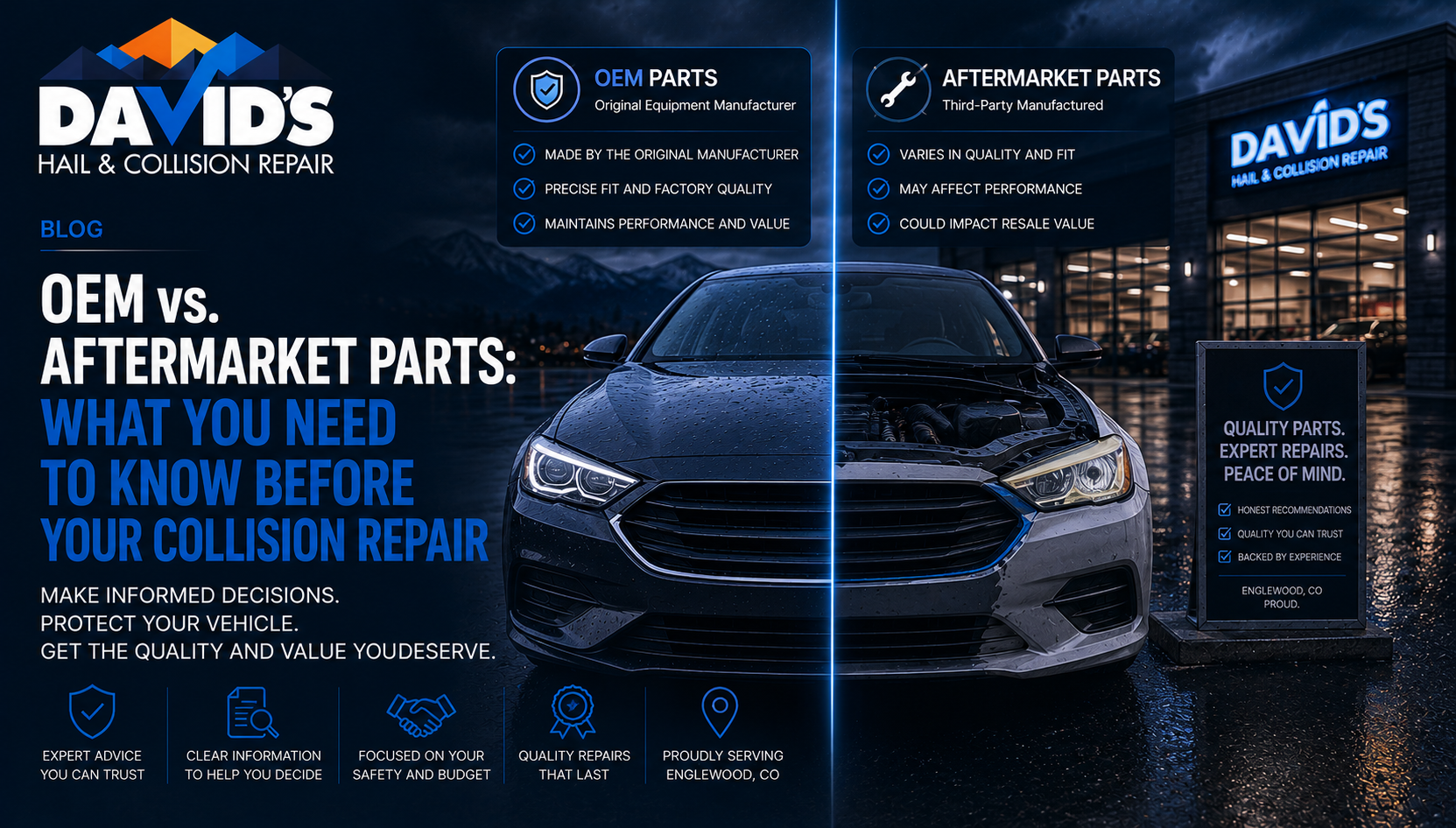
OEM stands for Original Equipment Manufacturer. These are parts made by, or on behalf of, your vehicle’s manufacturer — the exact same components that were used to build your car in the first place, or the direct replacement version of them.
Aftermarket parts are made by third-party manufacturers, not your vehicle’s original maker. They’re designed to fit and function similarly, but they aren’t produced to the manufacturer’s exact specifications, and quality varies significantly from one aftermarket supplier to another.
Why the Difference Actually Matters
Fit. OEM parts are engineered to your vehicle’s exact dimensions. Aftermarket parts can sometimes be close enough that most people wouldn’t notice, or occasionally noticeably off — panel gaps that aren’t quite even, brackets that need extra adjustment to line up, and so on.
Safety systems. Modern vehicles have sensors, cameras, and structural components built into or behind panels that used to be purely cosmetic — think bumpers with parking sensors, or fenders near side-impact sensors. OEM parts are designed with these integrations in mind. Lower-quality aftermarket parts don’t always account for them properly.
Corrosion resistance and materials. OEM parts are made to the manufacturer’s original material and coating specifications. Aftermarket quality varies — some aftermarket manufacturers produce genuinely solid parts, while others cut corners on metal gauge or corrosion coating to hit a lower price point.
Resale value and future claims. A vehicle repaired with OEM parts generally holds its value better, and some manufacturer warranties can be affected by non-OEM parts in certain circumstances — worth checking if your vehicle is still under warranty.
Why Aftermarket Parts Get Used At All
If OEM is generally the stronger choice, why does aftermarket exist in collision repair at all? Mainly cost. Aftermarket parts are typically cheaper, and insurance companies sometimes prefer them for exactly that reason — a lower parts cost means a lower total claim payout. On an older vehicle with a lot of existing wear, that tradeoff sometimes makes sense. On a newer vehicle, it’s a much bigger tradeoff to accept.
You Can Usually Request OEM Parts
Here’s something a lot of drivers don’t realize: you often have more say in this than you’d think. If your insurance company’s estimate defaults to aftermarket parts, you can typically request OEM parts instead — sometimes at no extra cost to you, sometimes for a difference you’d pay out of pocket, depending on your policy and state regulations. It’s worth asking your shop to advocate for OEM parts on your behalf during the claims process, rather than assuming the first estimate is the final word.
What to Ask Your Shop
- Does the estimate specify OEM or aftermarket parts for each item being replaced?
- If aftermarket parts are listed, is there an option to upgrade to OEM, and what would that cost?
- Will using aftermarket parts here affect anything related to my vehicle’s existing warranty?
A shop that can walk you through these answers panel by panel, rather than giving you a vague “we use quality parts” response, is one that’s actually paying attention to what goes into your repair.
The Bottom Line
OEM parts aren’t just a marketing term — they represent a real, meaningful difference in fit, safety system compatibility, and long-term value compared to lower-tier aftermarket alternatives. It’s a conversation worth having with your shop before repairs begin, especially on a newer vehicle where the difference matters most.
Ask us about OEM parts when you schedule your free collision repair estimate.