




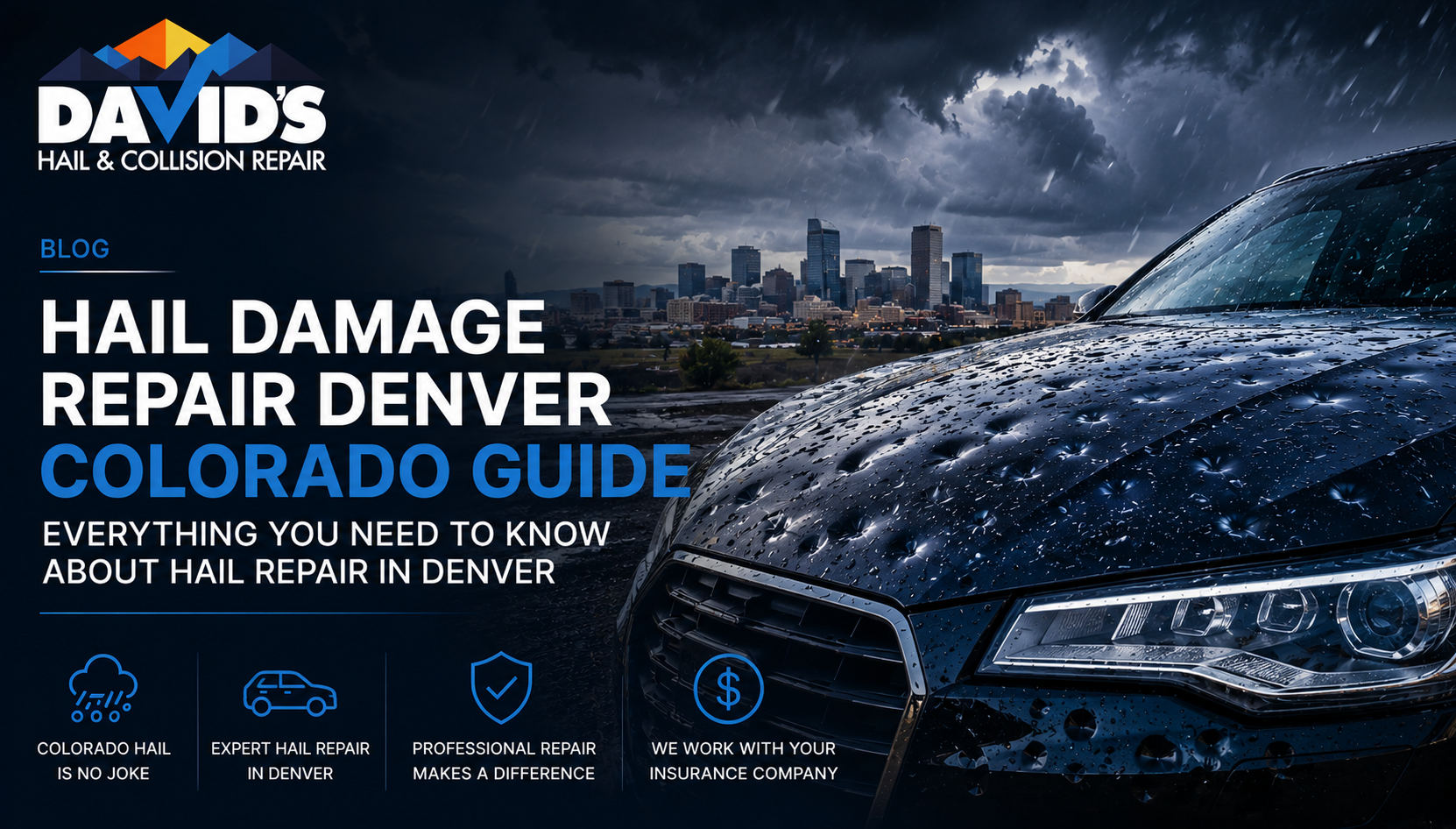
Colorado Hail Season Is Here: What Denver Drivers Need to Know About Hail Damage Repair
If you’ve lived along the Front Range for any length of time, you already know that Colorado is one of the most hail-prone states in the entire country. The stretch of I-25 corridor running from Denver through Englewood, Littleton, and Aurora sits squarely in what meteorologists call “Hail Alley” — a region that sees more hailstorms per year than almost anywhere else in the United States. Every spring and summer, thousands of vehicles across the Denver metro area are damaged by hail, leaving drivers with dented hoods, roofs, trunks, and body panels and a pile of questions about what to do next.
This guide covers everything you need to know about hail damage repair in Denver — from understanding your damage and filing your insurance claim to choosing the right repair method and protecting your vehicle’s resale value.
What Does Hail Damage Actually Look Like?
Hail damage can range from a handful of small, shallow dents to hundreds of deep dents covering every panel on the vehicle. The severity depends on hail size, storm duration, wind direction, and vehicle positioning during the storm. Even hail as small as three-quarters of an inch in diameter can leave visible dents on soft aluminum panels like hoods and roofs. Larger hailstones — one inch or bigger, which Colorado storms regularly produce — can cause significant denting across all body panels and in severe cases can crack windshields, break side mirrors, and damage trim pieces.
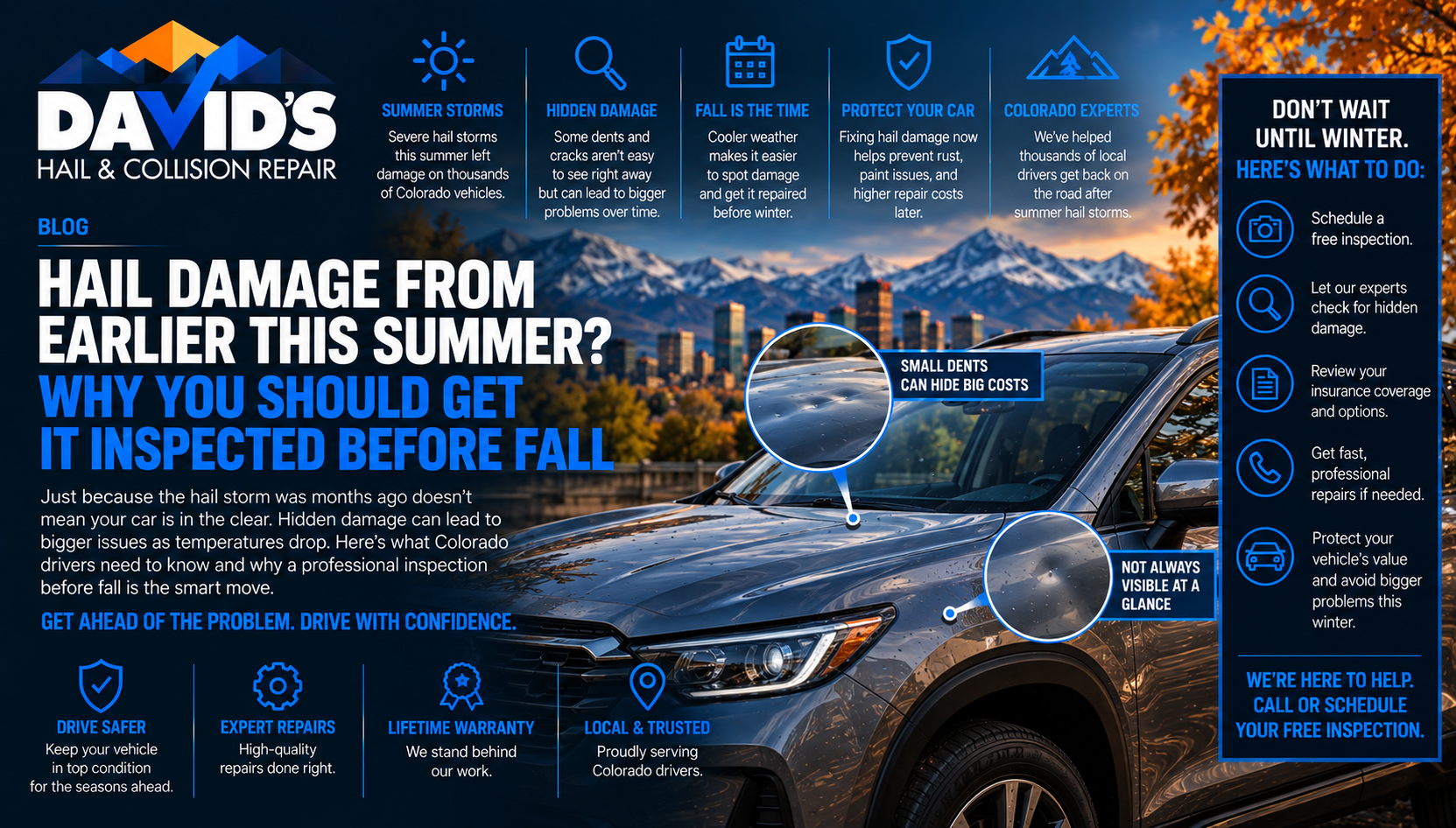
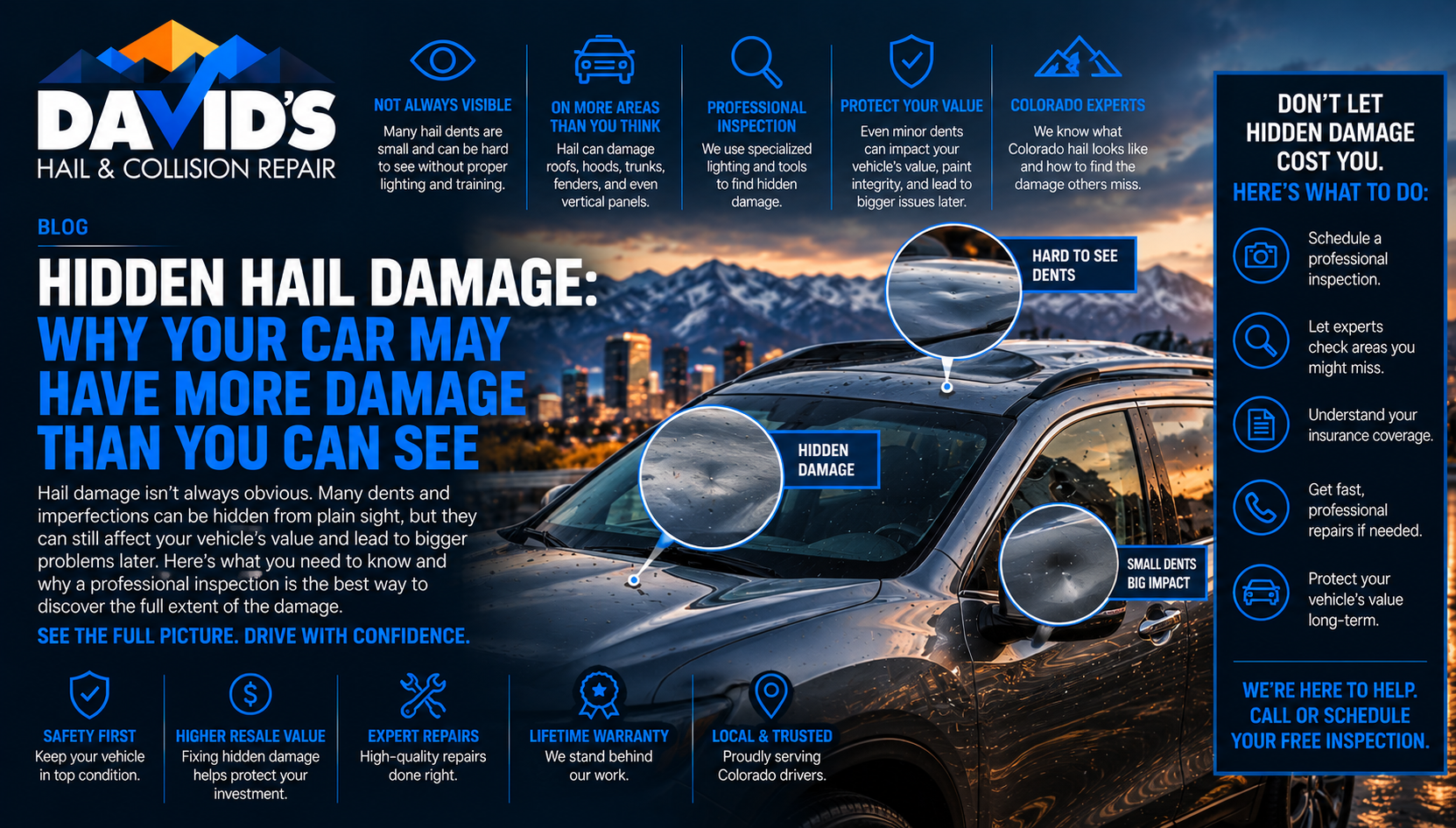
One thing that surprises many drivers is how much hail damage can be hidden in plain sight. Depending on the lighting and angle, dents on curved panels can be very difficult to see in normal daylight. This is why a professional hail damage inspection using specialized lighting is so important — at David’s Hail & Collision, our technicians use PDR lighting boards and panel analysis to identify every dent on the vehicle, including ones the adjuster may have missed.
Paintless Dent Repair: The Gold Standard for Hail Damage
Paintless dent repair, commonly called PDR, is the preferred repair method for hail damage and for good reason. PDR allows certified technicians to remove dents from the inside of the panel using precision tools — carefully massaging the metal back to its original shape without sanding, filling, or repainting. When performed correctly by a skilled PDR technician, the results are completely invisible and the vehicle’s original factory finish is preserved entirely.
The benefits of paintless dent repair for hail damage are significant. Because no repainting is involved, there’s no risk of color mismatch and no reduction in factory paint quality. Your vehicle retains its original finish, which is a major factor in resale value. PDR is also faster than conventional auto body repair — most hail damage repairs at David’s Hail & Collision are completed within a week.
Not every dent qualifies for PDR. If the paint has cracked or chipped at the point of impact, or if the dent is too deep or sharp to be massaged out safely, conventional repair techniques are used on those specific areas alongside PDR for the rest of the vehicle. Our technicians assess each dent individually to determine the right approach.
Does Your Insurance Cover Hail Damage Repair?
In most cases, yes — hail damage repair is covered under the comprehensive portion of your auto insurance policy. Comprehensive coverage handles damage caused by events outside your control, including hailstorms, flooding, falling objects, and theft. If you carry comprehensive coverage, your insurance company will pay for hail damage repair minus your deductible.
One of the most common questions we hear from Denver metro drivers is whether filing a hail damage claim will raise their insurance rates. The answer is no. Because hail damage is classified as a comprehensive claim — an act of nature — Colorado insurance companies cannot raise your premiums as a result. You can file your hail damage claim without fear of affecting your rates.
How to File a Hail Damage Insurance Claim
Filing a hail damage claim is straightforward, and David’s Hail & Collision can handle the entire process on your behalf if you prefer. Here’s how it works:
First, call the number on the back of your insurance card to report the hail damage and open a comprehensive claim. You’ll need to provide the date of the storm, your location during the storm, and a description of the visible damage. Your insurer will then schedule an adjuster to assess the damage and write an initial estimate.
Here’s something important to understand: the initial insurance estimate for hail damage is almost always lower than the true cost of repair. Insurance adjusters work quickly and under high volume during storm season — they frequently miss dents, especially on curved panels and in hard-to-see areas. This is called being “underwritten,” and it’s extremely common.
When you bring your vehicle to David’s Hail & Collision, our team performs a complete damage assessment and compares it to the insurance estimate. If we find additional damage — which we almost always do — we file a supplement directly with your insurance company and provide the documentation needed to get it approved. You don’t pay more. Your insurance simply covers what was missed.
You Don’t Have to Use the Shop Your Insurance Recommends
This is one of the most important things every Colorado driver should know: your insurance company cannot force you to use their preferred repair shop. Colorado law gives you the legal right to choose any licensed auto body shop you want for your hail damage repair. Insurance companies maintain networks of preferred shops — called direct repair programs — because those shops agree to prioritize cost savings for the insurer. That doesn’t always mean the best repair for your vehicle.
At David’s Hail & Collision, we work for you, not your insurance company. We advocate for your vehicle to be fully repaired to pre-storm condition using the right techniques and materials.
What About Your Deductible?
David’s Hail & Collision offers deductible assistance of up to $500 on qualifying hail damage repairs. For many drivers, this means your out-of-pocket cost for hail damage repair is significantly reduced — or eliminated entirely if your deductible is $500 or less. Call us at (303) 815-3854 to check your eligibility.
Don’t Wait Too Long
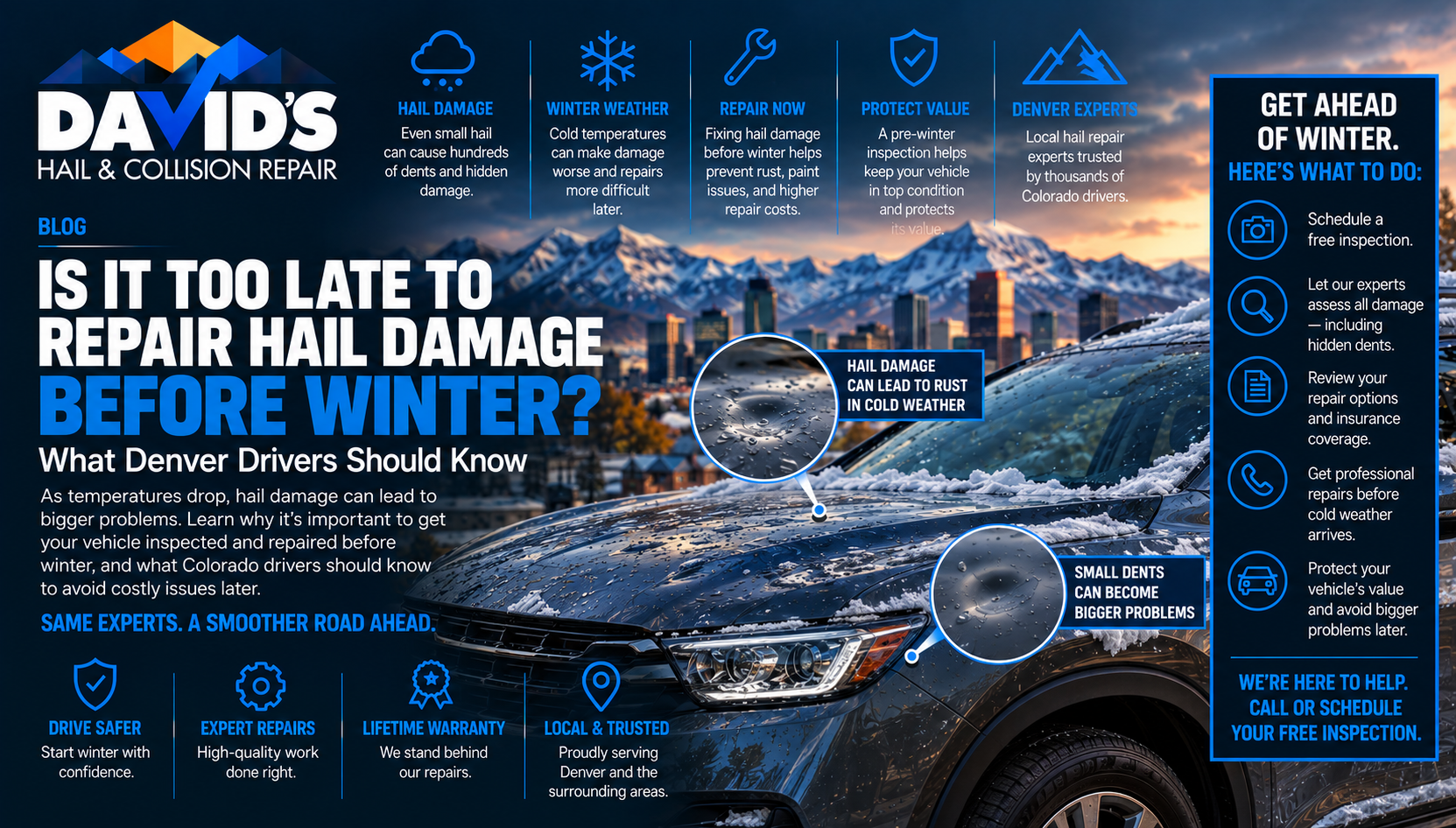
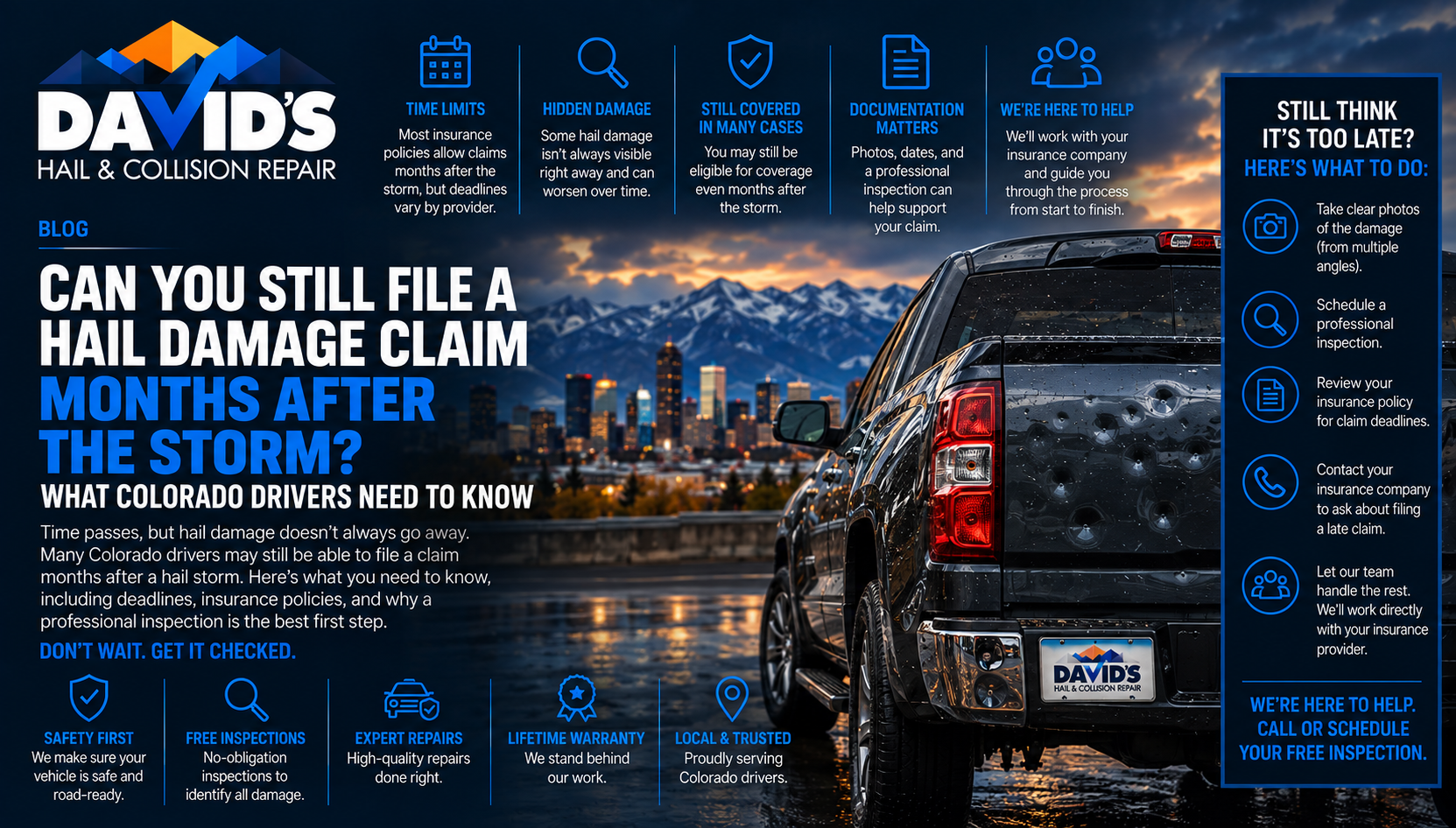
If your vehicle was damaged in a recent hailstorm, don’t put off getting it repaired. Insurance checks are typically valid for 180 days, but your estimate is based on current labor and parts rates — waiting can mean higher costs down the road. More importantly, your insurance policy includes an unrepaired damage waiver, meaning any previously paid but unrepaired hail damage will be deducted from future claims on that vehicle. Getting your vehicle repaired promptly protects both its condition and its value.
If your vehicle was damaged by hail anywhere in the Denver metro area — including Englewood, Aurora, Lakewood, Littleton, or Denver — David’s Hail & Collision is ready to help. We offer free hail damage inspections, handle your entire insurance claim, and back every repair with a lifetime warranty.
Schedule your free hail damage inspection today →